Disclaimer: Devoted Grandma is reader-supported. If you purchase anything through my site, I may receive a small commission (at no cost to you). Thank you.
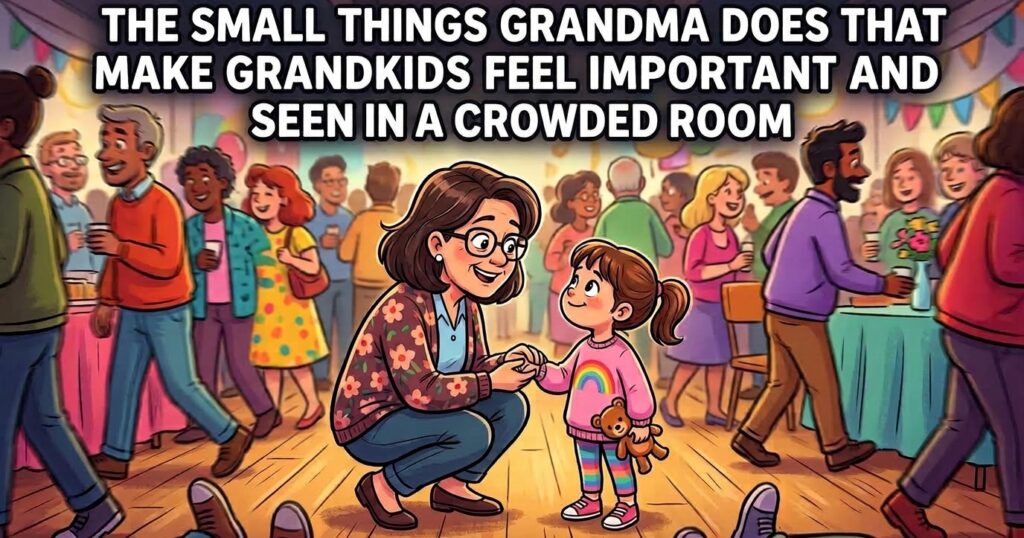
A family gathering can be full of love and still be a place where a child feels a little lost.
The grown-ups are catching up. Someone is passing around food. A cousin has exciting news, the baby is getting plenty of attention, and three conversations are happening at once.
Meanwhile, one grandchild is standing nearby, waiting to show somebody a drawing.
I think this is one of the lovely opportunities we have as grandmas. We can notice the child waiting at the edge of things. We can make a little space for their story, their opinion, or simply their company.
It rarely takes a grand gesture. Sometimes, it takes looking across the room and saying, “There you are! I’m so happy you came.”
Here are some small ways to give your grandchild that feeling of being important, even when the house is bursting with people.
1. Let your face show that you’re happy to see them
Before we ask about school, comment on their height, or remind them where to put their shoes, we can give them a proper welcome.
Look up. Smile. Say their name.
“There’s my Sophie! It’s lovely to see you.”
They don’t have to arrive with good grades, an entertaining story, or a hug ready for Grandma. Their arrival is enough to make us happy.
And if they’re a teenager who would rather disappear into the wallpaper than receive a big public greeting, a warm smile and a quiet “Glad you’re here” can do the job beautifully.
2. Return to the story that got interrupted
Your grandchild starts telling you something, and halfway through, someone asks where the serving spoon is.
Naturally, you answer. But once the spoon mystery is solved, turn back.
“Now, you were telling me what happened on the school bus. What happened next?”
It’s such a small thing, yet it tells them you were following along. Their story didn’t vanish from your mind the moment an adult needed something.
If you truly can’t listen just then, be honest, and follow through.
“I want to hear the rest once I’ve put this dish down. Will you sit with me?”
3. Remember something that matters in their world
Perhaps they were nervous about reading aloud in class. Maybe they’ve been building a model, learning a song, or trying to keep a rather dramatic houseplant alive.
Ask about it.
“How’s that little plant of yours doing?”
Remembering an ordinary detail shows that you think about them between visits.
Choose something they would feel comfortable discussing around others. A crowded dinner table probably isn’t the place to ask whether they’ve made up with the friend they cried about last week.
Some things deserve a quiet moment.
4. Make room for their voice at the table
Children can struggle to find an opening when adults are talking enthusiastically. By the time there’s a pause, the conversation has moved on three subjects and landed on somebody’s roof repairs.
If you notice your grandchild trying to speak, help them find a turn.
“I think Daniel had something he wanted to add.”
Then give them time to say it.
There’s no need to turn the whole gathering into an audience. Just make enough space for their words to be heard, as you would for anyone else at the table.
5. Ask for their opinion and take the answer seriously
“Which picture do you think we should put in this frame?”
“Would a game or a walk be more fun after lunch?”
A small, genuine choice gives your grandchild a part in what’s happening.
The important word is genuine. If we’ve already decided on the blue frame, asking their opinion and immediately dismissing the green one won’t feel especially good.
We don’t have to agree with every suggestion. But we can listen, consider it, and explain kindly when something isn’t possible.
6. Notice the quiet kindness
The child who wins a prize often gets plenty of congratulations. The child who quietly finds a chair for someone may go unnoticed.
Grandma can notice.
“I saw you make room for your cousin. That was thoughtful.”
Keep it simple and specific. There’s no need to announce that they’re the kindest child in the family or compare them with their siblings.
A few quiet words can show that you see the everyday choices they make, too.
7. Offer a place beside you without demanding company
An empty chair and a gentle invitation can be wonderfully welcoming.
“You’re welcome to sit here with me.”
Then let them choose.
They might settle in and talk. They might eat a biscuit beside you in comfortable silence. They might run off with the cousins and return later.
Being welcome feels different when it comes without an obligation to entertain Grandma.
And honestly, I’m quite happy to have a biscuit companion. Conversation is a bonus.
8. Help them keep their dignity
Perhaps they spill their drink, mispronounce a word, or misunderstand a joke.
These moments can feel much bigger when several people are watching.
A calm “Let’s get a cloth” helps with the spill. There’s no need for a running commentary about how clumsy they are.
We can also resist bringing out embarrassing childhood stories simply because they make the adults laugh. A story we treasure may be one our growing grandchild would rather keep private.
Their trust is worth more than a laugh around the table.
9. Give them a meaningful part in the gathering
Some children enjoy having something useful to do, especially when they’re unsure how to join in.
“Would you help me choose some music?”
“Could you show me how this game works?”
Offer something that suits their interests and abilities, and let them decline. The goal is to help them feel included.
Then allow them some ownership. If they’re arranging the napkins, we can probably survive a layout that differs from our original vision. The napkins are unlikely to complain.
10. Respect the way they like to connect
One grandchild comes through the door ready to tell you everything. Another needs half an hour before saying much at all.
Both deserve a warm welcome.
We can offer a hug without insisting, let a quiet child settle in, and avoid announcing, “Why are you being so shy?”
Sometimes connection happens more easily while washing strawberries together or looking at something out the window.
A child shouldn’t have to become the loudest version of themselves to receive our attention.
11. Find a little moment that belongs to the two of you
You may not get a long conversation during a busy gathering. But you can often find a minute.
Look at their drawing. Ask them to show you the funny part of their book. Step onto the porch together to admire the enormous leaf they found.
For that little stretch of time, put the phone down and give them your attention.
These moments don’t need to be impressive enough for a photograph. They just need to feel shared.
12. Give them a personal goodbye
As everyone gathers coats, bags, and the container nobody remembers bringing, try to say goodbye to each grandchild individually.
“I loved hearing about your costume idea.”
“Thank you for teaching me that game.”
“I’m so glad we had a little time together.”
If you missed a chance to connect, you can acknowledge that, too: “We didn’t get much time to chat today. I’d love to hear the rest of your news soon.”
Then make room for that conversation later.
We won’t catch every unfinished sentence or notice every small moment. Sometimes we’ll be the ones searching for the serving spoon.
But we can keep making the effort to look up, listen, and welcome each grandchild as they are.
Years from now, they may not remember what we served or how many people squeezed around the table. They may remember how it felt when Grandma spotted them across the room, and her face lit up.