Disclaimer: Devoted Grandma is reader-supported. If you purchase anything through my site, I may receive a small commission (at no cost to you). Thank you.
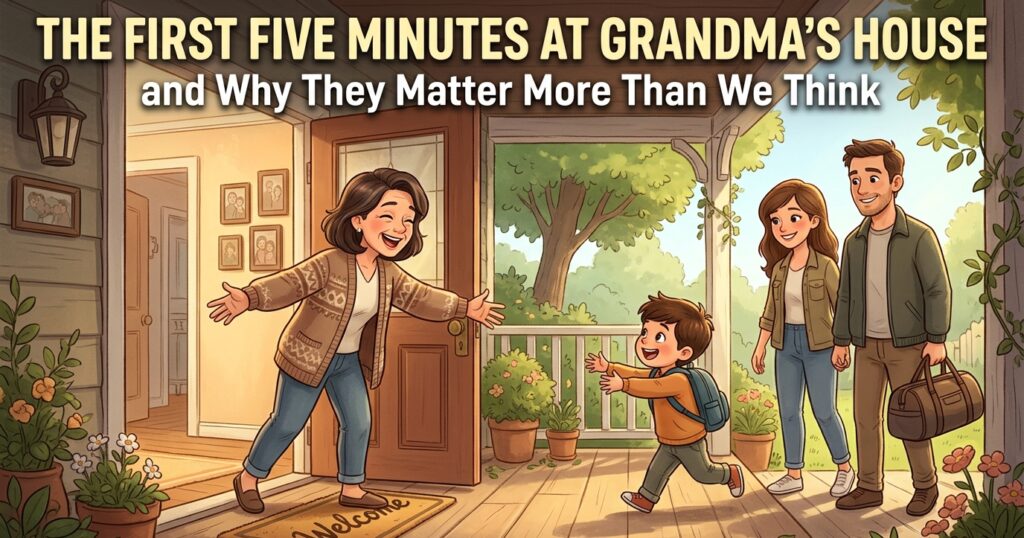
There’s a particular sound that never fails to put a smile on my face, the sound of my grandchildren arriving at my house. Sometimes it’s a knock on the door, sometimes it’s the sound of little feet running up the driveway, and sometimes it’s a teenage voice casually announcing, “Hey, Grandma!”
As grandmothers, we spend so much time thinking about what we’ll do when our grandchildren visit. We plan meals, prepare activities, stock up on their favorite snacks, and occasionally clean parts of the house they probably won’t even notice!
But how much thought do we give to those first five minutes after they walk through our door?
Those few moments can set the emotional tone for the entire visit. They can determine how comfortable our grandchildren feel, how willing they are to open up, and how excited they are to come back another day.
Here are some little things worth paying attention to during those precious first five minutes.
1. Let Your Face Tell Them How Happy You Are to See Them
Before our grandchildren hear a single word from us, they can already see how we’re feeling.
Imagine walking into someone’s home and seeing their entire face light up simply because you’ve arrived. There’s something incredibly reassuring about knowing your presence brings someone joy.
Put down whatever you’re holding, look up from your phone, and give them a genuine smile. Even if you’re exhausted or have had a particularly difficult morning, try to give them a moment of undivided attention.
Our grandchildren deserve to experience the beautiful feeling of being someone’s favorite arrival.
2. Make Your First Words Ones They’ll Love Hearing
Our opening words can have a surprising influence on how our grandchildren feel about being at our house.
Sometimes, without realizing it, we greet them with comments like:
- “Well, look who finally decided to visit!”
- “What have you done to your hair?”
- “You’ve been a stranger lately.”
- “Why didn’t you call me back?”
Although we may mean these things playfully, they can make our grandchildren feel criticized or guilty before they’ve even taken off their shoes.
Instead, try saying, “I’m so happy you’re here,” or “Seeing you has made my day.”
Let their arrival be celebrated rather than their absence questioned.
3. Give Them a Moment to Settle In
We, grandmas, can get a little carried away with excitement. Within seconds of our grandchildren arriving, we might already be asking about school, offering them food, showing them something we bought, and telling them about our plans for the afternoon.
Meanwhile, they haven’t even put their bags down!
Remember that our grandchildren may be arriving from a busy school day, a long journey, a stressful week, or an overwhelming social situation.
Give them a little breathing room. Show them where they can put their belongings, offer them something to drink, and allow them to settle in at their own pace.
They shouldn’t feel as though visiting Grandma is another appointment they need to be mentally prepared for.
4. Welcome the Mood They Arrive In
Not every grandchild will arrive at Grandma’s house bursting with excitement.
Some will be quiet. Others may be tired, frustrated, distracted, or simply not in the mood for conversation.
It’s important that we don’t take this personally.
Rather than saying, “Why aren’t you happy to see Grandma?” we can gently say, “You look like you’ve had a long day, sweetheart. Make yourself comfortable.”
Our grandchildren should know that they don’t have to put on a cheerful performance to be welcomed into our homes.
Grandma’s house should be somewhere they can arrive as they are, not somewhere they have to pretend to be feeling better than they actually are.
5. Let Them Choose How Affectionate Their Greeting Is
I know how tempting it is to wrap our grandchildren in the biggest hug imaginable, especially when we haven’t seen them in a while.
But as they grow older, their preferences regarding physical affection may change.
Some grandchildren love a big squeeze, while others prefer a high five, a little side hug, or a warm hello.
Try not to make them feel guilty if they aren’t particularly affectionate when they arrive. Saying, “What, Grandma doesn’t get a kiss anymore?” might seem harmless, but it can make affection feel like an obligation.
Respecting their preferences doesn’t weaken our bond. It shows them that their comfort matters to us just as much as our own feelings.
6. Show Them That You’ve Been Thinking About Them
One of the sweetest things a grandchild can discover upon arriving is that Grandma has been thinking about them long before they walked through the door.
Perhaps you’ve bought their favorite cereal, kept a funny newspaper clipping for them, charged the controller for their favorite video game, or saved a slice of cake because you knew they would enjoy it.
These little preparations don’t have to cost much.
You might simply say, “I remembered how much you liked those strawberries last time, so I picked some up for you.”
What makes these gestures special isn’t necessarily the item itself. It’s the realization that someone remembers their preferences and thinks about their happiness even when they’re not around.
7. Resist the Urge to Immediately Correct Them
Sometimes our grandchildren walk through the door wearing something we wouldn’t have chosen, looking at their phones, or sporting a hairstyle we don’t quite understand.
And goodness knows, we grandmas can have plenty of opinions!
However, unless something genuinely requires immediate attention, those first few minutes aren’t the best time to start correcting them.
There will be opportunities to discuss manners, household rules, and other important matters later.
When correction becomes a regular part of our greetings, our grandchildren may begin anticipating criticism whenever they visit us.
We want them to walk through our doors looking forward to our company, not mentally preparing themselves for our comments.
8. Make Them Feel Like They Belong Rather Than Like Guests
There’s a lovely difference between being welcomed as a guest and being welcomed as someone who belongs.
Guests often feel the need to ask permission, remain polite, and avoid inconveniencing their hosts.
Our grandchildren, within reasonable household boundaries, should feel comfortable enough to relax.
It might mean knowing which cupboard holds their favorite snacks, having a familiar spot on the couch, keeping a few belongings at our house, or simply knowing they can help themselves to a glass of water.
A warm, “Come on in, sweetheart. You know where everything is,” can communicate a wonderful sense of belonging.
There’s something special about having another place in the world that feels a little like home.
9. Create a Little Arrival Tradition
Sometimes the most memorable parts of childhood are the seemingly insignificant things that happen over and over again.
Perhaps every visit begins with a silly secret handshake, a little joke, a cup of hot chocolate, or a few minutes sitting together on the porch.
Maybe you have a funny nickname you greet them with or a playful competition to see who can make the other laugh first.
These small traditions give our grandchildren something familiar to look forward to.
And years from now, when they’re grown and have busy lives of their own, those little rituals may be among the things they miss most about coming to Grandma’s house.
A Little Thought for My Fellow Grandmas
We don’t need an immaculate house, an elaborate meal, or an afternoon filled with exciting activities to make our grandchildren feel special.
Sometimes, all it takes is the way we welcome them through our front door.
Those first five minutes are an opportunity to communicate something that every grandchild deserves to hear, whether they’re five, fifteen, or thirty-five.
You are wanted here. You are welcome here. You don’t have to impress me, entertain me, or prove anything to me. I’m simply happy that you’re here.
And wouldn’t it be beautiful if, no matter how old our grandchildren became or how complicated their lives got, walking through Grandma’s door always made the world feel a little lighter?