Disclaimer: Devoted Grandma is reader-supported. If you purchase anything through my site, I may receive a small commission (at no cost to you). Thank you.
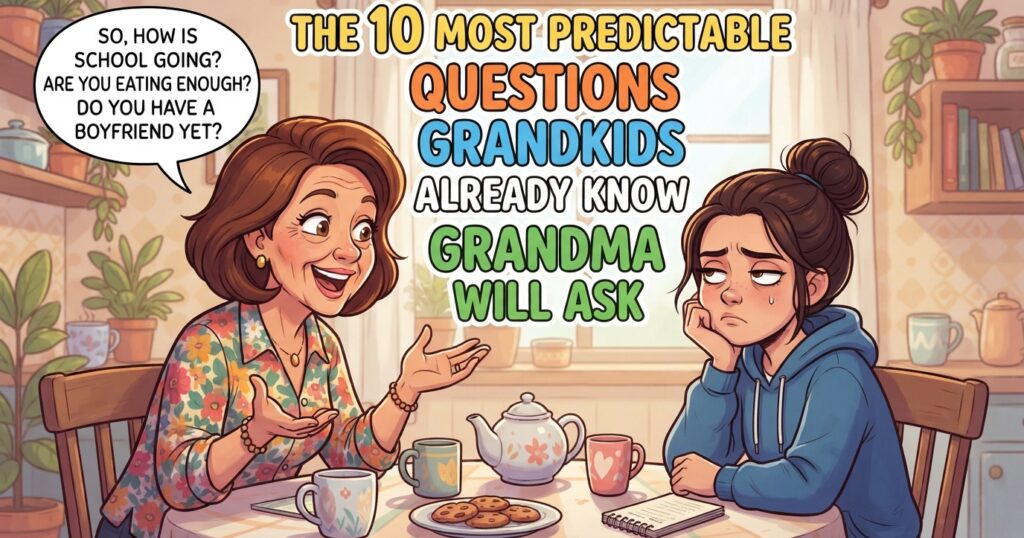
Grandchildren may not always know what Grandma is cooking for dinner or what surprise she has tucked away in her handbag, but they can often predict the questions she will ask.
Sometimes, they know them before she even opens her mouth.
“How is school?”
“Have you eaten?”
“Do you have a boyfriend yet?”
These questions usually come from love. We want to know that our grandchildren are healthy, happy, safe, and making good choices. However, when we ask the same questions every time, our conversations can start to feel like a familiar interview.
The problem is not that Grandma asks questions. It is that predictable questions often receive predictable answers.
“Fine.”
“Yes.”
“No.”
“Nothing much.”
If we want our grandchildren to open up, we may need to retire a few of our usual questions—or at least ask them in a more interesting way.
Here are ten questions grandkids probably already know Grandma will ask and what we can say instead.
1. “How is school?”
This may be the most predictable Grandma question of them all.
It is a sensible thing to ask, especially when school takes up such a large part of a child’s life. Unfortunately, it is also so broad that most grandchildren do not know where to begin.
That is why we often receive the one-word answer, “Fine.”
Instead, try asking about one small part of their school day:
“What made you laugh at school this week?”
“Which class went by the fastest today?”
“Did anything surprising happen?”
Specific questions are easier and more enjoyable to answer. They also help Grandma learn about the people, moments, and little dramas that make up her grandchild’s daily life.
2. “Have you eaten?”
Grandmas seem to possess a built-in alarm that goes off whenever a grandchild might be hungry.
A grandchild can walk through the door carrying a sandwich, a bag of chips, and a drink, and Grandma may still ask, “Have you eaten?”
Food is one of the ways we show love. We want our grandchildren to be well-fed and cared for. However, older grandchildren may find this question slightly amusing when Grandma asks it every single time they call.
Try making it playful:
“What delicious thing have you eaten today?”
“If I could send you any meal right now, what would you choose?”
“What snack are you obsessed with lately?”
You will still find out whether they have eaten, but you might also discover a new favorite food to keep in the cupboard for their next visit.
3. “Why don’t you call me more often?”
Grandma may ask this because she misses her grandchild. Unfortunately, the question can sound more like an accusation than an invitation.
The grandchild may immediately feel guilty or defensive. Instead of enjoying the conversation, they begin explaining how busy they have been.
A gentler approach would be:
“I’m so happy to hear your voice.”
“I’ve missed talking to you. When would be a good time for our next call?”
“Even a quick message from you always brightens my day.”
This expresses the same desire without making the grandchild feel as if they have already failed. Warmth usually encourages more contact than guilt does.
4. “Do you have a boyfriend or girlfriend yet?”
The moment a grandchild reaches a certain age, Grandma may become very curious about their love life.
Some grandchildren enjoy talking about relationships. Others would rather discuss almost anything else—especially when the whole family is listening.
Constantly asking can make them feel embarrassed, pressured, or as though being single is something that needs to be fixed.
Instead, allow them to bring up romance when they feel ready. You can ask broader questions such as:
“Who have you been spending time with lately?”
“Do you have good people around you?”
“What qualities do you value most in a friend?”
When grandchildren know Grandma will listen without teasing or interrogating them, they are more likely to share important relationship news willingly.
5. “What do you want to be when you grow up?”
This is a lovely question when children are small. Their answers may change from astronaut to veterinarian to professional dinosaur trainer in the space of one week.
As they grow older, however, the question can begin to feel heavy. Teenagers and young adults may genuinely have no idea what they want to do. Being asked repeatedly can make them feel as if everyone else expects them to have their entire future planned.
Try asking:
“What are you curious about these days?”
“What is something you would love to learn?”
“If you could try any job for one day, what would you choose?”
These questions give grandchildren room to explore without demanding a final answer about the rest of their lives.
6. “Are you still playing that game?”
Whether it is a video game, an online trend, a television series, or a hobby Grandma does not understand, this question can sound dismissive.
To Grandma, it may seem like the grandchild has been staring at the same screen forever. To the grandchild, however, it may be an activity they genuinely enjoy or a way they connect with friends.
Instead of questioning why they still like it, show some curiosity:
“What do you enjoy most about that game?”
“Can you show me how it works?”
“What is the hardest part of it?”
You do not have to become a gaming expert. Simply showing interest tells your grandchild, “The things you enjoy matter to me.”
7. “Why are you so quiet?”
Quiet grandchildren hear this question constantly.
Sometimes they are shy. Sometimes they are tired. Sometimes they are simply listening. Being repeatedly asked why they are quiet may make them feel even more self-conscious.
Rather than putting them on the spot, Grandma can create an easy opening:
“You don’t have to talk, but I’m always happy to listen.”
“Would you like to help me with something?”
“Come sit beside me when you’re ready.”
Some of the best conversations happen while baking, driving, walking, or working on a small task together. A quiet grandchild may speak more freely when they do not feel that everyone is waiting for them to perform.
8. “Do you remember me?”
Grandmas sometimes ask this playfully, especially when they have not seen a younger grandchild for a while.
However, the question can create pressure. A young child may become nervous, while an older grandchild may feel guilty for not calling or visiting enough.
A warmer greeting would be:
“I’m so happy to see you!”
“I’ve been looking forward to this visit.”
“Come and remind me what you’ve been up to.”
Lead with happiness instead of testing their memory or affection. Grandchildren should feel welcomed into Grandma’s presence, not examined at the door.
9. “When are you coming to visit?”
This question is usually asked with great hope, but after the tenth time, it can begin to sound like a complaint.
Older grandchildren may be balancing school, work, friendships, relationships, and other responsibilities. They may want to visit but struggle to find the time.
Try being more specific and flexible:
“I would love to see you. Would Saturday afternoon or Sunday morning work better?”
“Could we plan a short lunch together sometime this month?”
“If visiting is difficult, how about a video call this week?”
A clear invitation is easier to answer than a repeated reminder that they have not visited enough.
10. “What’s new?”
This is Grandma’s reliable conversation starter when she cannot think of anything else.
The trouble is that “What’s new?” is such a large question that grandchildren often reply, “Nothing.”
Of course, something is almost always new. Grandma simply needs to help them find it.
Try asking:
“What is the best thing that happened this week?”
“What song have you been listening to lately?”
“What is something you are looking forward to?”
“What is the funniest thing you have seen online recently?”
These questions give grandchildren somewhere to begin. One small answer can easily lead to a much bigger conversation.
Grandma’s familiar questions come from a beautiful place. We ask because we care. We want to stay connected, know what is happening, and make sure our grandchildren are doing well.
But connection does not grow simply because we ask more questions. It grows when grandchildren feel relaxed, understood, and genuinely interesting to us.
The next time you are tempted to ask the same question you always ask, pause for a moment. Try something more specific, playful, or unexpected.
You may be surprised by how much more than “fine” your grandchild has to say.