
Disclaimer: Devoted Grandma is reader-supported. If you purchase anything through my site, I may receive a small commission (at no cost to you). Thank you.
You would love a little time with your grandchild. Perhaps you want to make a phone call, share an outing, play a game, or continue a family tradition.
The invitation comes from love. Still, a grandchild may hear more than the words you say. They may wonder, “Will Grandma be hurt if I say no?”
Here is one sentence that makes your warmth clear while leaving room for an honest answer:
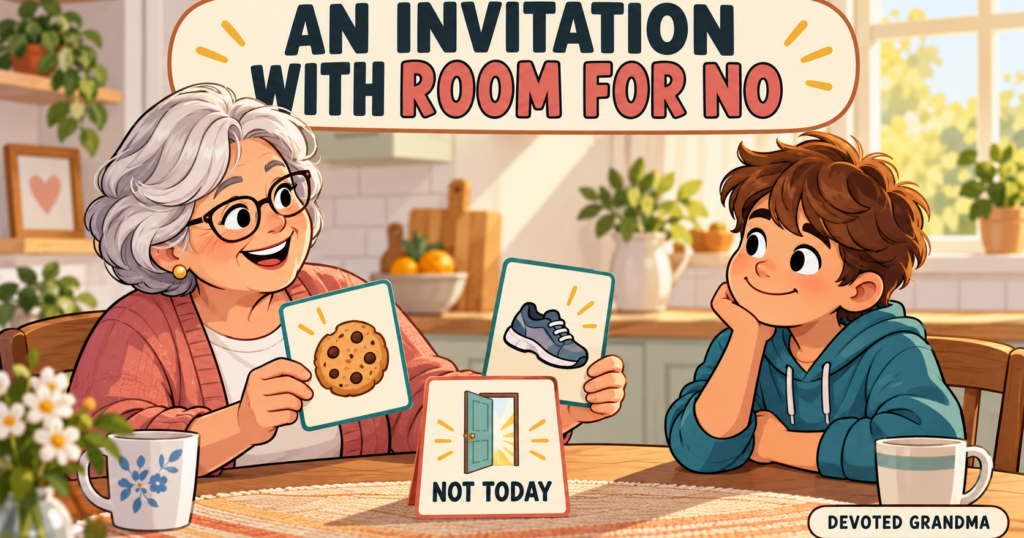
“I’d love to spend some time with you. Would you rather bake cookies or take a walk, or would another day feel better?”
The details can change, but the pattern stays simple:
“I’d love to [connect]. Would you rather [choice one] or [choice two], or would [a truthful way to decline] feel better?”
This is not a magic formula, and a gentle invitation cannot guarantee closeness. It simply gives a grandchild useful information: Grandma sincerely wants to connect, there are realistic choices, and saying no will not become a test of love.
Invite with warmth
Begin by saying what you genuinely hope for. “I’d love to see you,” “I’d enjoy hearing about your week,” or “I’d be happy to show you how I make this” all communicate interest.
Try to avoid opening with a complaint disguised as an invitation, such as, “Since you never call me anymore, do you have five minutes?” The request may be small, but the emotional price feels large.
A warm opening tells the truth about your affection without handing your grandchild responsibility for your feelings. If disappointment from a changed plan is already part of the moment, this message for when plans fall through offers another way to be honest without applying guilt.
Offer two realistic choices
Two choices can make an invitation easier to answer. The important word is realistic. Only offer options you can accept and that fit the parent’s rules, schedule, and budget.
For a young child, keep the choices immediate and concrete. An older grandchild may appreciate choices about timing, length, or how you connect. A teen might prefer texting to a call. An adult grandchild might need to compare dates before answering.
Choices are not helpful when they hide a decision you have already made. “Would you like to hug me now or after lunch?” does not leave room for a child who does not want a hug.
Accept the refusal
If your grandchild says no, your next response teaches them whether the permission was real.
You might say, “Okay, thank you for telling me,” or, “That’s all right. We can leave it for today.” Then resist the urge to add, “I suppose Grandma isn’t very interesting anymore.”
You are allowed to feel disappointed. You simply do not need to make your grandchild repair that feeling. A calm answer helps keep one refusal from turning into a judgment about the whole relationship.
Reconnect without keeping score
Permission to decline does not mean you must stop inviting. It means the next invitation arrives without a debt attached.
Later, you can send a caring note, mention something they enjoy, or try again at a more suitable time. this two-word follow-up is a gentle way to show that you remembered an ordinary detail without demanding a reply.
Reconnection can be wonderfully ordinary. The message is not, “You turned me down, so now you must make it up to me.” It is, “The door is still open, and I still care about you.”
Six ways to adapt the invitation
For a phone call
“I’d love to catch up. Would you rather talk for ten minutes tonight or sometime Saturday, or should we skip a call this week?”
For a younger child, arrange calls through the parent. For a teen, make the offered times specific and easy to decline.
For an outing
“I’d love to take you out. Would you rather visit the library or get a snack, or would you prefer to stay home today?”
Check timing, transportation, cost, and permission with the parent before presenting the outing as available.
For affection
“I’m happy to see you. Would you like a hug or a high five, or would you rather just say hello?”
A child’s choice about physical affection deserves respect. A warm smile and welcome do not have to depend on receiving a hug.
For a game or activity
“I’d love to do something together. Would you rather play cards or draw, or would you like some time by yourself?”
With little ones, show the two objects as you speak. With older grandkids, invite their suggestion if neither option appeals.
For advice
“I care about what you’re dealing with. Would you like to hear one thought or have me simply listen, or would you rather not talk about it with me?”
If a serious safety concern is involved, listening respectfully does not mean keeping dangerous information secret. Bring in the child’s parent or another responsible adult when needed.
For a family tradition
“I’d love to include you in our holiday baking. Would you rather decorate cookies or choose the music, or would you like to sit this one out?”
Traditions can carry strong feelings, especially when “we always do this” begins to sound like an obligation. A smaller role or a graceful no can protect the warmth you hoped the tradition would create.
When the choice is not optional
Not every direction is an invitation. Seat belts, medication, school responsibilities, household safety, and a parent’s established rules may not be negotiable.
In those moments, be clear about what must happen and offer choice only where choice truly exists: “We need to leave at three. Would you like to bring your book or your headphones?”
This distinction matters. False choices can weaken trust. Honest boundaries, delivered calmly, show that respecting a grandchild’s voice does not require pretending that every decision belongs to them.
Keep the door open
A loving invitation can hold two truths at once: “I want time with you,” and, “You may answer honestly.”
Start with warmth, offer two real choices, make room for a truthful refusal, and reconnect without keeping score. The sentence may change with age and circumstance, but its heart remains steady.
Your grandchild does not have to say yes to prove that the bond matters. And Grandma can keep offering love without making yes the price.



