
Disclaimer: Devoted Grandma is reader-supported. If you purchase anything through my site, I may receive a small commission (at no cost to you). Thank you.
“Do I really have to?”
That familiar question might come with a long sigh, folded arms, or the sort of eye roll only a grandchild can deliver with such feeling.
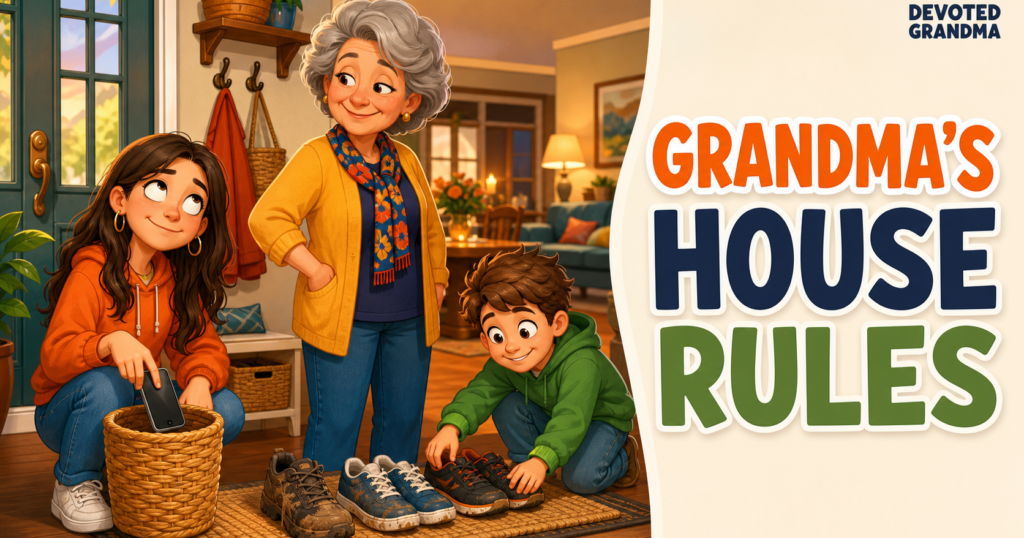
Maybe you asked everyone to sit at the table for dinner. Maybe you announced that muddy shoes belong by the door. Perhaps you suggested putting phones away for half an hour, and your teenage grandchild reacted as though you had proposed sending all modern technology to the moon.
House rules can produce a little friction. Yet the warm, reasonable ones also give Grandma’s house its own comforting rhythm. Children learn what happens here, what is expected of them, and how everyone shares the space.
The goal is not to guard every cushion or make grandchildren nervous about doing something wrong. It is to create a home where love is generous, expectations are clear, and there is room for both tradition and change.
1. We Eat at the Table
A grandchild may wonder why a sandwich cannot travel to the couch, bedroom, or nearest screen. Sitting at the table can feel terribly old-fashioned when there is a game waiting in the next room.
But a shared meal offers something valuable: a natural pause. No one has to invent a special heart-to-heart conversation. People simply sit near one another, pass the food, and talk about whatever comes up.
Keep this rule warm rather than rigid. A picnic on the living-room floor or pizza during a family movie can be a delightful exception. The point is not the furniture. The point is making regular room for one another.
2. Shoes, Coats, and Bags Have a Place
“Please put your shoes by the door” may be the most repeated sentence in a grandmother’s home. It is rarely the most thrilling part of a visit.
Still, a predictable place for belongings helps everyone. It prevents a hunt for one missing sneaker five minutes before departure, and it makes a child feel that the home has been prepared for them.
A hook, basket, shelf, or small drawer can turn this rule into a welcome: “Your things belong here because you belong here.” For more ways to create that feeling, see 8 Tiny Changes That Make Grandma’s House Easier for Grandkids to Visit.
3. Everyone Helps With One Small Job
Grandchildren may arrive hoping for snacks, games, and Grandma’s full attention—not an exciting opportunity to match socks.
Yet one small, age-appropriate job can help a child feel like a member of the household instead of a guest being served. A young child can carry napkins to the table. An older child can feed the dog, rinse dishes, or help bring groceries inside.
Keep the task brief and specific. “Would you put these forks on the table?” feels friendlier than “You need to help more.” Whenever possible, work beside them. Shared work often opens the door to easy conversation.
4. Phones Take a Short Rest
A rule requiring phones to disappear for an entire visit may create more resentment than connection, especially for older grandchildren whose social lives and schoolwork often involve their devices.
A short, clearly defined phone-free period is easier to accept. Try putting devices aside during dinner, a board game, or the first 20 minutes after everyone arrives. Adults should follow the rule too.
This works best as an invitation to be present, not a judgment about “kids today.” Say, “Let’s all put our phones away while we eat,” rather than singling out one grandchild who just received a message.
5. We Speak Kindly, Even When We Are Annoyed
Grandma’s house should be a place where grandchildren can have real feelings. They do not need to smile through disappointment or pretend to enjoy every activity.
They can say, “I don’t want to play that,” without saying, “That game is stupid.” They can be frustrated with a cousin without insulting them. Adults must meet the same standard by correcting behavior without mocking, shaming, or labeling a child.
Kind speech does not mean avoiding every disagreement. It means remembering that the relationship matters while working through one. If complaints often change your answer, The Ways Grandmothers Unknowingly Reward Bad Behavior offers a useful reminder about staying calm and consistent.
6. Ask Before Taking the Last One
There may be no household drama quite like discovering that someone ate the final cookie, used the last clean towel, or finished the special cereal without warning.
Asking before taking the last portion is a small lesson in consideration. It encourages children to notice that other people have needs and hopes too.
This rule should not turn food into a source of anxiety. Keep ordinary snacks available when possible, respect parents’ instructions about food, and never make a child feel guilty for being hungry. The useful habit is simply pausing to consider others.
7. Before You Leave, We Put Things Back Together
After a happy visit, the floor may look as if a toy box, blanket fort, and craft cupboard held a family reunion of their own.
A quick cleanup teaches grandchildren that enjoyment and responsibility belong together. Young children can toss blocks into a bin. Older ones can fold blankets, return games, and carry cups to the kitchen.
Make the finish line clear: “Let’s spend five minutes putting the room back together, and then we’ll have a goodbye snack.” Music, a timer, or choosing one job each can make the routine feel less like punishment.
Which Rules Build Belonging?
A good house rule protects people, preserves the home reasonably, or helps family members treat one another well. It is simple enough to remember and flexible enough to account for age, temperament, disability, allergies, and genuine needs.
A rule may deserve updating if grandchildren seem afraid to touch anything, normal accidents receive a harsh response, or keeping the rule matters more than enjoying the people who came to visit. “That is how I have always done it” can explain a tradition, but it does not automatically make the tradition helpful.
It may help to ask three questions:
- Does this rule help someone feel safe, respected, or included?
- Is the expectation reasonable for this grandchild’s age and needs?
- Can I explain it in one calm sentence?
Grandchildren probably will not thank Grandma for the shoe basket, the five-minute cleanup, or the brief break from their phones. They may groan. They may negotiate. They may produce another magnificent eye roll.
But those little routines can become part of the unmistakable feeling of Grandma’s house: this is where we gather, this is how we care for one another, and there is always a place for you here.



