
Disclaimer: Devoted Grandma is reader-supported. If you purchase anything through my site, I may receive a small commission (at no cost to you). Thank you.
A grandchild is coming to visit, and you want everything to feel welcoming. You have food in the refrigerator, clean sheets on the bed, and a few possible activities in mind.
Then the little questions begin. Do they still like grilled cheese? Are hugs welcome at the door? May you share a photograph with relatives? Will they need quiet time? How much device time have their parents allowed?
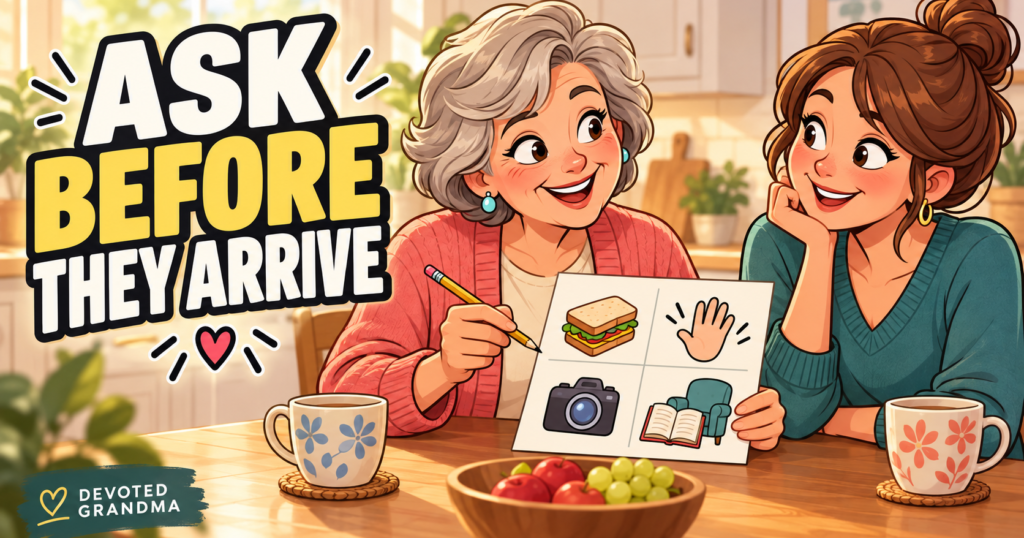
Guessing can create awkward moments that nobody intended. A short before-visit card lets you ask about a few ordinary preferences while there is still time to plan.
This is not a list of demands, and it does not give a child control of the household. Parents remain responsible for family decisions. You remain responsible for safety and the reasonable rules in your home. The card simply makes room for useful information.
A completed before-visit card
Here is an example for an older grandchild named Ava. Grandma could complete it during a short telephone call with Ava and her parent.
- Food: Ava would like turkey sandwiches for lunch. She does not like mustard. Her parent will send information about an allergy that Grandma needs to follow.
- Affection: Ask before hugging. A wave or cheerful hello is always fine.
- Photographs: Family pictures are fine. Ask Ava and her parent before sending or posting one.
- Quiet time: Ava would like about 30 minutes to read after lunch.
- Devices: Her parent says she may use her phone after dinner and should charge it outside the bedroom overnight.
- If plans change: Ava can say she needs a break. Grandma will listen, then the adults will decide what can reasonably change.
Notice what this card does not say. It does not promise that every meal, outing, or household routine will be arranged around Ava. It records preferences, parent instructions, and a simple way to speak up.
Ask without making the visit feel managed
A card works best as a gentle conversation, not an interview. Choose the questions that matter for this particular visit. You do not need to ask everything at once.
Try these low-pressure questions:
- “Is there something simple you would enjoy eating while you’re here?”
- “When you arrive, would you like a hug, a wave, or to decide in the moment?”
- “Are family pictures all right? I’ll still ask before sharing any.”
- “Would some quiet time help you feel comfortable?”
- “What are the device rules at home that I should help you follow?”
- “If you get tired or want a plan to change, how would you like to tell me?”
You can make the purpose clear by adding, “I may not be able to say yes to everything, but I would rather ask than guess.”
If your grandchild prefers a shorter stay, the ideas in why grandkids sometimes prefer shorter visits can help you consider the request without immediately taking it personally.
Record only what will be useful
Write short answers instead of turning the card into a detailed report. “Ask before hugging” is clearer than a paragraph about every possible greeting. “Quiet reading after lunch” is more useful than “may need space sometimes.”
Separate each answer into one of three kinds:
- A preference: Something you can consider, such as a favorite breakfast or a wish for quiet time.
- A parent decision: A rule or instruction from the parent, such as device limits, transportation arrangements, or dietary guidance.
- A household or safety rule: Something that is not optional in your home, such as wearing a seat belt, staying within agreed boundaries, or keeping food out of a particular room.
This distinction keeps kindness from becoming a promise. A grandchild may prefer cookies before dinner, but that does not require you to change your mealtime rule. You can say, “I wrote down that you love chocolate-chip cookies. We can enjoy them after dinner.”
Confirm the plan with the parent
Even when an older grandchild answers confidently, check the practical details with their parent or guardian. This matters especially for food restrictions, medicine, transportation, supervision, bedtime, device use, photographs, and who may pick the child up.
A simple message might say, “Ava and I talked about a few things that could make Saturday comfortable. Could you check this card and correct anything I misunderstood?”
Keep the child’s preferences visible during that conversation. Parent coordination should not become a way to dismiss what the child said. At the same time, the card should never replace direct adult communication about health, safety, or family responsibilities.
Adapt the questions to their age
For younger grandkids
Offer two or three simple choices: “Would you like a hug, a high five, or a wave?” Ask the parent about routines and necessary care. Pictures can help a young child choose between two snacks or activities, but adults still make the final plans.
For school-age grandkids
Let them answer in their own words. Ask what helps when they feel tired, overwhelmed, or ready for a different activity. Avoid treating every answer as permanent. A child who wants a hug on Friday may not want one on Saturday.
For teens and adult grandkids
Ask directly and leave room for privacy. “Would you like any unscheduled time?” may be more respectful than planning every hour. If you sometimes find yourself treating an older grandchild as much younger, this everyday grandmother’s dilemma offers a helpful way to think about changing support.
Adapt when the answer changes
The card is a starting point, not a contract. Hunger, energy, mood, weather, and family circumstances can change. Your grandchild can revise a preference, and you can explain honestly when a plan cannot change.
Try, “Thank you for telling me. Let’s see what is possible.” Then consider the parent’s instructions, safety, your household boundaries, and the needs of everyone present.
If the answer is no, warmth still matters: “We can’t cancel the appointment, but we can have quiet time when we return.” A limit can be firm without making the child feel troublesome for asking.
Your blank reusable card
Copy the following list into a notebook, print it, or keep it on your phone. Use only the lines that fit the visit.
- Visit date and general plan:
- Food preferences and parent instructions:
- Greetings and affection:
- Photographs and sharing:
- Quiet time or space:
- Devices:
- How to ask for a change:
- Parent decisions to remember:
- Household and safety rules:
- Details to confirm before arrival:
You do not need a perfectly planned visit. You are simply replacing a few assumptions with kind questions. The card helps your grandchild know that their comfort matters, while making it equally clear that parents and responsible adults still guide the visit.



