Disclaimer: Devoted Grandma is reader-supported. If you purchase anything through my site, I may receive a small commission (at no cost to you). Thank you.
When a grandchild struggles with a zipper, carries a wobbly plate, or pauses before ordering at a restaurant, a loving grandmother often feels an immediate urge to help.
Sometimes help is exactly what a child needs. At other times, stepping in too quickly quietly takes away the chance to think, try, and discover, “I can do this.”
The goal is not to leave a child frustrated or unsafe. It is to offer enough support for the child to keep going without doing the whole job for them. Age, ability, and family rules all matter, so coordinate with the parents and adjust each idea to fit your grandchild.
1. Offer Two Good Choices
Small decisions give children practice using their own judgment. At Grandma’s house, you might let a younger grandchild choose between two snacks, two games, or two shirts. An older child might choose the afternoon activity or decide which side dish to prepare.
Support looks like: Offering a manageable choice and accepting the answer.
Taking over looks like: Asking what they want, then persuading them to choose your favorite.
Check with the parents about any limits first. Then present choices that already fit those limits. Your grandchild receives real freedom, while the adults remain comfortably aligned.
2. Let Them Carry Something Manageable
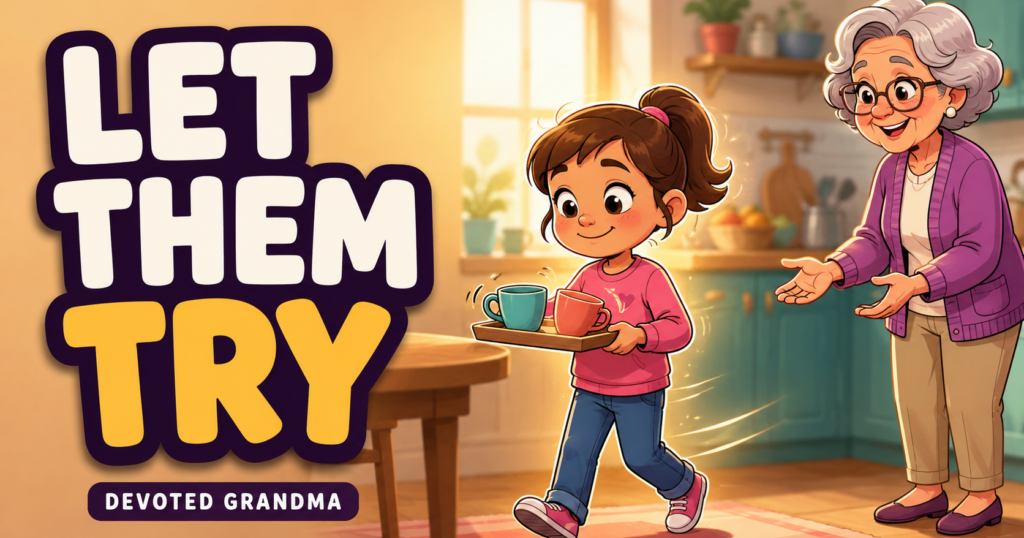
A child who carries napkins to the table, brings in a light grocery bag, or holds their own backpack gets to make a real contribution. The task may seem tiny to an adult, but it can feel important to a child.
Support looks like: Choosing a safe load, showing where it belongs, and allowing a little extra time.
Taking over looks like: Reaching for it at the first wobble because carrying it yourself would be faster.
If the child needs help, divide the job. They can carry one item while you carry the rest. This keeps the task safe without erasing their role.
3. Give Them Time to Speak for Themselves
At a café, library, store, or family gathering, a grandchild may need a few seconds to find their words. That pause can feel long when you already know what they want to say.
Support looks like: Waiting calmly and staying available if they turn to you for help.
Taking over looks like: Answering every question directed to them or apologizing for their hesitation.
A shy, anxious, or speech-disabled child may use a different approach agreed upon with a parent. Independence does not have to mean speaking aloud. It means having an appropriate way to participate and being given the chance to use it.
4. Ask Before Helping
One of the simplest habits is to pause and ask whether help is wanted. A child working on a puzzle, craft, shoelace, or school project might be closer to a solution than it appears.
Support looks like: Asking, “Would you like help, a hint, or more time?”
Taking over looks like: Moving pieces, correcting the work, or finishing the task without permission.
Parents may have particular expectations about homework or other responsibilities. Follow their lead. Grandma can be an encouraging companion without becoming the person who produces the finished result.
5. Break a Job Into Smaller Parts
When a whole task feels overwhelming, make the next step smaller instead of removing the task completely. If your grandchild is preparing a snack, they might gather ingredients first, then follow one direction at a time.
Support looks like: Simplifying the process while leaving meaningful parts for the child.
Taking over looks like: Saying, “Never mind, I’ll do it,” as soon as confusion appears.
Real responsibility should also fit the child. The same principle appears in rethinking the chores we pass down: The lasting lesson matters more than making a child perform a job exactly as an earlier generation did.
6. Let a Small Mistake Stay Small
Milk may splash. A game piece may be placed incorrectly. A carefully packed bag may be missing something nonessential. When the stakes are low, a small mistake can become useful practice rather than an emergency.
Support looks like: Staying calm, helping with cleanup if needed, and asking what they want to try next.
Taking over looks like: Preventing every possible error or turning one mishap into a long lecture.
Of course, step in when health, safety, important belongings, or family rules are involved. Stepping back is not the same as ignoring danger. It is making room for harmless trial and error.
7. Resist the Urge to Improve Their Work
A crooked sandwich, mismatched outfit, or lopsided birthday card may not look the way Grandma would have made it. That is part of the point. The child’s work should still look like the child’s work.
Support looks like: Noticing effort, creativity, care, or persistence.
Taking over looks like: Straightening, rewriting, or decorating until the result reflects your taste.
If a parent has set a requirement, help your grandchild remember it. Otherwise, allow room for harmless preferences. Capability grows when children see that their own decisions can produce a finished result.
8. Help Them Recover Instead of Removing Every Discomfort
Children sometimes feel disappointed, nervous, or embarrassed. Grandma’s comfort matters, but comfort does not always require making the feeling disappear immediately.
Support looks like: Listening, offering calm company, and helping the child consider a manageable next step.
Taking over looks like: Fixing the situation behind the scenes, dismissing the feeling, or deciding what the child must do before hearing them.
Bedtime worries are a good example. A nervous request during a sleepover may call for curiosity, comfort, and a parent-aligned plan. The loving choice depends on what is troubling the child, not on proving independence at any cost.
9. Praise the Process, Then Let the Success Belong to Them
When your grandchild succeeds, it can be tempting to explain how much you helped. Instead, let them feel ownership of what they accomplished.
Support looks like: Saying, “You kept trying,” “You made a thoughtful choice,” or “You figured out what to do next.”
Taking over looks like: Making praise depend on a perfect result or claiming the victory because you offered guidance.
Specific encouragement helps a child notice the useful things they did. It also leaves room for an honest response when the outcome was imperfect.
A Simple Question for Grandma
Before stepping in, quietly ask yourself: Is my grandchild unsafe, truly stuck, or simply taking longer than I would?
If they are unsafe, intervene. If they are truly stuck, offer the smallest helpful next step. If they are simply taking longer, give them the gift of time.
Your grandchild does not need a grandmother who never helps. They need one who can notice the difference between rescuing and supporting. Sometimes love moves closer. Sometimes it waits nearby and lets a child discover what they can do.