Disclaimer: Devoted Grandma is reader-supported. If you purchase anything through my site, I may receive a small commission (at no cost to you). Thank you.
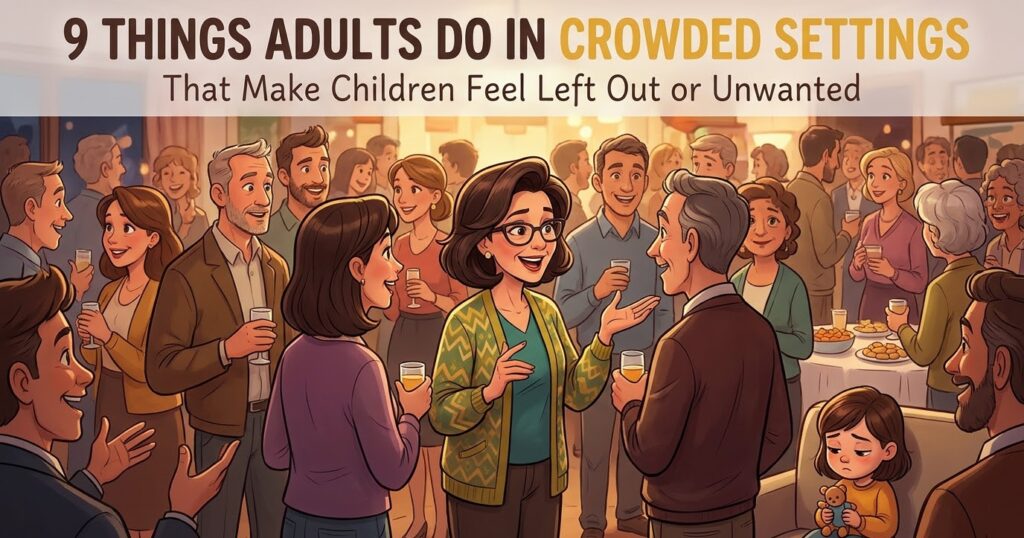
Have you ever taken your grandchild to a family gathering, birthday party, church event, or holiday dinner and noticed them suddenly becoming quieter than usual?
Perhaps they were sitting in a corner, fiddling with something in their hands, or following you around while all the adults were busy talking.
Sometimes, we assume children are simply being shy or that they’re bored with all the grown-up conversations. But ladies, I’ve come to realize that some of the loneliest moments a child experiences can happen in a room full of people who love them.
And the surprising thing is that we adults can contribute to those feelings without ever meaning to.
We might be catching up with relatives, greeting old friends, or enjoying conversations we rarely get to have. Meanwhile, a grandchild who was excited to attend with us may begin wondering whether anyone really wants them there.
As grandmothers, we have a wonderful opportunity to notice those little moments and make sure our grandchildren feel included, appreciated, and loved.
Here are nine things adults sometimes do in crowded settings that can leave children feeling unwanted, along with some gentle ways we can do better.
1. Greeting Every Adult in the Room While Completely Overlooking the Children
We’ve all been there, ladies!
You arrive at a family gathering, and suddenly there’s an aunt you haven’t seen in years, an old friend waving from across the room, and a cousin waiting to give you a hug.
Before you know it, you’ve greeted half the room.
But what about the little ones?
Imagine being a child standing next to your grandmother while adult after adult receives a warm greeting, a hug, and an enthusiastic “It’s so wonderful to see you!”
Meanwhile, nobody even acknowledges your presence.
Children notice these things more than we sometimes realize.
They may begin to feel like they’re invisible or that their presence isn’t nearly as exciting as everyone else’s.
What Grandma Can Do Instead
Make it a habit to greet the children just as warmly as the adults.
A simple “There’s my handsome grandson! I’ve been looking forward to seeing you!” can mean the world.
And when you’re introducing your grandchild to someone, don’t just say their name and move on.
Share something wonderful about them.
“This is my granddaughter, and she’s been teaching herself how to play the guitar!”
It’s such a small gesture, but it tells a child that they are someone worth noticing.
2. Having Long Conversations Above a Child’s Head Without Ever Including Them
Picture this.
Your grandchild is standing beside you while you’re talking to relatives about work, family updates, or the latest neighborhood happenings.
Five minutes pass.
Then ten.
Then twenty.
Your grandchild tries to make eye contact or gently pulls at your sleeve, but you continue chatting.
Eventually, they stop trying.
Now, ladies, I’m certainly not suggesting that every adult conversation needs to revolve around children. Sometimes we need a little grown-up time!
But there’s a difference between a child patiently waiting while Grandma finishes a conversation and a child feeling like they’ve been forgotten altogether.
What Grandma Can Do Instead
Every so often, turn toward your grandchild and acknowledge them.
You might say, “Sweetheart, I’m just catching up with Aunt Mary. Are you doing alright?”
Or find a natural opportunity to bring them into the conversation.
“We were just talking about our favorite holiday traditions. What’s your favorite part of Christmas?”
Even if they don’t have much to say, being invited into the conversation reminds them that they belong there.
3. Laughing About a Child’s Embarrassing Moments in Front of Everyone
Oh, ladies, this one deserves a little extra thought.
Family gatherings have a funny way of bringing out old stories.
Someone remembers the time your grandson wet his pants during a school play. Another relative recalls when your granddaughter had a terrible crush on a boy in her class.
Before long, everyone is laughing.
Everyone, that is, except the child whose story is being told.
We may think we’re sharing an adorable memory, but to a child, especially an older grandchild, it can feel humiliating.
And when several adults are laughing at something they wish nobody knew, they may start feeling uncomfortable around the very people who should make them feel safe.
What Grandma Can Do Instead
Before sharing a story about your grandchild, ask yourself whether they’d enjoy hearing it told in front of others.
Better still, ask their permission.
If someone else starts sharing something embarrassing, gently redirect the conversation.
“Oh, that reminds me! Have I told you how well she’s doing with her artwork lately?”
We can enjoy a good family laugh without making a child feel like they’re the joke.
4. Giving All the Attention to the Loudest or Most Outgoing Children
Every family has different personalities.
There’s the grandchild who can walk into a room and immediately start telling jokes, singing songs, or entertaining everyone.
And then there’s the quieter grandchild who prefers watching from the sidelines.
Unfortunately, crowded gatherings often reward the children who demand the most attention.
Everyone laughs at the outgoing child’s jokes, praises their stories, and asks them questions.
Meanwhile, the quieter child may receive little more than a passing smile.
Over time, they might begin wondering whether they need to become louder, funnier, or more entertaining to deserve attention.
What Grandma Can Do Instead
Make a special effort to notice the quieter children.
You don’t have to put them on the spot in front of everyone. In fact, that might make them even more uncomfortable!
Instead, sit beside them for a few minutes.
Ask about something they’re interested in, compliment something they’ve done, or simply enjoy a quiet conversation together.
Sometimes, the grandchildren who ask for the least attention are the ones who appreciate our gentle attention the most.
5. Constantly Telling Children to Go Somewhere Else
“Go play outside.”
“Go sit with the other kids.”
“This is where the grown-ups are talking.”
“Why don’t you find something to do?”
Now, I understand that certain conversations and activities aren’t suitable for children. And sometimes, adults really do need uninterrupted time together.
But imagine how a child feels when every attempt to spend time with their relatives ends with someone sending them away.
They may begin to think their company is unwanted.
This can be particularly hurtful for grandchildren who came to the gathering specifically because they were excited to see their grandparents or other family members.
What Grandma Can Do Instead
Rather than constantly sending children away, find little moments when they can comfortably join the adults.
Maybe they can help arrange the dessert table, sit beside Grandma during lunch, or participate in a family game.
And when you genuinely need some adult conversation, explain it kindly.
“Sweetheart, I need to talk with your aunt for a little while, but afterward I’d love for us to have some cake together.”
The difference is that you’re not simply asking them to leave. You’re reminding them that you still want their company.
6. Comparing Children in Front of Other Relatives
Ladies, comparison can sneak into conversations so easily.
“Look how well your cousin behaves!”
“Your sister was never this shy.”
“Why can’t you be more sociable like your brother?”
Sometimes, adults say these things because they believe they’re encouraging children to improve.
But in a crowded room, these comments can feel especially painful.
Not only is the child being compared to someone else, but now there’s an audience.
They may feel embarrassed, inadequate, or convinced that the adults would prefer them to be more like another child.
And what makes it worse is that children often remember these public comparisons long after the adults have forgotten saying them.
What Grandma Can Do Instead
Celebrate each grandchild’s individuality without turning their strengths into a competition.
One grandchild may be wonderfully talkative, while another is a thoughtful listener.
One might love sports, while another spends hours drawing or reading.
There’s room to admire all of them.
And if you need to correct a child’s behavior, do it privately whenever possible rather than using another child as the example they should follow.
7. Making Plans or Handing Out Treats Without Noticing Who Has Been Excluded
This one can happen so innocently.
Perhaps an aunt announces that she’s taking a few of the grandchildren for ice cream.
Or someone starts handing out little gifts to the children.
Maybe the older cousins are invited to join an activity while one younger grandchild stands nearby, hoping to be included.
Sometimes, there’s a perfectly reasonable explanation. Perhaps there aren’t enough seats in the car, or an activity has age restrictions.
But children don’t always understand those practical details.
What they see is everyone else being invited, celebrated, or given something while they’re left standing there.
And ladies, being the only child who wasn’t invited can feel terribly lonely.
What Grandma Can Do Instead
Pay attention to who’s being included and who’s standing on the sidelines.
If an activity genuinely cannot accommodate everyone, explain it kindly instead of pretending the excluded child hasn’t noticed.
Perhaps you can help organize another opportunity for them.
And remember, inclusion doesn’t always require spending money.
Sometimes, inviting a grandchild to help you bake cookies or sit beside you during a family game is enough to make them feel special.
8. Discussing a Child’s Problems or Personal Struggles in Front of Other People
Family gatherings often become opportunities for adults to exchange updates about the children.
Unfortunately, those updates aren’t always positive.
Someone might announce that a grandchild has been struggling at school.
Another adult might bring up a teenager’s friendship problems, weight changes, behavioral difficulties, or lack of confidence.
We may believe we’re simply having an innocent conversation with relatives who care.
But imagine being that grandchild and hearing your private struggles discussed in front of a room full of people.
They might feel exposed, ashamed, or even betrayed.
And the next time something difficult happens in their life, they may hesitate to confide in Grandma because they’re worried everyone else will eventually hear about it.
What Grandma Can Do Instead
Treat your grandchildren’s personal struggles with the same discretion you’d want someone to show you.
If you’re worried about something, speak privately with the appropriate adult rather than discussing it in front of relatives.
And if your grandchild has shared something personal with you, don’t assume that being family gives everyone the right to know.
Protecting their privacy is one of the quietest ways we can show our grandchildren that we respect them.
9. Failing to Notice When a Child Is Clearly Uncomfortable or Trying to Leave
This may be one of the most heartbreaking situations of all.
A grandchild who was excited when the gathering began suddenly becomes withdrawn.
They stop participating in activities.
They sit by themselves.
Perhaps they repeatedly ask when it’s time to go home.
And because the adults are enjoying themselves, nobody notices the change.
Or worse, someone notices but dismisses it.
“Stop being so antisocial!”
“You’re ruining everyone’s fun!”
“There’s nothing wrong with you. Go enjoy yourself!”
Sometimes a child really is simply tired or bored.
But other times, something has happened that made them uncomfortable.
Perhaps another child has been unkind, someone made an embarrassing remark, or they’ve spent the entire afternoon feeling excluded.
What Grandma Can Do Instead
Pay attention to changes in your grandchild’s behavior.
If they suddenly seem unusually quiet, frustrated, or eager to leave, find a private moment to check on them.
You might gently ask, “Sweetheart, I’ve noticed you haven’t been enjoying yourself much. Is everything alright?”
And if they aren’t ready to explain, don’t pressure them in front of everyone.
Sometimes, all they need is for Grandma to sit beside them, offer a little reassurance, or help them take a break from the crowd.
Of course, if a child feels unsafe or tells us someone has hurt or threatened them, we need to take that seriously and help protect them.
Our grandchildren should know they never have to pretend they’re comfortable just to keep the adults happy.
A Little Reminder From One Grandma to Another
Ladies, I think one of the easiest things to forget about crowded family gatherings is that children experience them very differently from adults.
For us, a crowded room might mean wonderful conversations, delicious food, and the chance to catch up with people we love.
For a child, that same room might feel overwhelming, intimidating, or surprisingly lonely.
And while we certainly can’t give every grandchild our undivided attention throughout an entire gathering, we can make sure they never have to wonder whether we’re happy they’re there.
We can greet them warmly.
We can save them a seat.
We can invite them into conversations, protect them from embarrassment, and notice when they’re standing alone.
Most importantly, we can remind them that they don’t have to be the funniest, loudest, smartest, or most entertaining person in the room to deserve our attention.
Sometimes, all it takes is Grandma looking across a crowded room, catching her grandchild’s eye, and giving them that special smile that says, “I see you, sweetheart. And I’m so glad you’re here.”
Because years from now, our grandchildren may not remember every relative who attended a particular family gathering.
But they just might remember the grandmother who made sure they never felt invisible.
A Little Question for My Fellow Grandmas
Have you ever noticed one of your grandchildren feeling left out at a family gathering? What did you do to help them feel included? I’d love to hear your thoughts, ladies!