Disclaimer: Devoted Grandma is reader-supported. If you purchase anything through my site, I may receive a small commission (at no cost to you). Thank you.
If there’s one thing I’ve learned from being a grandma, it’s that our grandchildren are going to make mistakes. Sometimes they’ll be small ones, like spilling a drink or forgetting their homework. Other times, they’ll make decisions that leave us wondering what on earth they were thinking!
And while our first instinct might be to correct them or immediately explain what they should have done differently, I’ve come to realize something important.
How we respond to our grandchildren’s mistakes can have just as much of an impact as the mistakes themselves.
A child who feels ashamed after making a mistake may become afraid to try again. But a child who feels supported and encouraged can learn that getting something wrong doesn’t mean there’s something wrong with them.
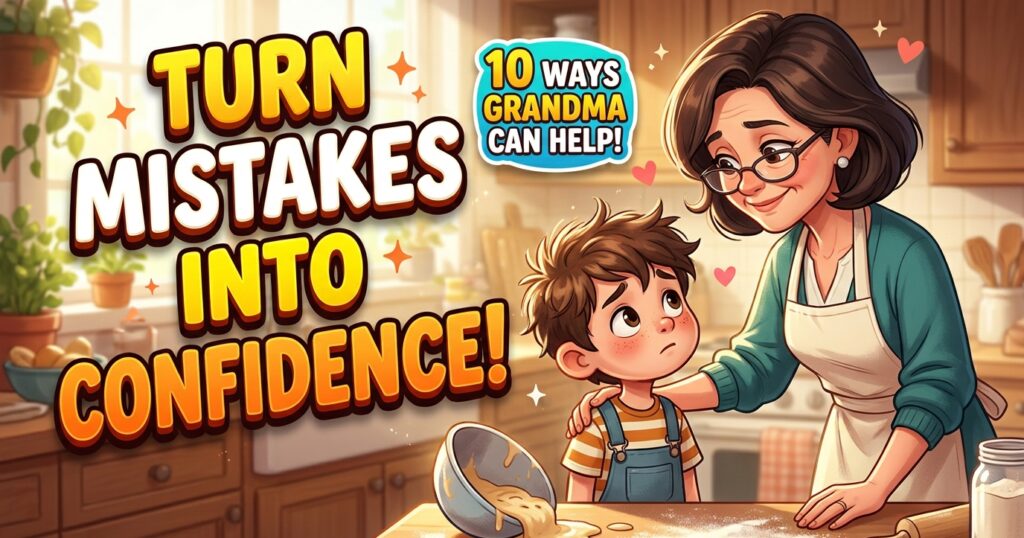
Here are 10 ways Grandma can turn those difficult moments into opportunities to build confidence, courage, and resilience.
1. Remind Them That Their Mistake Doesn’t Change How You See Them
Imagine your grandchild accidentally breaks something valuable in your home. Before you say anything, their face drops, and they start apologizing.
Instead of immediately expressing frustration, you might say, “Oh, sweetheart, I know you didn’t mean to do that. We’ll figure out what to do next.”
That doesn’t mean ignoring what happened. You can still discuss being careful and taking responsibility.
But there’s a difference between teaching a child that their actions have consequences and making them feel like they’ve disappointed you as a person.
Our grandchildren need to know that making a bad decision doesn’t make them bad children.
2. Share a Time When You Made a Similar Mistake
Sometimes our grandchildren look at us as though we’ve always had everything figured out.
If only they knew!
We’ve burned dinners, forgotten important dates, said things we regretted, and made plenty of questionable decisions ourselves.
Sharing those experiences can be surprisingly comforting.
If your grandchild makes a mistake while cooking, tell them about the cake you once forgot to put sugar in. If they embarrass themselves at school, share a similar childhood memory.
The goal isn’t to make their mistake about you. It’s to show them that even the adults they admire have gotten things wrong.
Sometimes hearing Grandma say, “Oh, honey, I’ve done that too!” is exactly what they need.
3. Ask What They Learned Before Telling Them What They Did Wrong
We grandmas sometimes jump into teaching mode a little too quickly.
Our grandchild makes a mistake, and before they’ve processed what happened, we’re explaining everything they should have done differently.
But children often understand more than we realize.
Instead of immediately giving advice, try asking, “What do you think you’ll do differently next time?”
Perhaps your grandchild already knows they should have studied earlier, listened more carefully, or thought before speaking.
Allowing them to recognize the lesson themselves helps them develop confidence in their own judgment.
And if they’re genuinely unsure, that’s when Grandma can gently guide them.
4. Praise Their Courage to Try, Even When Things Don’t Work Out
Picture your grandchild trying out for a sports team and not making it.
They’ve practiced for weeks, worked up the courage to participate, and now they’re feeling defeated.
It’s tempting to immediately insist that the coach made a mistake.
But what if we focused on something they genuinely deserve credit for?
Their courage.
You could say, “I’m really proud of you for trying out, especially when you knew it wouldn’t be easy.”
That encouragement teaches children that their efforts matter even when they don’t get the results they hoped for.
And when Grandma recognizes their bravery, trying again might feel a little less frightening.
5. Help Them Fix What Went Wrong Instead of Fixing Everything for Them
Watching a grandchild struggle can really test a grandma’s patience, especially when we know exactly how to solve the problem!
Maybe they’ve assembled a toy incorrectly, made a mess while baking, or forgotten something important.
Our instinct is often to step in.
But sometimes the most confidence-building thing we can do is ask, “What do you think we can do to fix this?”
If they spill something, let them help clean it up. If they hurt someone’s feelings, encourage them to apologize.
Confidence doesn’t always come from getting things right. Sometimes it comes from discovering you can make things right after getting them wrong.
6. Stop Bringing Up Their Old Mistakes
Have you noticed how easily families turn an embarrassing childhood moment into a story that gets told repeatedly?
Maybe a grandchild once said something inappropriate at a family gathering or accidentally ruined a birthday cake.
At first, everyone laughs.
But years later, that same grandchild might still be hearing about it every Thanksgiving.
Even when we mean no harm, repeatedly reminding children of their embarrassing moments can make them feel like they’ll never escape them.
We can laugh together about funny memories, but if our grandchild looks uncomfortable or asks us to stop, we should respect that.
Children deserve the freedom to grow beyond the things they once got wrong.
7. Give Them Another Chance to Try
One of the best ways to rebuild confidence after a mistake is to create an opportunity for another attempt.
Suppose your grandchild tries making pancakes and accidentally burns them.
Instead of taking over, you could say, “Well, how about we give the next batch another go?”
If they struggle to read something aloud, offer to practice privately. If they make a mistake during a game, encourage another round.
Of course, some mistakes require more time and reflection.
But whenever appropriate, giving our grandchildren another chance helps them discover that one unsuccessful attempt doesn’t have to be the end of the story.
8. Correct Them Privately Whenever Possible
Imagine being corrected in front of an entire room of people.
Even as adults, most of us would feel embarrassed.
Now imagine how uncomfortable that might be for a child, especially in front of siblings, cousins, or friends.
When a mistake needs addressing, we can often preserve our grandchild’s dignity by speaking privately.
Instead of announcing, “You know better than that!” across the dinner table, quietly ask them to step aside.
Then explain what happened and what needs to change.
Naturally, dangerous behavior requires immediate intervention.
But ordinary mistakes rarely need an audience.
Correcting children privately teaches them that accountability doesn’t have to come with humiliation.
9. Help Them Understand That One Mistake Doesn’t Define Their Abilities
Children can be surprisingly hard on themselves.
A grandchild struggling with math might announce, “I’m terrible at math!”
One who loses a game might say, “I never win anything.”
Instead of simply saying, “That’s not true,” remind them of their progress.
“You had trouble with this problem, but remember how much you’ve improved since last month?”
We can also encourage them to use one powerful little word: yet.
“I haven’t figured it out yet.”
“I can’t do that yet.”
It’s a small change that reminds children there’s still room to improve.
And sometimes that little bit of hope is enough to keep them going.
10. Let Them See That Grandma Is Still Learning Too
Perhaps one of the most powerful lessons we can give our grandchildren comes from how we handle our own mistakes.
What happens when Grandma gets something wrong?
Do we become frustrated, blame someone else, or pretend nothing happened?
Or do we acknowledge it and try again?
If you misunderstand something your grandchild tells you, admit it.
If you lose your patience, apologize.
You might say, “I’m sorry I raised my voice earlier. I was frustrated, but I should have handled that differently.”
There’s something meaningful about a child hearing an adult acknowledge a mistake without making excuses.
It shows them that growing older doesn’t mean becoming perfect.
It means continuing to learn.
The Beautiful Gift of Making Mistakes Feel Less Scary
One day, our grandchildren will face mistakes we won’t be there to help them through.
They’ll experience disappointments, make difficult decisions, and occasionally wish they could turn back time.
And while we can’t protect them from every wrong turn, we can help shape the voice they hear in their heads when something goes wrong.
Will that voice tell them they’re incapable or not good enough?
Or will it remind them that they can take responsibility, learn something valuable, and find the courage to try again?
I hope that through the little moments we share today, our grandchildren carry a bit of Grandma’s encouragement into those future challenges.
Because years from now, they might not remember every piece of advice we gave them.
But they may always remember that when they got something wrong, Grandma helped them believe they could still get things right.