Disclaimer: Devoted Grandma is reader-supported. If you purchase anything through my site, I may receive a small commission (at no cost to you). Thank you.
We grandmas can carry on a conversation anywhere. A checkout line, a school hallway, the bleachers at a ballgame- give us a friendly face, and we’ll find something to talk about.
And naturally, our grandchildren are one of our favorite subjects.
But sometimes, somewhere between “I’m just being affectionate” and “I thought that was a funny story,” we notice the look. The tight smile. The lowered eyes. The whispered, “Grandma, please.”
We don’t have to become so careful that every outing feels like a test. Still, a few small changes can help our grandchildren enjoy being out with us without wondering what we might announce next.
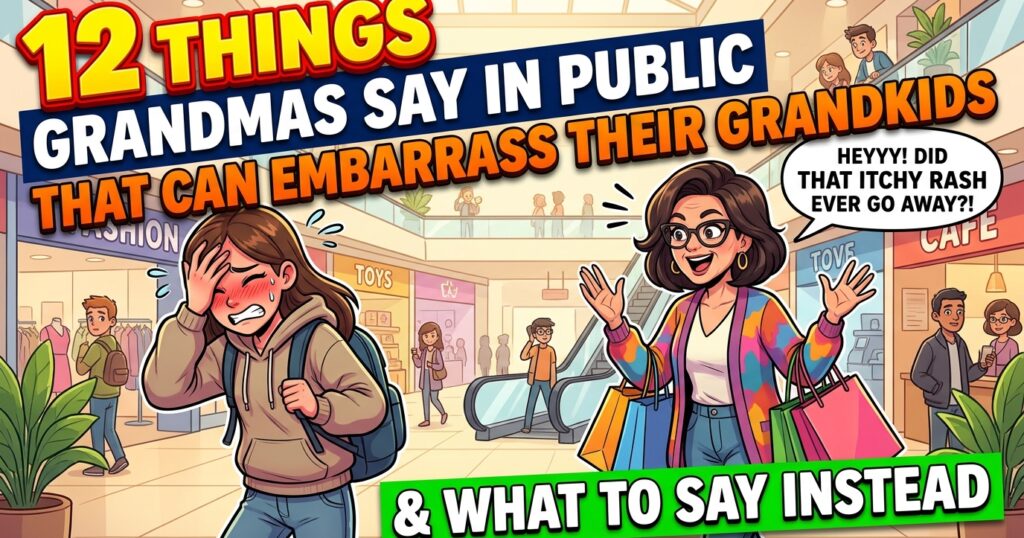
Here are twelve familiar remarks worth reconsidering, along with kinder ways to express what we mean.
1. “Give Grandma a kiss! Don’t you love me anymore?”
At home, your grandchild might happily curl up beside you. Outside school, with three friends watching, they may prefer a quick goodbye.
That change can sting a little, but it doesn’t tell us how much they love us. Asking them to prove their affection publicly puts them in an uncomfortable spot.
Try saying: “It was lovely seeing you, sweetheart. Hug, wave, or see you later?”
Then accept their choice warmly. A cheerful wave can carry plenty of love.
2. “You used to run around here in nothing but your underwear!”
We remember the adorable toddler. Their friends see the person standing in front of them now.
Stories about potty training, bath time, bedwetting, or little childhood mishaps may be precious memories to us. Our grandchildren may consider them private, especially when they’re trying hard to feel grown up.
Try saying: “I have some lovely memories of you growing up.”
If you want to tell a particular story, ask privately first. Being part of a memory doesn’t automatically mean they want an audience for it.
3. “Is that your boyfriend?”
A grandchild speaks to someone at the grocery store, and suddenly Grandma is planning a wedding in aisle four.
It can feel like harmless teasing, but it may make an ordinary friendship awkward. Worse, they may start avoiding introductions because they expect us to turn everyone into a romance.
Try saying: “Would you like to introduce me to your friend?”
Let them explain the relationship in their own words. A friendly hello is usually all the occasion needs.
4. “You’re actually going out dressed like that?”
We may have questions about the ripped jeans. Quite a few questions, frankly.
But commenting on their appearance in front of relatives, friends, or strangers can leave them feeling exposed. Even a joking remark may land harder than we expect.
Try saying: “Will you be comfortable in that for where we’re going?”
Use that only if comfort or the occasion is the real concern. If we simply dislike the outfit, we can often let the moment pass without a review.
5. “Look how much you’ve eaten!”
Whether said with surprise, admiration, or concern, this makes their plate everyone’s business.
The same goes for “You barely touched anything” or “Are you sure you need dessert?” A family meal becomes uncomfortable when a grandchild feels watched with every bite.
Try saying: “How’s your meal?”
We can enjoy the conversation without keeping a public tally. If there’s a genuine concern, it deserves a thoughtful, private discussion with the appropriate adult.
6. “Tell everyone about that bad grade you got.”
Perhaps we’re hoping a relative will offer encouragement. Perhaps we think talking openly will show that a disappointing result isn’t the end of the world.
But our grandchild may hear an announcement of something they were already struggling to face.
Try saying: “How has school been treating you?”
Let them choose what to share. In private, we can add, “If you want to talk about that exam, I’m here.”
They deserve some say over who hears about their setbacks.
7. “Why can’t you be more like your sister?”
Comparisons can slip out during ordinary outings. One grandchild sits quietly, another gets restless, and suddenly someone becomes the example everyone else should follow.
That can embarrass both children and turn a manageable problem into resentment.
Try saying: “I need you to stay beside me while we finish shopping.”
Address the specific behavior calmly. Your grandchild will understand the request more clearly when they don’t also have to defend who they are.
8. “Oh, she’s our shy one. She never talks.”
Sometimes we say this to explain an awkward silence or rescue a grandchild from pressure.
But now everyone is looking at the child who was already uncomfortable. Labels such as “the shy one,” “the difficult one,” or “our little drama queen” can also follow them long after their behavior changes.
Try saying: “We’re happy to be here. Give us a moment to settle in.”
You can carry the conversation briefly without making your grandchild the subject of it.
9. “I bought you that expensive gift, and you can’t even say hello?”
It’s reasonable to want courtesy. But mentioning the price of a gift in front of others can make affection feel like a debt.
It also turns a missed greeting into a public account of what Grandma has spent.
Try saying: “Hello, sweetheart. It’s good to see you.”
If you’re repeatedly feeling ignored, bring it up later: “It means a lot when you greet me when I arrive.”
That gives them something clear to work on without attaching a bill.
10. “Tell them what you told me about your mom.”
A grandchild may confide in us after an argument at home. Repeating that conversation at lunch with relatives can leave them feeling caught between adults they love.
Even saying, “Go on, tell everyone,” reveals that there is something private to discuss.
Try saying: “I’ll let you decide what you’d like to share.”
Ordinary confidences deserve care. If something concerns their safety, involve the appropriate person privately rather than turning it into a family conversation.
11. “Sing that song for everyone! Don’t be silly.”
We know how talented they are. Naturally, we want everyone else to know, too.
But singing in Grandma’s kitchen is different from performing in a crowded restaurant. A reluctant child shouldn’t have to choose between pleasing us and feeling comfortable.
Try saying: “Would you like to share your song, or save it for another time?”
Ask once and accept the answer. We can be proud of their talent even when nobody gets a demonstration.
12. “Don’t mind him. He’s just being a teenager.”
When a grandchild is quiet, upset, or disagrees with us, this remark may get a knowing laugh from other adults.
For the grandchild, though, it can feel dismissive. They may have a real reason for their mood, and now their feelings have become the joke.
Try saying: “Let’s talk about it later, sweetheart.”
If their behavior needs correcting, be specific and discreet. Growing older is hard enough without having your age used as the explanation for everything you do.
We will occasionally get this wrong. Most of us have a story that escaped before our better judgment could catch it.
When that happens, a simple apology helps: “I’m sorry I shared that. I understand why you were embarrassed, and I’ll keep it private next time.”
Our grandchildren can enjoy our humor, affection, and wonderful collection of memories while still having boundaries. Learning where those boundaries are gives us a better chance of hearing the words every grandma loves:
“Come with us, Grandma.”