Disclaimer: Devoted Grandma is reader-supported. If you purchase anything through my site, I may receive a small commission (at no cost to you). Thank you.
A gift can be thoughtful and still be a poor fit for the moment. The parents may have already bought something similar. A grandchild’s interests may have changed. The family may not have room for it, or the hoped-for surprise may create more work than pleasure.
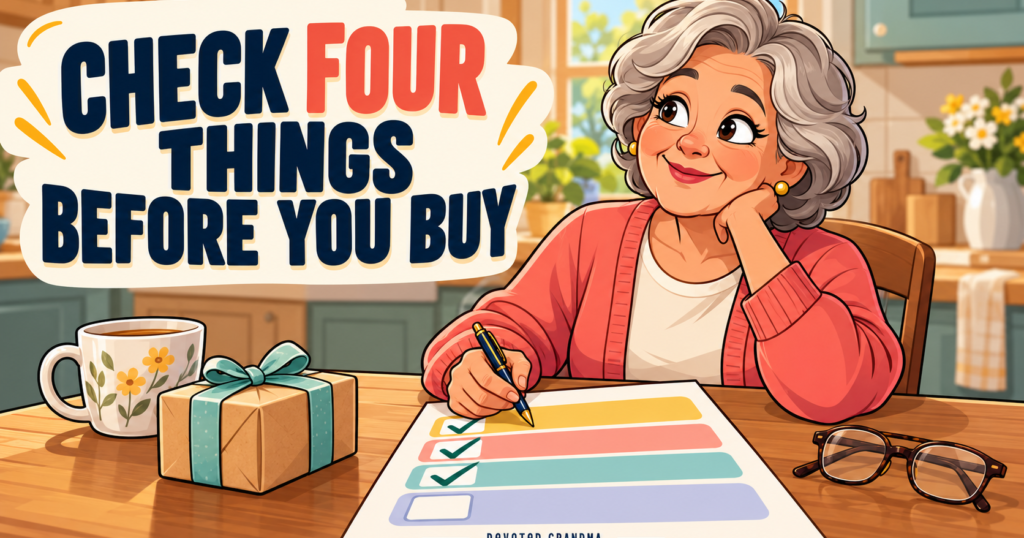
Before buying, try completing this simple card:
Parent: Yes, a gift is welcome. Please avoid toys with loud sounds.
Preference: She is currently interested in drawing animals.
Fit: It should be easy to store and useful without adult setup.
Fallback: If I cannot find the right item within my budget, I will send a warm note and save the gift for another occasion.
This is not a gift list, and it is not a warning catalogue. It is a short pause that helps affection and real family circumstances meet before checkout.
Start with parent permission
Permission is more than asking, “Can I buy her a present?” A general yes may not cover the details that matter inside the household.
Parents may be managing limited space, sibling expectations, safety needs, household rules, or an already crowded occasion. Respecting those boundaries does not make a gift less loving. It helps the gift enter the family without creating a problem someone else must solve.
Try one of these surprise-preserving questions:
- “I’m considering a small gift for Maya. Is that welcome right now?”
- “Are there any categories you would rather I avoid?”
- “Would something to use, something to do, or no gift at all fit best this time?”
- “I want to keep the exact item a surprise. Is there a size, space, or household limit I should know?”
If a parent says no, treat that answer as useful information, not a rejection of your love. Grandparents and parents will not always make the same choices. This thoughtful guide to disagreeing with how the grandkids are being raised can help when respecting a decision feels difficult.
Check the child’s actual preference
A grandchild can love Grandma and still feel unenthusiastic about a particular gift. That reaction does not measure the relationship.
Look for a current interest, not simply an interest you remember. Children can move quickly from dinosaurs to weather, or from crafts to basketball. Older grandkids may still enjoy something privately that they no longer want displayed or discussed in front of friends.
You do not need to conduct an interrogation. One light question may be enough:
- “What have you enjoyed doing lately?”
- “Is there anything you’re learning or making right now?”
- “Would you rather have a surprise, choose together, or skip presents this time?”
For a young child, ask the parent what the child repeatedly reaches for during ordinary play. For a school-age child, offer two broad categories rather than naming a product. A teenager may prefer a direct question and some control. An adult grandchild may appreciate being asked whether gifts are welcome at all.
Preference is not an order Grandma must fill. It is one part of the decision, alongside budget, family boundaries, and practical fit.
Make sure the gift fits real life
Now picture what happens after the wrapping comes off. Where will the item live? Who must assemble, charge, supervise, wash, transport, or store it? Does it suit the child’s age and the household’s available time?
A practical fit check can include:
- Space: Is there a sensible place to keep it?
- Use: Can the child enjoy it under the family’s usual rules?
- Upkeep: Will it create a job for a parent?
- Timing: Is this a good season for the item?
- Budget: Can Grandma buy it comfortably, without expecting a particular reaction in return?
A modest gift that fits may be more welcome than an impressive gift that complicates family life. The same principle applies to money. Set the spending limit before browsing, and let that limit remain firm even if advertising suggests that love should cost more.
Sometimes the best fit is an experience or time together, but only when the parents agree and the practical details are settled. “We’ll go somewhere special” can quietly become a scheduling burden. A better offer is, “Would a Saturday morning at the library work, if I handle transportation and follow your plans for the day?”
When an older grandchild is making choices independently, respect matters more than guessing. These examples of giving a grandchild your blessing offer another way to show support without taking over.
Choose a fallback before you shop
The fallback is what keeps the search calm. Decide in advance what you will do if permission is uncertain, the preference is unclear, the right option exceeds your budget, or nothing fits well.
Your fallback might be:
- Wait and ask again closer to the occasion.
- Invite the grandchild to choose with you.
- Give a card with a personal message.
- Plan simple time together, with the parent’s agreement.
- Mark the occasion warmly without purchasing anything.
A no-purchase result is not a failed check. It may be the wisest outcome. Not every family exchanges gifts for every occasion, and not every loving moment needs an object attached to it.
Use the card when you live far away
Distance makes it harder to notice changing interests, available space, and household routines. It also makes returns and exchanges more complicated.
Send the parent a short message with the first three questions together:
“I’m thinking about a small surprise for Jordan. Is a gift welcome? What is he genuinely interested in lately, and is there anything that would not fit your space or routines? No rush, and it is perfectly fine if this is not a good time.”
If you want the gift itself to remain secret, ask about boundaries and categories rather than showing the exact item. If you need measurements, a mailing date, or delivery help, settle those details before ordering.
Keep the four answers reusable
Write the headings on an index card or save them in a phone note:
Parent. Preference. Fit. Fallback.
The answers may take only a few lines. What matters is that none of the four spaces is filled with a hopeful guess.
This check cannot guarantee delight, and it should not turn gift-giving into a serious interview. It simply gives Grandma a clear stopping point before a loving idea becomes a purchase.
If all four answers fit, buy with confidence inside your budget. If one answer is missing, pause. The gift can wait. The relationship does not depend on what is inside a box.