
Disclaimer: Devoted Grandma is reader-supported. If you purchase anything through my site, I may receive a small commission (at no cost to you). Thank you.
“I don’t like that anymore.”
A grandchild may be talking about a sandwich, a game, a nickname, or a family tradition. Yet the change can catch Grandma by surprise when yesterday’s favorite becomes today’s firm no.
Preferences change as children grow. A refusal is not necessarily a rejection of us, our home, or the memories we share. Sometimes it simply means, “Please notice who I am today.”
We do not need to hand over every decision. Parents still set family rules, and adults remain responsible for safety, schedules, budgets, and respectful behavior. Within those boundaries, however, a few genuine choices can help a grandchild feel personally considered.
Choose the moment that fits
- Planning time together: Try 1 or 2.
- Food: Try 3.
- Conversation: Try 4.
- Affection: Try 5.
- Activities: Try 6.
- Traditions: Try 7.
- Several grandkids: Try 8.
- Following up later: Try 9.
One small choice is enough. The goal is to show, in an ordinary moment, “I am paying attention to you.”
1. Offer two realistic plans
Notice: Your grandchild hesitates when you announce an outing or asks what else you could do.
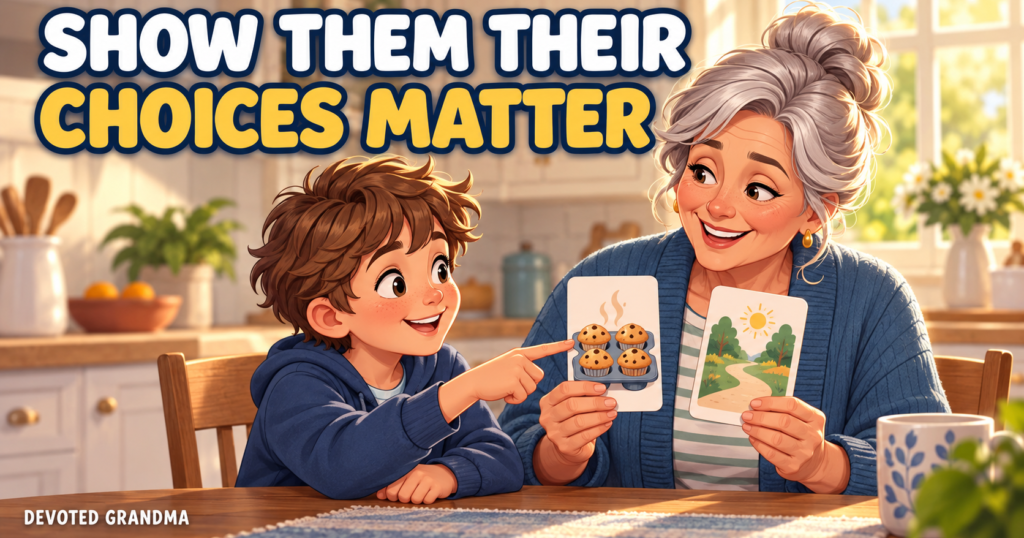
Try: “We have time for the park or baking muffins. Which sounds better today?” Offer only choices you can happily provide.
Adapt it: A young child may need two concrete options. An older grandchild might be invited to suggest another idea that fits your time.
Keep the boundary: Grandma and the parents decide what is safe, affordable, and possible.
Follow up: “You chose the park last time. Does that still sound good today?”
2. Ask about the shape of the visit
Notice: Your grandchild enjoys seeing you but becomes tired, restless, or quiet during a long visit.
Try: “Would you rather come for lunch or spend the afternoon with me?”
Adapt it: Parents will usually answer for younger children. Teens may be able to say whether a shorter visit, later start, or quieter plan suits them better.
Keep the boundary: Coordinate timing with the parent. Do not ask a child to choose between Grandma and a parent’s plans. Read more about why a grandchild might prefer a shorter visit.
Follow up: “Was that amount of time comfortable, or should we plan differently next time?”
3. Give a small food choice
Notice: A once-loved meal is left untouched, or your grandchild quietly removes part of it.
Try: “I’m making soup tonight. Would you like bread or crackers with it?”
Adapt it: Young children can choose between two approved sides. Older grandkids can help plan or prepare one part of the meal.
Keep the boundary: Follow parent guidance about allergies, medical needs, and household food rules. A reasonable choice does not require Grandma to become a short-order cook.
Follow up: “You liked the apple slices today. Should I remember those for next time?”
4. Let them choose the conversation door
Notice: “How was school?” gets a one-word answer, but your grandchild becomes animated around a hobby or project.
Try: “Would you rather tell me about something funny, something you’re making, or something you’re looking forward to?”
Adapt it: Younger children may point, draw, or show you an object. Older grandkids may prefer to talk while doing something side by side.
Keep the boundary: They do not owe private details. If they disclose danger, abuse, or another serious safety concern, involve a responsible parent or appropriate help rather than promising secrecy.
Follow up: “You mentioned your model last week. Would you like to show me how it is going?”
5. Ask before giving affection
Notice: Your grandchild stiffens, steps back, turns away, or does not approach for the usual hug.
Try: “Would you like a hug, a high five, or just a happy hello?” Receive the answer warmly.
Adapt it: A little one may choose a wave or silly handshake. A teen or adult grandchild may simply smile and begin talking.
Keep the boundary: Respecting a no to touch does not mean allowing rude behavior. You can still expect a civil greeting without physical affection.
Follow up: Ask again next time instead of treating one answer as permanent.
6. Make room for a changed favorite
Notice: A grandchild no longer reaches for the toys, games, or activities they once loved.
Try: “We used to enjoy puzzles together. Are you still in the mood for one, or would you rather do something different?”
Adapt it: A younger child might select from two visible activities. An older grandchild could bring a current interest or pick from these seated games for grandkids.
Keep the boundary: Screens, online accounts, tools, outdoor activities, and purchases still require appropriate permission and supervision.
Follow up: “You seemed to enjoy drawing together. Shall I leave the pencils out next time?”
7. Update a tradition without losing its meaning
Notice: Your grandchild seems embarrassed by matching pajamas, a childhood song, or another custom they have outgrown.
Try: “This tradition matters to me because it reminds me of our time together. Which part would you enjoy keeping, and what could we update?”
Adapt it: A child may choose a new cookie shape. A teen might take the family photo without wearing a themed outfit. An adult grandchild may suggest a new time or place.
Keep the boundary: Some family or faith practices are adult decisions. Explain that gently, then offer an appropriate choice within the practice.
Follow up: “I liked our new version. Is there anything you would change next year?”
8. Ask each grandchild separately
Notice: One confident sibling answers for everyone, or the quieter child simply agrees.
Try: “I want to hear what each of you thinks. You may choose different things.” Ask without comparing their answers.
Adapt it: Young children can take turns picking a song or snack. Older grandkids can have occasional one-on-one choices when time permits.
Keep the boundary: Fair does not always mean identical. Everyone can be heard even when the group must follow one plan. If attention becomes a struggle, try this fair-turn plan for two grandkids.
Follow up: “We chose your cousin’s game today. I wrote down your idea for our next turn.”
9. Remember one preference, then check it
Notice: Your grandchild mentions a favorite snack, changed nickname, upcoming event, or disliked activity.
Try: Make a private note if needed, then say later, “Last time you preferred being called Sam. Is that still right?” Remembering matters, but checking leaves room for change.
Adapt it: Confirm a young child’s details with a parent. With an older grandchild, keep the question casual rather than making your note feel like a record under inspection.
Keep the boundary: Do not save sensitive information, and never use a remembered preference to bypass a parent’s rule.
Follow up: “How did your Saturday performance go?” Find more examples among the details a grandchild may hope you remember.
The answer can change
A preference is not a contract. The child who wanted a hug yesterday may want a wave today. The teenager who enjoyed a long visit last month may need a shorter one during a busy week.
Grandma does not have to take these changes personally or surrender every adult decision. We can hold a kind boundary and remain curious: “That option is not available today, but I do want to hear what would help.”
Choose one ordinary moment and offer one honest choice. That small pause can tell a grandchild, “Your voice matters here, and I am still listening.”



