Disclaimer: Devoted Grandma is reader-supported. If you purchase anything through my site, I may receive a small commission (at no cost to you). Thank you.
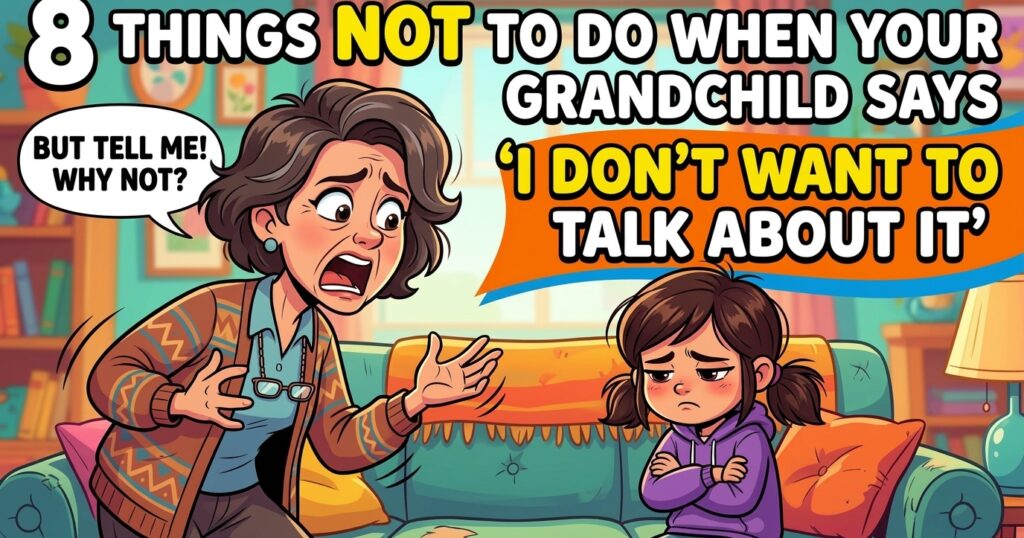
Few words can make a grandma worry faster than, “I don’t want to talk about it.”
You can tell something is wrong. Perhaps your grandchild’s voice sounds different, their smile has disappeared, or they are unusually quiet. Every grandmotherly instinct tells you to ask questions until you get to the bottom of it.
But when a grandchild closes the door to a conversation, pushing harder can make them lock it.
“I don’t want to talk about it” does not always mean, “I don’t trust you.” It may mean, “I don’t understand my feelings yet,” “I’m afraid you’ll be disappointed,” or simply, “I’m not ready.”
If you want your grandchild to come to you when the time feels right, here are eight things to avoid.
1. Don’t Keep Asking Questions
When you are worried, it is tempting to keep trying:
“What happened?”
“Did someone upset you?”
“Are you in trouble?”
“Was it something I did?”
You may be asking out of love, but to your grandchild, it can feel like an interrogation. The more questions you ask, the more pressure they may feel to protect themselves.
Instead, take a gentle step back and say:
“That’s okay. You don’t have to talk about it right now. I’m here whenever you’re ready.”
That one sentence gives them breathing room while reminding them that your door is still open.
2. Don’t Take It Personally
It can hurt when a grandchild does not want to confide in you, especially if you have always been close. You may wonder whether they trust someone else more or whether your relationship has changed.
Try not to respond with:
“I thought you could tell me anything.”
“Why don’t you trust me?”
“You used to talk to me.”
Those words can turn their private struggle into a responsibility to reassure you. Now, instead of dealing with their feelings, they must deal with Grandma’s hurt feelings too.
Their silence may have nothing to do with you. They might feel embarrassed, confused, overwhelmed, or unsure where to begin. Give them time without making them feel guilty for needing it.
3. Don’t Guess Out Loud
Grandmas can be remarkably good detectives. We notice changes in tone, behavior, friendships, and routines. But guessing aloud can make a child feel cornered.
“Is this about that friend you’ve been spending time with?”
“Did you fail your test?”
“Are you having trouble at home?”
Even if your guess is correct, your grandchild may feel exposed. If it is wrong, they may feel that you do not understand them at all.
You can acknowledge what you see without deciding what it means:
“You seem quieter than usual today. I won’t push, but I want you to know I noticed and I care.”
That leaves room for them to tell their own story in their own way.
4. Don’t Immediately Offer Advice
Sometimes a grandchild finally shares one small detail, and Grandma quickly reaches for a solution.
“Well, here’s what you need to do…”
“You should have…”
“If I were you…”
Advice can be helpful, but giving it too soon may shut the conversation down again. Your grandchild may not be ready to solve the problem. They might first need to feel heard.
If they begin to open up, listen before trying to fix anything. You can ask:
“Would you like me to listen, help you think it through, or give you some advice?”
That simple question lets them tell you what kind of support they need.
5. Don’t Minimize Their Feelings
What seems small to an adult can feel enormous to a child or teenager. A disagreement with a friend, an embarrassing moment at school, or being left out of a group chat might not seem serious to you. To them, it may feel like their whole world has shifted.
Avoid saying:
“That’s nothing to be upset about.”
“You’ll laugh about this one day.”
“There are bigger problems in life.”
“You’re being too sensitive.”
These phrases may be meant to provide perspective, but they can sound like, “Your feelings do not matter.”
Try saying:
“I can see this is really affecting you.”
You do not have to fully understand their reaction to respect that it is real.
6. Don’t Share Their Business Without Permission
If your grandchild eventually tells you something private, resist the temptation to repeat it to another family member simply because you are concerned.
Children and teenagers remember who protects their confidence. If they discover that their private words have traveled around the family, they may be much less likely to open up again.
You can say:
“I’ll respect your privacy. If I become worried that you or someone else may be in danger, I may need to get help, but I’ll try to talk with you about that first.”
Privacy is important, but safety comes first. If your grandchild mentions abuse, self-harm, threats, exploitation, or immediate danger, involve a trusted parent, guardian, or qualified professional. That is not gossip or betrayal. It is protection.
7. Don’t Punish Them With Silence
Some grandmas become distant after being shut out. They may stop asking their grandchild to join them, speak more coldly, or wait for the child to apologize.
But emotional distance can make your grandchild believe your love depends on how much they tell you.
Keep treating them warmly. Make them a snack. Send a funny picture. Invite them to sit with you. Talk about ordinary things. Sometimes the safest path back to a difficult conversation begins with a joke, a car ride, or quietly folding laundry together.
Your message should be: “You do not have to explain everything to receive my love.”
8. Don’t Assume They Will Never Tell You
“I don’t want to talk about it” often means “not now,” rather than “not ever.”
Your grandchild may need a few minutes, several days, or even longer to understand what happened and find the right words. Do not give up on them, but do not chase them either.
You can gently check in later:
“You don’t have to explain anything, but I wanted to see how you’re feeling today.”
Then let the moment breathe.
Children often open up when there is less pressure to make eye contact—during a walk, while riding in the car, over a simple activity, or late at night. Stay available and allow the conversation to arrive naturally.
Leave the Door Open
When your grandchild says, “I don’t want to talk about it,” your job is not always to get the whole story immediately. Sometimes your job is simply to make it safe for them to return.
Respect the boundary. Keep showing affection. Notice meaningful changes. Check in gently. Most importantly, show your grandchild that your love does not disappear when their words do.
You might not hear the story today. But if you respond with patience instead of pressure, you may become the person they choose when they are finally ready to tell it.