
Disclaimer: Devoted Grandma is reader-supported. If you purchase anything through my site, I may receive a small commission (at no cost to you). Thank you.
Most grandmothers would be horrified to think one of their grandchildren felt less loved than another.
We don’t wake up in the morning and decide, “Today I’m going to make one grandchild feel unimportant.”
But children and grandchildren don’t always judge love by what we intend. They often judge it by what they repeatedly experience.
They notice who gets the enthusiastic greeting. Who gets invited first. Who Grandma talks about most. Who receives the thoughtful gifts. Who gets forgiven quickly. And who seems to be expected to simply understand.
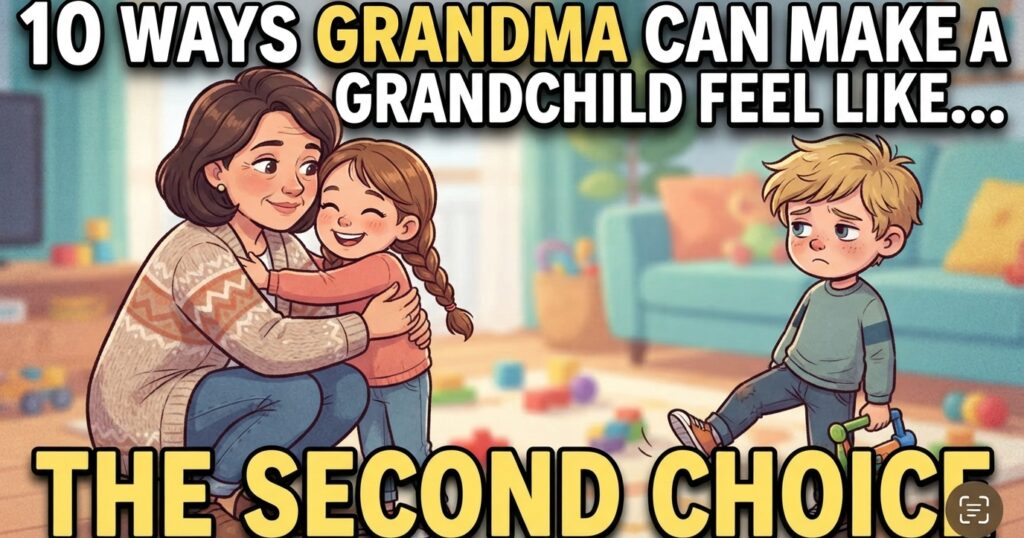
Sometimes a grandchild can begin to feel like second choice even when Grandma genuinely loves them just as much.
Here are 10 ways it can happen without us realizing it.
1. Always Talking About Another Grandchild
There is nothing wrong with being proud of your grandchildren. The problem begins when one grandchild constantly hears about another.
“Your cousin made the honor roll again.”
“Your brother is such a hard worker.”
“Your sister calls me every week.”
Even when these comments are innocent, the grandchild listening may hear something completely different:
Grandma wishes I were more like them.
Every grandchild wants to feel that Grandma sees something wonderful in them, too.
Make a point of noticing their interests, personality, progress, humor, kindness, creativity, or determination without immediately comparing it to somebody else.
2. Showing More Excitement When Certain Grandkids Visit
Grandchildren notice greetings.
One child walks through the door, and Grandma lights up, throws her arms open, and says, “There’s my baby!”
Another arrives and gets a casual, “Oh, hello sweetheart.”
You may not even realize there was a difference.
But they might.
Children are surprisingly good at reading facial expressions, tone of voice, body language, and enthusiasm.
You don’t have to greet every grandchild in exactly the same way. Just make sure each one feels that their arrival genuinely makes you happy.
3. Giving One Grandchild Much More of Your Time
Sometimes circumstances naturally mean we see one grandchild more.
Perhaps they live nearby while another lives hours away. Maybe you babysit one regularly. Perhaps one child’s parents are more comfortable asking for help.
That doesn’t automatically mean favoritism.
But the grandchild who gets less time may still feel the difference.
That is why intentional connection matters.
Call them. Text them. Remember their important days. Send them something silly. Ask about the game they told you about last week.
You cannot always give every grandchild equal amounts of time, but you can make each one feel remembered.
4. Putting More Thought Into One Grandchild’s Gifts
Grandchildren aren’t supposed to measure love by presents.
But sometimes presents reveal something deeper.
Imagine one grandchild receiving a carefully chosen gift connected to something they have talked about for months while another receives whatever Grandma happened to find at the last minute.
The price might even be identical.
The emotional message isn’t.
One gift says, I know you.
The other can accidentally say, I needed to get you something.
Thoughtfulness matters far more than money. Even an inexpensive present can feel incredibly special when it shows that Grandma listens.
5. Comparing Their Accomplishments
Comparisons are one of the fastest ways to make a grandchild feel like they are competing for Grandma’s approval.
“Your brother was reading at your age.”
“Your cousin already has a job.”
“Your sister never gave her parents this much trouble.”
Even positive comparisons can create pressure.
Every child develops differently. They have different strengths, personalities, struggles, interests, and opportunities.
Celebrate the grandchild standing in front of you instead of constantly measuring them against somebody else.
They shouldn’t have to win a family competition just to feel Grandma is proud of them.
6. Always Taking Another Grandchild’s Side
Grandchildren argue.
Cousins disagree. Siblings annoy one another. Somebody grabs something, somebody says something rude, and suddenly Grandma finds herself acting as referee.
But be careful about automatically deciding who is wrong.
Families sometimes create roles without realizing it.
One child becomes “the sensible one.”
Another becomes “the difficult one.”
Once those labels form, Grandma may unconsciously believe one child before even hearing the full story.
Give everyone a chance to explain themselves.
A grandchild who believes Grandma will automatically side against them may eventually stop coming to her when something is wrong.
7. Making Plans Around One Grandchild’s Interests
Perhaps one grandchild loves shopping, so every outing becomes a shopping trip.
Another loves sports, so weekends revolve around their games.
Meanwhile, another child patiently tags along doing things they barely enjoy.
Grandma doesn’t need to create perfectly equal entertainment schedules.
But sometimes ask:
“What would you like us to do today?”
That question can mean a lot.
It tells your grandchild that spending time together isn’t simply about fitting into everybody else’s plans. Their interests matter too.
8. Expecting the “Easy” Grandchild to Always Understand
This one happens surprisingly often.
A calm, independent grandchild may receive less attention precisely because they demand less of it.
Grandma thinks:
She’ll understand.
He doesn’t mind.
She’s always been independent.
Meanwhile, the louder or more demanding grandchild receives more calls, reassurance, attention, and help.
Being easygoing doesn’t mean someone doesn’t want to feel special.
Sometimes the child who asks for the least needs someone to intentionally choose them.
9. Remembering Everything About One Grandchild and Very Little About Another
“What was the name of your school again?”
“What sport are you playing?”
“Are you still working at that place?”
Meanwhile, Grandma remembers every tiny detail about another grandchild.
Nobody remembers everything. That isn’t the problem.
The problem is when forgetting becomes a pattern.
Remembering small details tells people that their lives matter to us.
You might keep simple notes in your phone about important dates, hobbies, school events, favorite foods, upcoming exams, performances, or big plans.
Then you can ask:
“How did your presentation go?”
That little question quietly says:
I remembered you.
10. Assuming They Already Know You Love Them
This may be the biggest mistake of all.
Grandma thinks:
Of course she knows I love her.
He knows he means the world to me.
Maybe they do.
But love shouldn’t always have to be guessed.
Say it.
“I’m so glad you’re my grandson.”
“I love spending time with you.”
“I’m proud of the person you’re becoming.”
“I was thinking about you today.”
“I always enjoy hearing from you.”
Grandchildren of every age need reassurance sometimes.
Even grown grandchildren can quietly wonder where they stand.
Every Grandchild Wants to Feel Chosen
Fairness between grandchildren doesn’t mean everything must be perfectly equal.
One grandchild may need more help during a difficult season. Another may live nearby. One may call every day while another barely texts. Relationships naturally look different.
The goal isn’t to keep a scoreboard.
The goal is to make sure every grandchild can confidently say:
Grandma sees me.
Grandma knows me.
Grandma enjoys being with me.
I matter to her.
Sometimes preventing favoritism isn’t about making dramatic changes. It is about noticing the little patterns we have fallen into.
Call the grandchild you haven’t spoken to lately.
Ask the quiet one what they want to do.
Celebrate something uniquely theirs.
Remember the thing they told you last week.
And every once in a while, make each grandchild feel like they are not merely one of many people Grandma loves.
Make them feel chosen.



