
Disclaimer: Devoted Grandma is reader-supported. If you purchase anything through my site, I may receive a small commission (at no cost to you). Thank you.
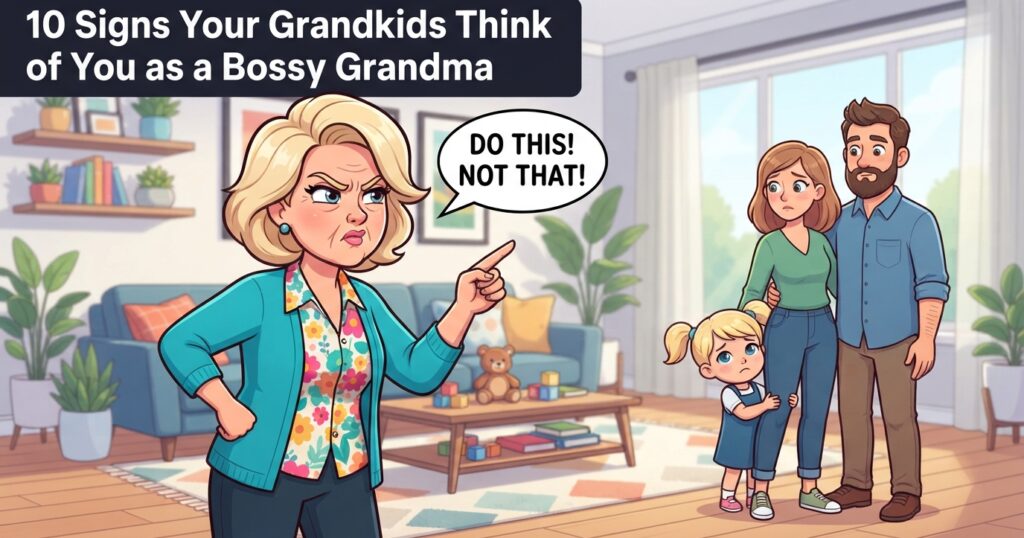
Most grandmothers do not wake up in the morning thinking, “How can I boss everyone around today?”
Usually, it comes from love.
We want our grandchildren to use good manners, make wise choices, stay safe, eat properly, dress warmly, work hard, and avoid mistakes we can already see coming. After living a little longer, it is difficult to watch someone we love walk toward a problem without saying something.
Unfortunately, what feels like helpful guidance to us can sometimes feel like constant instruction to our grandkids.
There is a difference between being involved and trying to be in charge. The trouble is that the line between the two can become blurry, especially when we are convinced we know what is best.
Your grandkids may never directly call you bossy. They might not want to hurt your feelings or start an argument. Instead, they may reveal how they feel through their reactions, body language, and the things they stop sharing with you.
Here are ten signs your grandkids may see you as a bossy grandma.
1. They Immediately Become Defensive Around You
You ask one simple question, and they respond as though they are being interrogated.
“Did you finish your homework?”
“Yes, Grandma!”
“Are you wearing that outside?”
“I know what I’m doing!”
Their defensive reaction may seem rude or unnecessary, but it could be a sign that they are expecting a lecture. Even a harmless question may sound like the beginning of another set of instructions.
When grandchildren regularly feel corrected, they begin protecting themselves before the criticism has even arrived.
Try asking with curiosity instead of suspicion. Rather than saying, “You are not going out dressed like that, are you?” you might say, “Tell me about the outfit you chose.”
The goal is to begin a conversation, not announce a decision.
2. They Say “I Know” Before You Finish Speaking
“I know, Grandma.”
Those three words can be frustrating, especially when you are trying to help. However, if you hear them constantly, your grandchild may feel that you repeat instructions they already understand.
They may know they need to take a coat. They may know they should thank the person who gave them a gift. They may know their schoolwork matters.
Sometimes young people need reminders. But reminding them of every little thing can make them feel as though you do not trust their judgment.
Before giving advice, pause and ask yourself, “Do they truly need to hear this, or do I simply need to say it?”
Giving them the chance to remember on their own can build confidence and responsibility.
3. They Stop Telling You Their Plans
Grandkids usually enjoy sharing exciting plans with people who will listen without immediately taking over.
However, they may become secretive if every plan is met with a long list of warnings, questions, corrections, and better ideas.
They tell you they are going to a friend’s house, and you begin asking what time they will leave, what time they will return, who else will be there, what they will eat, what they should wear, and whether they have considered staying home instead.
Your concern may be genuine, but the conversation can quickly make their plan feel like a problem that needs your approval.
When they share something, try beginning with, “That sounds exciting,” before offering advice. Let them enjoy the moment before you start preparing for every possible disaster.
4. They Look at Their Parents Before Answering You
You ask your grandchild a question, but instead of responding, they look toward their mother or father.
That glance may mean they are unsure who is actually in charge.
This often happens when a grandmother makes rules, promises rewards, gives permission, or announces consequences without checking with the parents first.
Even when you disagree with a parenting decision, grandchildren should not feel caught between Grandma’s rules and their parents’ rules.
Unless there is an immediate safety concern, allow the parents to lead. Supporting their authority does not make you less important. It shows your grandchildren that the adults in their lives respect one another.
5. They Become Quieter When You Enter the Room
Grandchildren should not feel as though Grandma’s arrival means the fun is over.
Yet if you frequently correct their volume, posture, clothing, language, table manners, hobbies, or use of technology, they may become guarded around you.
You might notice that the joking stops, the conversation changes, or everyone suddenly behaves more formally.
Of course, there are times when behavior needs to be corrected. But when every visit feels like an inspection, children and teenagers may struggle to relax.
Try noticing more of what they are doing well. A warm comment can change the atmosphere quickly.
“You two are having so much fun together.”
“I love hearing you laugh.”
“You handled that very maturely.”
Grandkids are more open to guidance when they do not feel that guidance is the only thing you offer.
6. They Avoid Asking for Your Opinion
A grandchild who once asked for your advice may begin making decisions without mentioning them to you.
This can happen when every request for an opinion turns into a command.
They ask, “Do you like this hairstyle?” and hear, “You should not wear your hair that way.”
They ask, “What do you think of this course?” and hear, “You need to choose something more practical.”
They ask for a thought, but receive a verdict.
Advice should leave room for the other person to decide. You can honestly share your opinion while still respecting their independence.
Try saying, “Here is what I think, but it is your decision, and I trust you to think it through.”
That final sentence may be the part they remember most.
7. They Joke About You Being in Charge
Children and teenagers often use humor to express something they do not feel comfortable saying directly.
Your grandchild might call you “the boss,” salute you after receiving an instruction, or jokingly ask whether they need written permission.
You may laugh along, but do not ignore the message completely.
A playful comment can contain a little truth. They may be gently telling you that they feel overly managed.
You do not need to become embarrassed or defensive. You can respond with humor and self-awareness.
“You may be right. Grandma has been giving too many orders today.”
Admitting it lightly shows them that you can listen without becoming upset.
8. They Rush Through Tasks When You Are Watching
You ask them to tidy up, wash the dishes, or get ready, and they suddenly become tense and hurried.
They may not be trying to do a poor job. They may feel watched and judged.
Standing over a grandchild while repeatedly correcting how they complete a task can make even a simple chore stressful.
“Not that way.”
“You missed a spot.”
“Use the other cloth.”
“Let me do it.”
If the result matters more than the exact method, give them space to find their own way. They might fold towels differently, organize a drawer differently, or prepare food differently.
Different does not always mean wrong.
Give a clear instruction, step back, and allow them to complete it. Independence grows when children are trusted with both the task and the process.
9. They Rarely Make Choices Around You
When you ask what they want to eat, watch, play, or do, they shrug and say, “Anything.”
Sometimes children truly do not care. Other times, they have learned that their choice will be corrected or replaced.
They choose a restaurant, and you suggest a healthier one. They choose a movie, and you say it looks silly. They choose an activity, and you explain why another one would be better.
Eventually, they may stop choosing.
A grandchild’s preference does not always need to match yours to be respected. Allowing them to make small choices teaches them that their opinions matter.
Even when you cannot agree to their first choice, acknowledge it before offering an alternative.
“I understand why you chose that. We cannot do it today, but let’s find something similar.”
10. They Seem More Relaxed With Other Adults
This may be the hardest sign to notice.
Your grandkids may talk openly, joke freely, and act naturally around another relative, teacher, neighbor, or family friend. With you, they may seem careful and restrained.
It does not necessarily mean they love that person more. It may simply mean they do not expect every conversation to become a lesson.
Grandkids need adults who guide them, but they also need adults who enjoy them.
Make room for conversations that have no hidden correction attached. Listen to their stories without searching for the moral. Watch their favorite show without commenting on every strange detail. Let them teach you something without proving you already know more.
Sometimes the best way to become closer is to stop trying so hard to improve them.
You Can Still Be a Strong Grandma Without Being the Boss
Recognizing yourself in a few of these signs does not make you a bad grandmother.
It makes you human.
Most bossy behavior begins with care, worry, experience, and a strong desire to protect the people we love. The answer is not to stop guiding your grandchildren completely. They still need boundaries, wisdom, honesty, and adults who are brave enough to speak up when something truly matters.
The key is learning when to guide and when to step back.
Before offering advice, ask whether it is necessary. Before correcting them, notice something they are doing well. Before making a decision, remember who the parent is. Before giving an order, consider whether a respectful request would work just as well.
Your grandchildren do not need you to control every part of their lives.
They need you to be a safe place where they can talk, laugh, make mistakes, grow, and still feel loved.
The less they feel managed by you, the more likely they are to willingly come to you when they truly need your guidance.



