
Disclaimer: Devoted Grandma is reader-supported. If you purchase anything through my site, I may receive a small commission (at no cost to you). Thank you.
There is a quiet kind of magic that happens when a child feels truly listened to.
It’s not the toys we buy them or the advice we give them that makes the deepest impression. More often than not, what grandkids remember most is the feeling that Grandma cared enough to stop what she was doing, look them in the eyes, and truly listen.
In today’s fast-moving world, children are often talked at more than they are listened to. Parents are busy juggling responsibilities, teachers manage crowded classrooms, and friends sometimes only half-hear each other between distractions. That’s why grandparents have such a beautiful opportunity. We can become a safe place where our grandchildren feel heard, understood, and valued.
The truth is, becoming a better listener isn’t about having the perfect advice ready. It’s about creating a space where your grandchild feels comfortable sharing their thoughts, feelings, dreams, and even their worries. When a child feels safe talking to you, that bond becomes one of the most meaningful relationships in their life.
Here are some heartfelt ways we grandmothers can become better listeners for the little people who mean so much to us.
1. Give Them Your Full Attention
When your grandchild is talking, try to pause whatever else you’re doing—even if it’s just for a few moments.
Put down the phone. Turn away from the television. Set aside the dish towel for a minute if you can. Even small gestures, like turning your body toward them, making eye contact, or kneeling down to their level, send a powerful message.
To a child, this says:
“What you’re saying matters to me.”
Children are incredibly perceptive. They can tell when someone is only half-listening. But they can also sense when they truly have your attention. And when they do, they feel valued, respected, and more willing to share what’s on their mind.
2. Let Them Finish Their Thoughts
Many adults have a habit of jumping in before a child finishes speaking. Sometimes we do this because we believe we already understand what they mean. Other times, we’re simply eager to help.
But children often need a little extra time to gather their thoughts.
Instead of interrupting, allow your grandchild to finish their entire thought, even if they pause or struggle to find the right words. Those extra moments show patience and respect.
And here’s the wonderful thing: often the most important part of what they want to say comes at the very end.
3. Listen Without Immediately Trying to Fix Everything
Grandmothers are natural problem-solvers. When our grandkids are upset, our instinct is to jump in with solutions.
But sometimes children don’t need advice right away; they need understanding first.
If your grandchild says something like:
“My friend ignored me today at school.”
Instead of quickly offering advice, try responding with empathy.
You might say:
“That must have felt really hurtful.”
When children feel understood, they feel supported. Once they know you truly hear them, they may naturally ask for your guidance later.
Listening first builds trust.
4. Show That You’re Truly Listening
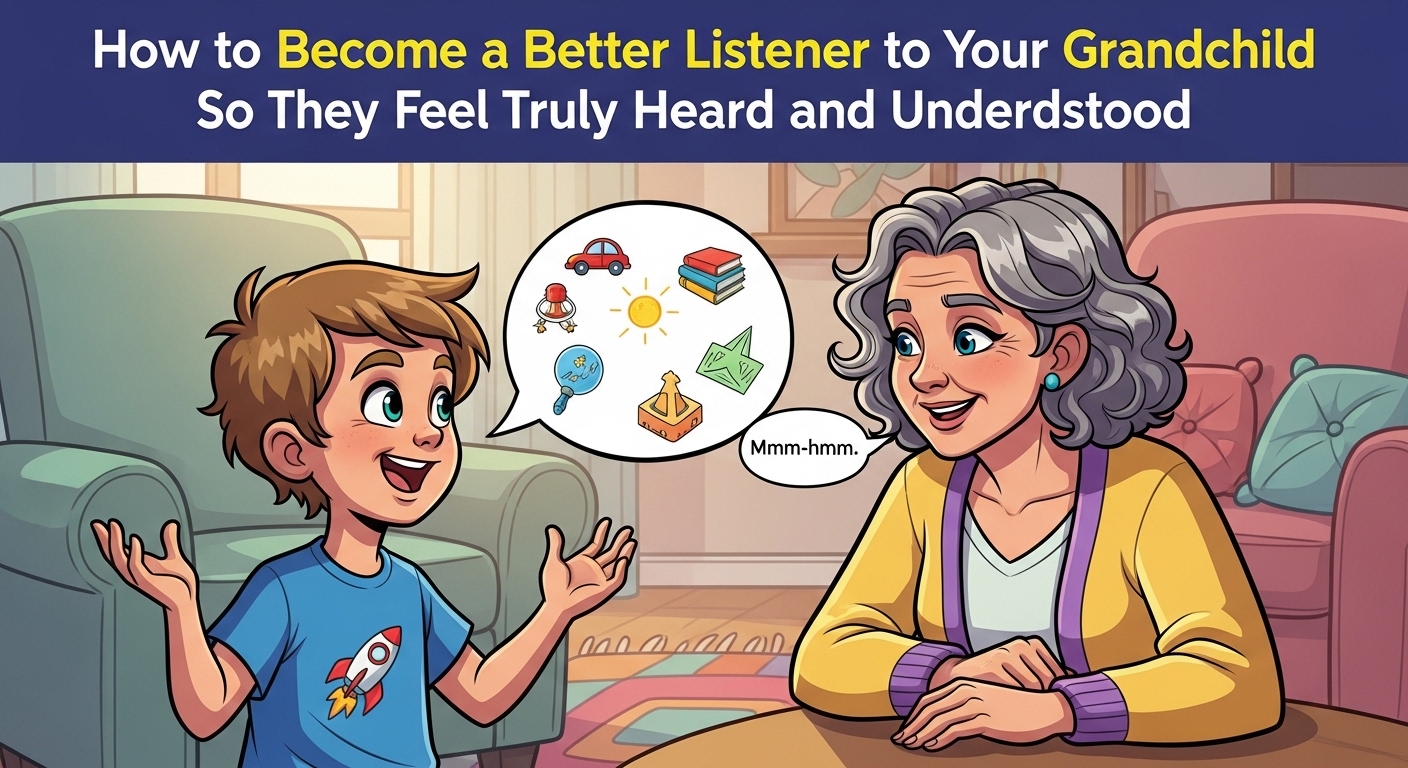
Active listening doesn’t always require long responses. Sometimes a few simple words show your grandchild that you’re paying attention.
Small phrases like:
- “I see what you mean.”
- “That sounds exciting.”
- “Oh wow, tell me more.”
- “What happened next?”
These gentle responses keep the conversation flowing. They encourage your grandchild to keep sharing because they know you’re genuinely interested.
To them, it feels less like reporting something to an adult and more like having a real conversation.
5. Pay Attention to Their Feelings, Not Just Their Words
Children don’t always say exactly what they’re feeling. Sometimes their emotions show up in other ways, in their tone of voice, their posture, or the way they avoid eye contact.
A grandchild might say they’re “fine,” but their shoulders are slumped, and their voice sounds quiet.
When you notice something like this, you can gently invite them to share more.
You might say:
“You seem a little upset today. Do you want to talk about it?”
Sometimes just knowing someone noticed is enough to open the door to a deeper conversation.
6. Avoid Judging Too Quickly
Children are far more likely to open up when they know they won’t immediately be judged or criticized.
If your grandchild admits they made a mistake, try to respond calmly and with curiosity rather than frustration.
Instead of saying:
“Why would you do that?”
Try asking:
“What made you decide to do that?”
This kind of response helps your grandchild reflect on their actions without feeling ashamed. It keeps communication open rather than shutting it down.
When children feel safe telling you the truth, even about mistakes, they learn that Grandma is someone they can trust.
7. Ask Thoughtful Questions
Great listeners don’t just hear words, they ask questions that help the conversation grow.
Instead of relying only on simple yes-or-no questions, try asking open-ended ones that encourage your grandchild to share more.
For example:
- “What was the best part of your day?”
- “What made that so fun?”
- “How did that make you feel?”
- “What do you think you’ll do next time?”
These types of questions help children think about their experiences in a deeper way. They also show your grandchild that you truly care about their thoughts and opinions.
8. Resist the Urge to Turn the Conversation Back to Yourself
It’s very natural for adults to respond to a child’s story by sharing one of their own.
For example, if your grandchild says they had a tough day at school, it can be tempting to reply with:
“That reminds me of when I was your age…”
While these stories can sometimes be helpful, they can also shift the focus away from your grandchild.
Try to keep the spotlight mostly on them. Let their story be the center of the conversation. If you do share a personal experience, keep it brief and gently bring the conversation back to their feelings.
This shows your grandchild that their voice matters most in that moment.
9. Be Comfortable With Silence
Not every conversation needs to be filled with constant talking.
Sometimes children pause because they’re thinking. Other times, they may be trying to decide how much they feel comfortable sharing.
If your grandchild grows quiet for a moment, resist the urge to rush in and fill the silence.
Just wait patiently.
Often, after a few seconds, they’ll continue speaking, and sometimes that’s when the most meaningful parts of the conversation emerge.
10. Make Listening a Daily Habit
The strongest relationships are built in small moments, not just big conversations.
Listening to your grandchild doesn’t always require a long, serious talk. Some of the best conversations happen naturally during everyday activities.
You might listen while:
- Baking cookies together
- Walking the dog
- Riding in the car
- Playing a board game
- Sitting together before bedtime
These relaxed moments often make children feel more comfortable opening up.
Over time, as these conversations happen again and again, your grandchild begins to understand something very important:
“Grandma is someone I can always talk to.”
The Beautiful Gift of Being Heard
Children don’t always remember every piece of advice we give them. But they almost always remember how we made them feel.
When we listen with patience, kindness, and genuine interest, we send a powerful message:
“Your thoughts matter. Your feelings matter. You matter.”
And that kind of listening does something extraordinary.
It builds trust.
It strengthens your bond.
And it helps your grandchild grow into someone who feels confident expressing themselves.
Sometimes the greatest gift a grandmother can give isn’t advice, wisdom, or the perfect words.
Sometimes the greatest gift is simply a listening heart. 💛



