
Disclaimer: Devoted Grandma is reader-supported. If you purchase anything through my site, I may receive a small commission (at no cost to you). Thank you.
At seventeen, Marcus wanted a new laptop more than anything.
His old one took forever to start.
The battery lasted about forty minutes.
And whenever he opened more than three programs, the fan sounded as though the computer was preparing for takeoff.
Marcus had been saving for months.
He worked Saturdays at a grocery store.
He washed neighbors’ cars.
He even stopped buying snacks after school.
Still, he was hundreds of dollars short.
One Saturday afternoon, Marcus took the bus home from work.
He dropped into a seat near the back.
Something touched his shoe.
Marcus looked down.
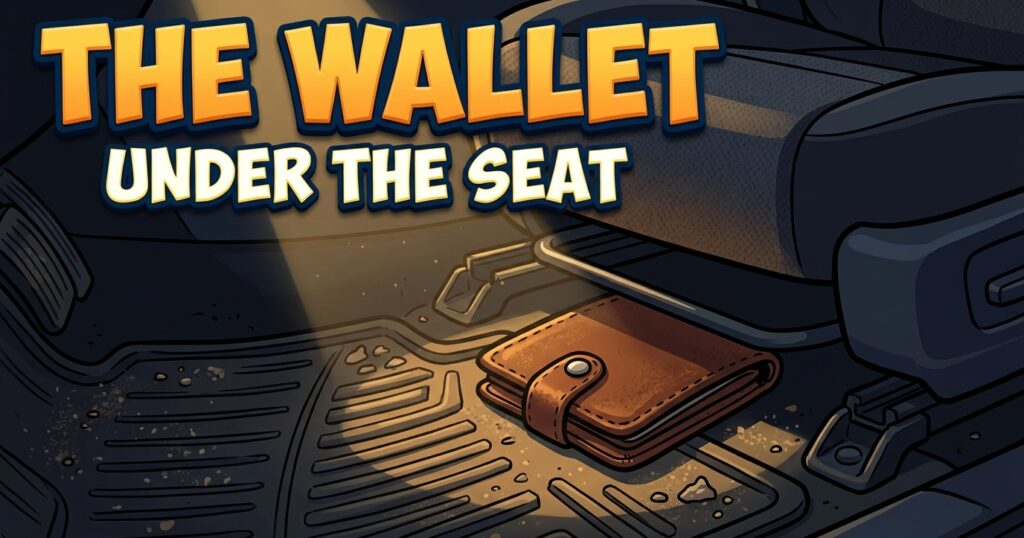
A brown leather wallet was wedged underneath the seat.
He picked it up.
Nobody seemed to notice.
Marcus opened it.
His eyes widened.
Inside was a thick stack of cash.
He counted it.
Nearly enough to buy the laptop.
Marcus looked around the bus.
Nobody was watching.
He checked the wallet again.
There was a driver’s license.
Bank cards.
A few photographs.
And the cash.
For one brief moment, Marcus imagined walking into the electronics store.
He could finally buy the laptop.
Who would know?
He hadn’t stolen the wallet.
He had found it.
A voice inside his head immediately answered:
You know.
Marcus closed the wallet.
When he got home, he showed his grandfather.
“Look what I found.”
Grandpa opened it.
“That’s a lot of money.”
“I know.”
“You find an address?”
Marcus handed him the driver’s license.
Grandpa looked at it.
“Then I suppose we know where we’re going.”
Marcus hesitated.
Grandpa noticed.
“What?”
“Nothing.”
“That wasn’t a nothing face.”
Marcus sat down.
“Would it really be so terrible if I kept some of the cash?”
Grandpa raised an eyebrow.
“Does it belong to you?”
“No.”
“Then you already know the answer.”
Marcus sighed.
“But whoever lost it probably doesn’t even know how much was inside.”
Grandpa closed the wallet.
“Interesting.”
“What?”
“You’re not trying to figure out what’s right.”
Marcus looked at him.
“You’re trying to figure out how much wrong you can do without feeling like a bad person.”
That stung.
Marcus looked away.
Grandpa sat beside him.
“Doing the right thing is easy when it costs nothing.”
He held up the wallet.
“This is when your values actually become useful.”
They drove to the address.
An elderly man answered the door.
Marcus explained.
“I found this on the bus.”
The man’s eyes widened.
“My wallet!”
He grabbed it and immediately looked inside.
Then he sat down.
For several seconds, he said nothing.
“Is everything there?” Marcus asked.
“Everything.”
The man looked at him.
“That money is for my wife’s medication and some household bills.”
Marcus felt something sink in his stomach.
Suddenly, the laptop seemed very far away.
“I thought it was gone.”
The man offered Marcus some money as a reward.
Marcus shook his head.
“No, sir.”
“Please.”
“It’s okay.”
On the drive home, Grandpa glanced at him.
“Still wish you’d kept some?”
“No.”
“Why?”
Marcus stared through the window.
“Because now I know what it was for.”
Grandpa nodded.
“Remember something, Marcus. It was still wrong before you knew.”
That lesson stayed with him.
Over the next few years, Marcus began noticing how often life presented smaller versions of the wallet.
A cashier accidentally gave him too much change.
Would he return it?
A teacher forgot to collect an assignment Marcus hadn’t completed.
Would he pretend he’d turned it in?
A friend told him something private.
Would he repeat it because the story was interesting?
At work, he made a mistake nobody else had noticed.
Would he admit it?
There was rarely an audience for these decisions.
No applause.
No medal.
Most of the time, doing the right thing didn’t make Marcus feel heroic.
Sometimes it was inconvenient.
Sometimes embarrassing.
Sometimes it meant losing an advantage.
But each decision did something important.
It made the next right decision a little easier.
Years later, Marcus became a manager.
One afternoon, a young employee named Caleb entered his office.
“I need to tell you something.”
Caleb looked terrified.
He explained that he’d made an expensive mistake while processing an order.
Nobody had discovered it yet.
He could probably hide it.
“But it didn’t feel right.”
Marcus listened.
“Thank you for telling me.”
“I’m fired, aren’t I?”
Marcus smiled.
“No.”
Caleb looked shocked.
“We’ll fix the mistake. Then I’ll show you how to avoid it next time.”
“You’re not angry?”
“I’m not thrilled about the mistake.”
Marcus leaned back.
“But I’m very interested in the fact that you walked into this office when you could have walked away.”
That evening, Marcus called Grandpa.
He told him what had happened.
Grandpa laughed.
“Another wallet under the seat.”
Marcus smiled.
“Exactly.”
Because good morals aren’t simply rules we recite.
Be honest.
Be fair.
Keep your promises.
Respect people.
Take responsibility.
Don’t take what isn’t yours.
Do the right thing even when it is inconvenient.
These values become a kind of compass.
And we need that compass because life doesn’t always place a sign in front of us saying:
THIS IS A TEST OF YOUR CHARACTER.
Usually, the moment looks ordinary.
An opportunity to lie.
A secret nobody would know you shared.
A mistake you could blame on someone else.
Money you could keep.
A promise that has become inconvenient.
A person you could take advantage of.
That’s when your morals matter most.
Not because doing right guarantees you’ll always be rewarded.
Sometimes honesty will cost you.
Integrity may make life harder in the short term.
But every choice is quietly answering a much bigger question:
What kind of person am I becoming?
Years after finding that wallet, Marcus eventually bought the laptop he’d wanted.
He barely remembered it.
It became outdated.
Then it broke.
Eventually, he replaced it.
But he never forgot the wallet.
Because the laptop was something he wanted to own.
The wallet taught him something far more important about the person he wanted to be.
Possessions eventually wear out, money comes and goes, and opportunities pass but your character follows you everywhere. Build one you can live proudly with. 💛
