
Disclaimer: Devoted Grandma is reader-supported. If you purchase anything through my site, I may receive a small commission (at no cost to you). Thank you.
Daniel always had a reason.
If he arrived late, traffic was terrible.
If he forgot something, he’d had a busy week.
If he didn’t finish his part of a project, someone hadn’t reminded him.
If he canceled plans, something had come up.
If he hurt someone’s feelings, they had misunderstood him.
Daniel didn’t think of himself as unreliable.
In fact, he considered himself extremely unlucky.
Things simply seemed to happen to him.
His best friend, Marcus, saw it differently.
One Saturday, Marcus was moving into a new apartment.
“Can you help me?” he asked.
“Absolutely,” Daniel said. “I’ll be there at nine.”
Saturday morning came.
Nine o’clock.
No Daniel.
Ten o’clock.
Still no Daniel.
Marcus called.
“Where are you?”
Daniel sounded half asleep.
“I’m coming. My alarm didn’t go off.”
“You said nine.”
“I know, but that’s not my fault. My phone must have updated overnight.”
Daniel arrived at eleven-thirty.
By then, Marcus and two other friends had moved most of the furniture.
Daniel walked in carrying coffee.
“Sorry. Crazy morning.”
Marcus looked annoyed.
“Could’ve used you earlier.”
“I told you what happened.”
“I know.”
Daniel didn’t notice the disappointment in Marcus’s voice.
After all, he’d explained himself.
A few weeks later, Daniel promised his sister, Chloe, that he would attend her graduation dinner.
“Seven o’clock,” she reminded him.
“I’ll be there.”
Daniel arrived at eight-fifteen.
Dessert was being served.
Chloe looked hurt.
“Seriously?”
“The meeting at work ran late.”
“You could have texted.”
“My battery was low.”
“You could’ve charged it.”
“I didn’t have my charger.”
Chloe shook her head.
“There’s always something.”
Daniel became defensive.
“What was I supposed to do? Walk out of the meeting?”
“That’s not the point.”
“Then what is?”
But Chloe didn’t answer.
She simply turned back toward the table.
Months passed.
Daniel continued making promises.
And Daniel continued having reasons why those promises couldn’t be kept.
Eventually, something strange began happening.
People stopped asking him for things.
Marcus needed help painting his apartment.
He asked someone else.
Chloe needed a ride to the airport.
She called a taxi.
Friends organized a weekend trip.
Daniel found out about it afterward.
“Why didn’t anyone tell me?”
Marcus looked uncomfortable.
“We didn’t think you’d come.”
“Why wouldn’t I?”
Marcus stared at him.
Daniel suddenly realized there wasn’t a good answer.
One Sunday, Daniel visited his grandfather.
Grandpa was setting up chairs in the backyard for a family lunch.
“Need help?” Daniel asked.
“Sure.”
They arranged twelve chairs around a long table.
Then Grandpa pointed to one at the end.
“Leave that one.”
“Why?”
“Broken.”
Daniel looked at it.
“It looks fine.”
“Sit on it.”
Daniel did.
The chair immediately leaned sideways.
He jumped up.
“One leg’s loose.”
Grandpa nodded.
“I’ve tightened it three times.”
“So fix it again.”
“I could.”
Grandpa picked up the chair.
“But at some point, you stop trusting the chair.”
Daniel laughed.
“That’s a dramatic way to talk about furniture.”
Grandpa looked at him.
“I’m not talking about furniture.”
Daniel stopped smiling.
Grandpa placed the chair against the wall.
“When something lets you down once, you understand.”
He held up one finger.
“Twice, you might understand again.”
Another finger.
“But if it keeps happening, eventually you stop sitting there.”
Daniel knew exactly what Grandpa meant.
“I’m not a broken chair.”
“No.”
Grandpa sat down.
“But people need to know they can rely on you.”
“I have legitimate reasons when things go wrong.”
“I’m sure you do.”
That wasn’t the answer Daniel expected.
“So you agree with me?”
Grandpa shook his head.
“Having a reason doesn’t always remove responsibility.”
Daniel frowned.
Grandpa continued.
“Your alarm didn’t go off?”
“Yes.”
“That’s a reason you overslept. But Marcus was still left moving furniture without you.”
Daniel looked away.
“Your meeting ran late?”
“Yes.”
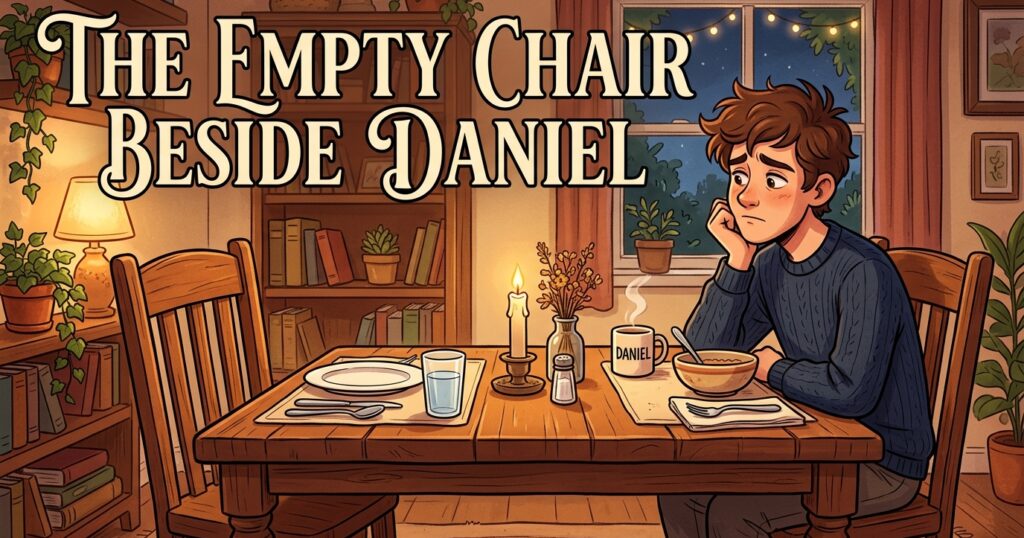
“That’s a reason you were late to Chloe’s dinner. But she still spent over an hour looking at the empty chair she’d saved for you.”
Daniel became quiet.
Grandpa leaned forward.
“Excuses explain what happened. They don’t always repair what happened.”
That sentence followed Daniel home.
For the first time, he began thinking about his excuses from the other person’s side.
He thought about Marcus waiting beside boxes.
Chloe looking toward the restaurant door.
Friends wondering whether Daniel would cancel again.
His coworkers finishing things he’d promised to do.
He had been so busy explaining why things weren’t his fault that he’d rarely stopped to consider how his actions affected everyone else.
A few days later, Daniel made another mistake.
He forgot to send an important document to a coworker named Hannah.
His first instinct arrived immediately.
Nobody reminded me.
He almost said it.
Instead, he stopped.
“I’m sorry,” Daniel said. “I forgot. That’s on me. I’ll send it within the hour.”
Hannah looked surprised.
“Okay.”
Daniel sent it in twenty minutes.
It felt uncomfortable admitting fault without protecting himself.
But it also felt strangely freeing.
No complicated explanation.
No argument.
No defense.
Just responsibility.
He began changing slowly.
He set two alarms when something mattered.
He put appointments in his calendar.
If he couldn’t make a commitment, he stopped saying yes simply to please people.
When something genuinely unexpected happened, he communicated early.
And when he messed up, he practiced four difficult words:
“That was my fault.”
Months later, Marcus called.
“I’m moving some furniture into storage Saturday.”
Daniel smiled.
“Want help?”
There was a pause.
“If you can make it.”
“What time?”
“Eight.”
At 7:50 Saturday morning, Marcus pulled into the storage facility.
Daniel was already there.
Marcus raised an eyebrow.
“Who are you?”
“Very funny.”
They worked all morning.
As they finished, Marcus handed him a bottle of water.
“Thanks for showing up.”
Daniel understood that Marcus wasn’t only talking about that morning.
Trust was returning.
Not because Daniel had become perfect.
He still got stuck in traffic.
He still forgot things occasionally.
Life still interfered with plans.
But he had stopped treating every explanation like a permission slip that erased the effect of his actions.
Years later, Daniel understood why Grandpa’s broken chair had mattered.
People rarely walk away because you made one mistake.
Good relationships can survive lateness, forgetfulness, bad decisions, misunderstandings, and plenty of human imperfection.
What wears people down is when nothing is ever your responsibility.
When every apology contains a “but.”
When every broken promise has an explanation.
When every failure somehow belongs to someone or something else.
Eventually, people become tired of arguing with your reasons.
They simply adjust their lives so they no longer have to depend on you.
So explain when an explanation matters.
But don’t hide behind it.
Say you’re sorry.
Take responsibility.
Change what you can.
And most importantly, show people through your actions that next time can be different.
Because there may come a day when you finally run out of excuses, only to discover that the people who used to wait for you have stopped saving you a chair. 💛
