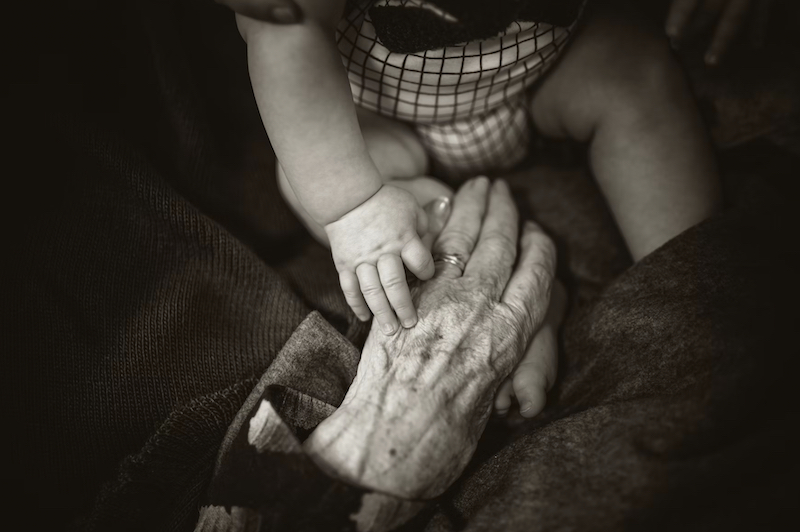
Every grandmother eventually gets one of those questions.
The kind that makes your eyes widen a little.
The kind that makes you pause with your coffee halfway to your mouth.
The kind that makes you think, “Oh dear, I was not prepared for this before lunch.”
Grandchildren have a special talent for asking uncomfortable questions at the most unexpected times. They may ask about family problems, money, death, divorce, bodies, dating, mistakes from the past, or something they heard at school or online.
And because we love them, our first instinct may be to panic, correct them, distract them, or say, “Go ask your mother.”
But uncomfortable questions are not always bad things.
Sometimes, they are little doors opening.
A grandchild may not be trying to be rude. They may be confused. Curious. Worried. Embarrassed. Or quietly testing whether Grandma is a safe person to talk to.
That moment matters.
Because the way we respond can either close the door quickly or gently show them, “You can bring hard things to me.”
Here is how wise grandmothers turn an uncomfortable question into a safe, loving conversation.
1. They Don’t React Like The Question Is Shameful
The first few seconds matter more than we realize.
If a grandchild asks something uncomfortable and we gasp, scold, laugh too loudly, or look horrified, they may instantly feel like they did something wrong.
Even if we do not mean to shame them, our face can do the talking before our mouth catches up.
A calm grandmother does not have to have the perfect answer right away. She simply gives the child a steady place to land.
She might say:
“That’s a really good question.”
“I’m glad you asked me.”
“That can feel a little awkward to talk about, but we can talk about it.”
“Let me think for a second so I answer you well.”
Those words do something beautiful. They tell the grandchild, “You are not in trouble for being curious.”
And sometimes that is the beginning of real trust.
2. They Ask What Made The Grandchild Wonder
Before answering, a wise grandmother tries to understand where the question came from.
A child asking, “Why did Mom and Dad split up?” may be looking for reassurance.
A teen asking, “Did you ever make a big mistake?” may be struggling with guilt.
A young adult asking, “Were you ever unhappy in your marriage?” may be trying to understand their own relationship.
The question on the outside is not always the question on the inside.
So instead of rushing in with a speech, Grandma can gently ask:
“What made you think about that?”
“Did something happen?”
“Where did you hear that?”
“What are you wondering most?”
This helps her answer the real concern, not just the words that were spoken.
It also gives the grandchild a chance to open up without feeling interrogated.
3. They Keep Their Answer Age-Appropriate
Not every question deserves every detail.
Grandmothers may have lived through painful things. Family arguments. Regrets. Hard seasons. Complicated relationships. But a grandchild does not need to carry adult burdens just because they asked an adult question.
A safe conversation is honest, but not heavy.
For a younger child, the answer may be simple:
“Sometimes grown-ups disagree, but you are loved and safe.”
For an older grandchild, it may be a little more open:
“It was a difficult time, and people made choices they thought were best. I don’t know if everyone handled it perfectly, but I do know we all had feelings.”
For a teen or young adult, Grandma can share wisdom without turning it into a full family courtroom:
“There were things I understood later that I didn’t understand then. Life teaches us slowly sometimes.”
The goal is not to hide the truth. The goal is to tell the truth with care.
4. They Avoid Turning The Conversation Into A Lecture
Grandchildren can smell a lecture coming from three rooms away.
The minute Grandma starts with, “Well, let me tell you something about life,” many grandkids quietly shut the little door they just opened.
Uncomfortable questions are often better handled with short answers, soft follow-up questions, and space.
Instead of saying everything at once, a grandmother can say a little and then pause.
For example:
“That’s something many people wonder about. I think the most important thing to know is this…”
Then stop.
Let the grandchild ask more.
A safe conversation is not a speech. It is a bridge.
5. They Don’t Pretend To Know Everything
There is something powerful about a grandmother who can say, “I don’t know.”
Children and teens do not need us to be walking encyclopedias with better snacks.
They need us to be honest.
If a question catches Grandma off guard, she can say:
“I don’t know the best way to answer that yet, but I’m glad you asked.”
“That’s a big question. I want to be thoughtful with it.”
“I may not have all the answers, but I can listen.”
This does not make Grandma look weak. It makes her trustworthy.
A grandchild learns that difficult conversations do not require perfect words. They require love, patience, and honesty.
6. They Refuse To Gossip Or Bad-Mouth The Parents
This one can be hard.
Sometimes an uncomfortable question is about the parents.
“Why does Dad get so angry?”
“Why doesn’t Mom visit more?”
“Why don’t you and my parents get along?”
In that moment, a grandmother may feel tempted to defend herself, explain everything, or finally tell “her side.”
But wise grandmothers remember that a grandchild is not a judge. They are not a therapist. They are not a messenger between adults.
They are a child, even when they are grown.
So Grandma keeps the conversation safe by refusing to turn it into blame.
She might say:
“Adult relationships can be complicated, but I don’t want you to feel stuck in the middle.”
“I know you may have questions, and I’ll answer what I can kindly.”
“Your parents love you. Sometimes grown-ups have hard things to work through.”
This protects the grandchild’s heart.
It also shows maturity, which children remember more than we think.
7. They Make Room For Feelings
Sometimes grandchildren ask uncomfortable questions because they are trying to name an uncomfortable feeling.
They may be scared.
They may feel left out.
They may be embarrassed.
They may be angry.
They may be wondering if something is their fault.
A grandmother can gently make room for those feelings by saying:
“That sounds like it’s been on your mind.”
“I can understand why that would bother you.”
“That would be confusing to me too.”
“You don’t have to feel silly for asking.”
These small sentences can bring a deep sigh of relief.
Many grandchildren are not looking for perfect answers. They are looking for someone who does not make them feel strange for having feelings.
8. They Share Personal Stories Carefully
Grandmothers have stories. Lots of them.
Some are funny. Some are painful. Some are still tender.
A personal story can help a grandchild feel less alone, but it should be shared with care.
The question to ask is:
“Will this story help my grandchild, or am I telling it because I need to unload?”
That difference matters.
A helpful story is short, gentle, and focused on the lesson.
For example:
“When I was young, I also felt nervous asking questions. I wish someone had told me that curiosity is not something to be ashamed of.”
Or:
“I made choices I would handle differently now. But I learned that one mistake does not have to define your whole life.”
That kind of sharing gives wisdom without placing a heavy suitcase in the child’s hands.
9. They Respect What Should Be Answered By The Parents
Some questions are best answered with the parents involved, especially with younger grandchildren.
That does not mean Grandma has to shut the conversation down cold.
Instead of saying, “Ask your mother,” in a harsh way, she can say:
“That’s an important question. I’m glad you brought it up. I think your mom or dad should be part of this conversation too, but I’m happy to sit with you while you ask.”
Or:
“I can tell you a little, but I want to make sure your parents get to guide this too.”
This shows respect for the parents while still showing the grandchild that their question was not wrong.
It also keeps Grandma from accidentally crossing a boundary.
10. They End With Reassurance
Uncomfortable conversations should not end with the grandchild feeling more alone than before.
Even if the answer is imperfect, Grandma can close the moment with love.
She can say:
“I’m really glad you asked me.”
“You can always come to me with questions.”
“Nothing you ask makes me love you less.”
“We can talk about this again anytime.”
That last part matters.
Sometimes children only ask one tiny piece of a bigger question. If the first conversation feels safe, they may come back later with the rest of it.
That is trust being built slowly.
11. They Know Silence Can Be Gentle Too
Grandmothers do not always need to fill every quiet moment.
After a big question, a grandchild may need time to think.
A teen may stare at the floor.
A little one may suddenly change the subject.
An older grandchild may say, “Never mind.”
That does not always mean the conversation failed.
Sometimes they heard enough for now.
A calm grandmother does not chase them with ten more questions. She simply leaves the door open.
She might say:
“That’s okay. We don’t have to talk more right now. I’m here when you want to.”
There is a special kind of love in not forcing the moment.
12. They Remember The Goal Is Connection
When a grandchild asks an uncomfortable question, the goal is not to win, correct, impress, or explain every detail.
The goal is connection.
The goal is to help the child feel safe enough to wonder, talk, feel, and return.
A grandmother may not always say the perfect thing. In fact, she probably won’t. Most of us think of the perfect answer three hours later while washing a mug.
But love does not require perfection.
It requires steadiness.
It requires a soft face.
It requires the courage to say, “We can talk about hard things here.”
Because one day, the question may be bigger.
And the grandchild may remember, “Grandma didn’t panic last time. Grandma listened. Grandma made me feel safe.”
That is how uncomfortable questions become sacred little openings.
Not because Grandma had all the answers.
But because she made room for the conversation.