
Disclaimer: Devoted Grandma is reader-supported. If you purchase anything through my site, I may receive a small commission (at no cost to you). Thank you.
Your 12-year-old grandson, Caleb, comes to visit for the weekend along with his younger cousin, Mia, who is eight.
During lunch, Mia accidentally spills her juice across the table. You sigh, hand her a towel, and say gently, “That’s all right, sweetheart. Accidents happen.”
Later that afternoon, Caleb leaves his muddy shoes in the hallway after you have already reminded him twice to put them by the back door. You speak firmly and ask him to clean the floor.
Caleb’s face tightens.
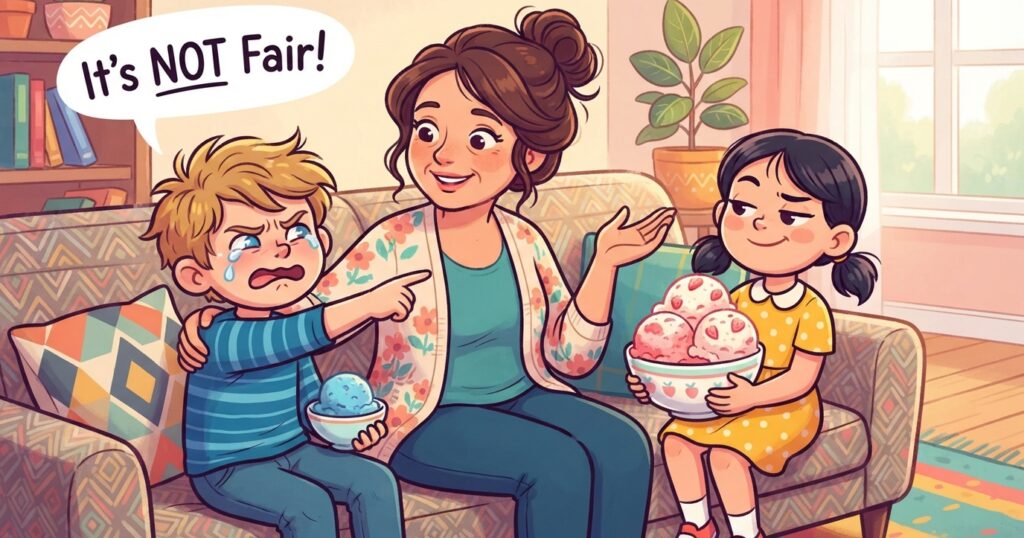
“That’s not fair,” he says. “You’re always nicer to Mia. She spills something and you act like it’s nothing. I forget my shoes and you get mad at me. You don’t treat me the same.”
You feel surprised and a little hurt. You love both grandchildren dearly, and you have never intended to make Caleb feel less important.
When a grandchild says, “You don’t treat me fairly,” it can touch a tender place in a grandmother’s heart. We may immediately want to defend ourselves. After all, we know how deeply we love each grandchild. We remember the birthday cakes, the school concerts, the long talks, the rides, the gifts, and the quiet prayers offered on their behalf.
But a child’s complaint about fairness is not always an accusation about our love. Often, it is an invitation to understand how the situation looks and feels from the child’s point of view.
Let us consider each response.
Option A: Explain that he is older and should understand
There is some truth in this response. Caleb is older than Mia. A 12-year-old can reasonably be expected to remember instructions more consistently than an eight-year-old. Different ages often require different expectations.
However, beginning with this explanation may make Caleb feel that his concern has been dismissed before it has even been heard.
When a child says something is unfair, and the adult quickly answers, “You are older, so you should know better,” the child may hear, “Your feelings do not matter.” He may also begin to feel that growing older only brings more criticism and fewer chances to make mistakes.
A better time to explain age differences is after Caleb has had the opportunity to describe what he has noticed. Listening first does not mean agreeing with everything he says. It simply shows that his experience matters to you.
Option B: Invite him to explain, listen carefully, and discuss fairness
This is the best response.
You might say, “I’m glad you told me. I don’t want you to feel less loved or unfairly treated. Can you tell me about some times when it has felt that way?”
Then comes the important part: listening without immediately correcting him.
Caleb may mention more than the spilled juice and the muddy shoes. Perhaps he has noticed that Mia receives more comfort when she becomes upset. Perhaps he feels that he is expected to be patient simply because he is older. Perhaps he sees you laughing at Mia’s mistakes while responding more seriously to his.
Some of his examples may be accurate. Others may be influenced by the strong emotions children naturally feel when comparing themselves with siblings or cousins. Either way, hearing him out can help you understand the meaning beneath his complaint.
He may really be asking, “Am I just as special to you?” or “Do I still get patience when I make mistakes?” or “Do you notice how hard I am trying?”
Once he feels heard, you can explain the difference between equal treatment and fair treatment.
Equal treatment means everyone receives exactly the same response. Fair treatment means each person receives what is appropriate for his or her age, needs, understanding, and circumstances.
You might say, “You are right that I responded differently. Mia spilled her drink by accident. You had been reminded about your shoes twice, so I spoke more firmly. But I can also understand why it looked as though I was being kinder to her. I will pay closer attention to my tone.”
This response teaches several valuable lessons at once. It shows Caleb that he can bring concerns to you. It shows that adults can examine their own behavior without losing authority. It also helps him understand that fairness is not always sameness.
Most importantly, it protects trust.
Children are more likely to accept correction when they believe the adult correcting them is willing to listen and be fair. Your calm curiosity tells Caleb that the relationship is more important than proving yourself right.
Option C: Promise identical rules and consequences
This response may feel reassuring in the moment. A grandmother who worries that she has hurt her grandchild may want to make a sweeping promise: “From now on, everything will be exactly the same.”
The problem is that identical treatment is not always fair or realistic.
An eight-year-old and a 12-year-old have different abilities, responsibilities, and emotional needs. They may have different bedtimes, chores, privileges, and consequences. One child may need more reminders, while another may need more independence.
Promising identical treatment could also create new problems. Caleb might later feel frustrated if Mia receives a privilege that is unsuitable for her age, or Mia may be held to a standard she is not ready to meet.
Rather than promising sameness, promise thoughtfulness. You can tell Caleb, “I will try to be fair, explain my decisions, and listen when something does not feel right to you.”
That is a promise you can keep.
Option D: List all the special things you do for him
This response comes from love. You may want Caleb to remember the outings you share, the meals you prepare, or the ways you support his interests. Those examples can certainly reassure him that he matters.
However, listing your loving actions too soon may sound as though you are trying to prove that he has no right to feel hurt.
Love is not an account book. A child’s concern cannot always be settled by showing him how much has been done for him.
Later in the conversation, it may be helpful to remind Caleb that your relationships with him and Mia are different but equally precious. First, though, he needs to know that you are taking his concern seriously.
A loving way forward
Fairness is one of the strongest concerns children have, especially as they grow old enough to compare rules, privileges, attention, and affection. They watch closely. They notice differences in tone, patience, praise, and correction.
We will not always respond perfectly. No grandmother does.
The goal is not to make every interaction identical. The goal is to build a relationship in which a grandchild can say, “That hurt,” or “That did not feel fair,” without fear of being mocked, punished, or brushed aside.
When such a moment comes, pause before defending yourself. Ask a gentle question. Listen for the feeling underneath the complaint. Acknowledge any truth you hear. Then explain your reasoning calmly.
You might even create a simple family habit: anyone may respectfully ask, “Can you help me understand why?” This gives children a way to question a decision without becoming rude, and it reminds adults to explain rather than simply demand.
Caleb may still dislike being corrected about his muddy shoes. Listening does not mean removing expectations. He can clean the floor and still feel loved. He can be held responsible and still be treated with kindness.
That is the heart of wise grandparenting: not avoiding every disagreement, but using difficult moments to deepen understanding.
A child who feels heard is more likely to hear you in return. And a grandchild who trusts your fairness will carry that sense of security long after the muddy footprints have been wiped away.



