
Disclaimer: Devoted Grandma is reader-supported. If you purchase anything through my site, I may receive a small commission (at no cost to you). Thank you.
Your 10-year-old grandson, Marcus, has worked hard to improve his grades. His parents promised that if he brought his math grade up, they would celebrate by taking him out for pizza and letting him choose a new book.
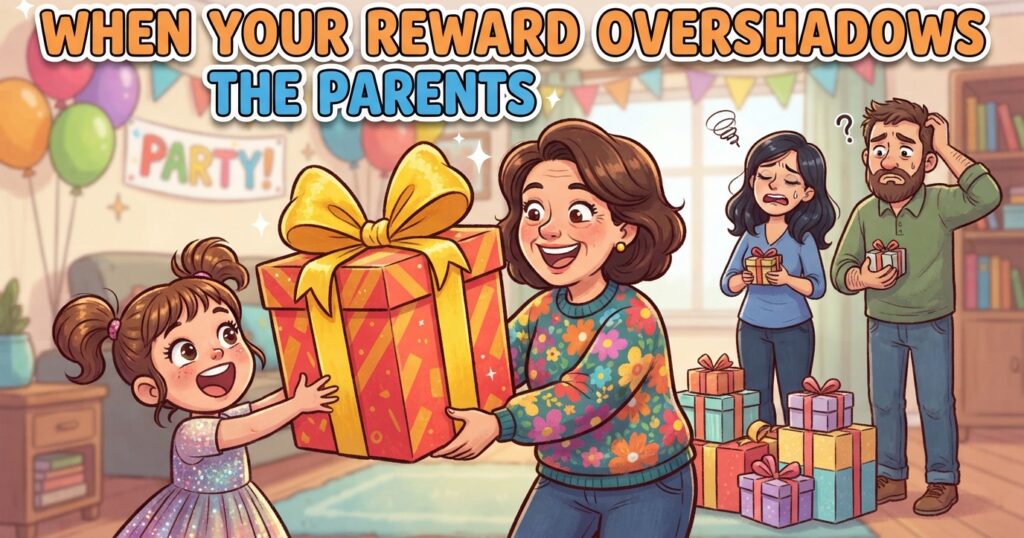
You are proud of him too. Without speaking to his parents first, you surprise Marcus with an expensive gaming console. His eyes light up, and he immediately tells everyone that Grandma gave him “the best reward ever.”
Later, Marcus’s mother quietly tells you that she feels hurt. She explains that their simple family celebration now seems unimportant, and Marcus has barely mentioned the promise his parents made. You meant only to show your love, but now you sense tension.
There is something especially joyful about rewarding a grandchild. We see their effort, their growing confidence, and their hopeful little face, and our hearts naturally want to celebrate in a big way.
Sometimes, though, a gift can carry more meaning than we intended.
This dilemma is not really about a gaming console. It is about roles, respect, and the delicate partnership between parents and grandparents. Marcus’s parents made a promise connected to his effort. Their pizza outing and book were not simply prizes. They were part of a lesson: work hard, follow through, and celebrate together as a family.
When Grandma gave Marcus a much larger reward, she unintentionally changed the focus. Instead of remembering his parents’ encouragement and their family promise, Marcus became absorbed in the most exciting gift.
That does not make Grandma selfish or unkind. Her mistake came from love. But loving intentions do not always prevent hurt feelings.
Let us look at each response.
Option A: Defend your right to spoil him
It is true that many grandparents enjoy giving their grandchildren special treats. A grandparent-grandchild relationship often includes a little extra fun, softness, and generosity.
However, telling Marcus’s mother not to take it personally would dismiss her feelings. It would also turn the conversation into a struggle over who has the right to give what.
The deeper issue is not whether Grandma is “allowed” to buy gifts. The issue is whether the gift supported or disrupted the parents’ plan.
When parents feel that their efforts are being overshadowed, they may begin to feel less respected in their own family. Over time, that can create resentment. It may also place the child in an uncomfortable position, even if the child does not fully understand what is happening.
A child should not feel that love is a competition between Grandma and the parents.
Option A protects Grandma’s pride, but it does not protect the family relationship.
Option B: Make Marcus return the gift
At first, this may seem like the fairest solution. If the oversized reward caused the problem, perhaps removing it will undo the hurt.
But asking Marcus to return the console could make him feel punished for an adult mistake. He did not ask Grandma to overshadow his parents. He simply received a gift and became excited.
Returning it may also turn the situation into a dramatic family event. Marcus could feel guilty, confused, or even angry with his parents if he believes they are responsible for taking away his present.
There may be situations where a gift truly needs to be returned, especially if it violates a family rule or creates a serious concern. But in this case, the first step should be an honest conversation between the adults.
The goal is not to erase the mistake at any cost. The goal is to repair trust and prevent the pattern from happening again.
Option B tries to correct the situation quickly, but it risks placing too much emotional weight on the child.
Option C: Apologize and make a plan together
A sincere apology does not mean Grandma loved Marcus too much. It means she recognizes that her gift had an effect she did not intend.
She might say, “I was so proud of Marcus that I got carried away. I can see how my gift overshadowed the celebration you had planned, and I am sorry. I respect that you are his parents, and I would like us to agree on how to handle bigger rewards in the future.”
This kind of apology does several important things.
First, it acknowledges the parents’ feelings without arguing about whether those feelings are justified.
Second, it respects their role. Grandparents can be deeply important in a child’s life, but parents are usually responsible for setting the family’s rules, expectations, and rewards.
Third, it opens the door to cooperation.
Perhaps the family decides that Grandma will check with the parents before giving expensive gifts. Maybe large rewards will come from everyone together. Grandma could contribute toward a planned gift, pay for a special activity, or choose a smaller present that complements the parents’ celebration instead of replacing it.
Marcus can also be gently reminded that many people supported him.
Grandma might say, “Your parents are very proud of you, and they planned something special because they saw how hard you worked. My gift is only one part of the celebration.”
That helps restore the parents’ place without making Marcus feel guilty for enjoying the console.
Option C requires humility, but humility is often what keeps love from becoming competition.
Option D: Avoid the subject and let time pass
It can be tempting to stay quiet, especially when we feel embarrassed. We may hope that everyone will calm down and forget what happened.
Sometimes small irritations do fade. But this situation has already touched on a sensitive issue: whether the parents feel respected.
Silence may send the message that Grandma does not understand the problem or does not care enough to address it. The parents may become more cautious about sharing future plans, achievements, or celebrations with her.
Unspoken hurt often does not disappear. It settles into the relationship.
Option D avoids an uncomfortable conversation, but it also misses an opportunity for closeness and understanding.
A loving way forward
Grandmothers have a wonderful role. We can encourage, comfort, celebrate, and bring a special kind of joy into our grandchildren’s lives.
But the strongest grandparent relationships are not built by giving the biggest gifts. They are built by supporting the child’s whole family.
Before offering a major reward, it helps to ask, “What have his parents planned?” or “Would this gift fit with the lesson they are trying to teach?”
That small pause can prevent a loving gesture from becoming a source of tension.
Our grandchildren benefit when they see the adults in their lives treating one another with respect. They learn that love is not about outdoing someone else. It is about working together.
Sometimes the most meaningful gift a grandmother can give is not the grandest surprise. It is the quiet assurance that she stands beside the parents, cheers for the child, and helps the whole family celebrate as one.



