
Disclaimer: Devoted Grandma is reader-supported. If you purchase anything through my site, I may receive a small commission (at no cost to you). Thank you.
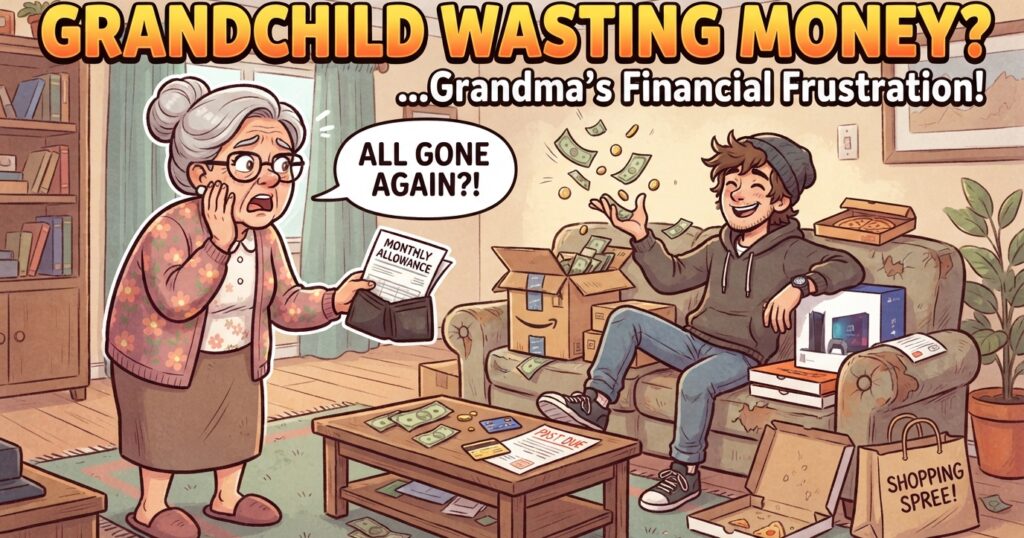
Your 20-year-old grandson, Marcus, has a part-time job while attending college. He often talks about wanting to become more independent, but he regularly spends his paycheck on takeout meals, new clothes, games, and outings with friends.
Near the end of almost every month, Marcus calls you because he is short on money for something important. Sometimes it is gas. Sometimes it is a phone bill. This time, he tells you he cannot afford the fee for a required college course.
You have helped him several times before. He always sounds grateful and promises to manage his money better, but the same problem keeps happening. You love him dearly and do not want his education to suffer. At the same time, you are beginning to wonder whether your help is preventing him from learning responsibility.
Money troubles can stir up strong emotions in a grandmother’s heart. When a grandchild says he cannot afford something important, our first instinct may be to rescue him. We may picture him missing a class, losing transportation, or feeling frightened and embarrassed. Love naturally makes us want to soften the difficult parts of life.
But when an older grandchild repeatedly runs out of money after spending carelessly, the situation is no longer only about the unpaid bill. It is also about responsibility, boundaries, trust, and the difficult transition into adulthood.
Let us look gently at each possible response.
Option A: Pay the fee and say nothing
This choice comes from tenderness. You may think, “He is still learning. I do not want one mistake to interfere with his education.” Paying the fee quickly may solve the immediate problem and bring relief to both of you.
However, if this has happened several times, paying without a conversation may unintentionally teach Marcus that someone else will cover essential expenses after he spends his money on nonessential things. He may feel grateful in the moment, but gratitude alone does not build financial judgment.
Repeated rescuing can also create quiet resentment. A grandmother may begin helping lovingly but later feel used, disappointed, or anxious whenever the phone rings. Meanwhile, the grandchild may become dependent without fully realizing it.
Helping is not wrong. The problem is helping in a way that removes both the consequence and the lesson.
Option B: Refuse all help
There is value in allowing young adults to experience consequences. Financial responsibility develops partly through real-life discomfort. When money is gone, choices become clearer.
Still, a complete refusal may be too rigid in this particular situation. The expense is connected to Marcus’s education, and an abrupt “You made your choice, so deal with it” could sound more like punishment than guidance. It may also shut down the conversation just when he needs to begin thinking honestly about his habits.
Boundaries are important, but boundaries do not have to be cold. A firm response can still include empathy, curiosity, and encouragement.
The goal is not to make Marcus suffer. The goal is to help him become more capable.
Option C: Offer limited, structured help
Option C is the best response.
This approach balances compassion with accountability. You are not ignoring an important need, but you are also not pretending the pattern is harmless.
You might begin by saying:
“Marcus, I love you, and I want to support your education. I am concerned, though, because this has happened several times. Before I help with the fee, I would like us to look at where your money has been going and make a plan so you are not in the same position next month.”
This wording does several helpful things. It reassures him of your love, names the repeated pattern without insulting him, and makes your help part of a learning process rather than an automatic rescue.
You could offer to pay part of the fee, lend him the money with manageable repayment terms, or pay the school directly. The exact arrangement will depend on your own finances and comfort. You should never give money that threatens your own security.
Together, you might help him divide future income into simple categories: essential bills, savings, food, transportation, and spending money. The plan does not need to be complicated. Even a basic weekly limit can help him see that every purchase involves a choice.
It is also important that Marcus participates. He should gather his recent expenses, suggest cuts, and explain how he will avoid the same problem. Responsibility grows when a young adult helps create the solution.
You are not taking control of his life. You are offering guidance while leaving ownership with him.
Option D: Ask his parents to control his money
Involving his parents may feel sensible, especially if you believe they should know what is happening. In some families, a respectful conversation with them may be appropriate.
However, asking them to take control of a 20-year-old’s bank account goes too far in most circumstances. Marcus is an adult, and taking over his finances could embarrass him, damage trust, and prevent him from developing his own judgment.
Unless there are serious concerns about his safety, health, or ability to manage daily life, the better approach is to encourage responsibility rather than remove independence.
You may suggest that he speak with his parents or a financial adviser, but speaking about him behind his back should not be your first step. Whenever possible, include him in decisions that affect him.
Loving Him Without Funding Every Mistake
Grandmothers often hold a special place in a young person’s life. We may be the ones they call when they feel ashamed, confused, or afraid. That trust is precious.
Protecting that relationship does not mean saying yes every time.
Sometimes love sounds like, “I will help you.”
Sometimes it sounds like, “I cannot keep paying for this.”
And sometimes it sounds like, “I will help with this important need, but we must make a different plan together.”
Before offering money, pause and ask yourself: Am I helping him move forward, or am I helping him avoid responsibility? Can I afford this without stress? What lesson will my response teach?
A healthy boundary is not a withdrawal of love. It is a way of keeping love from becoming tangled with guilt, fear, or resentment.
Marcus may not enjoy the conversation. He may become defensive or embarrassed. Stay calm. Focus on the pattern rather than attacking his character. Instead of saying, “You are irresponsible,” say, “Your spending choices are leaving you unable to pay important expenses.”
Young adults often need both room to make mistakes and caring adults who help them reflect on those mistakes. Your role is not to manage every dollar. It is to encourage honesty, foresight, and self-respect.
The most loving response is often neither a quick rescue nor a harsh refusal. It is compassionate help paired with clear expectations. That combination can protect the immediate need while helping your grandchild build the skills he will need long after Grandma is no longer there to cover the bill.



