
Disclaimer: Devoted Grandma is reader-supported. If you purchase anything through my site, I may receive a small commission (at no cost to you). Thank you.
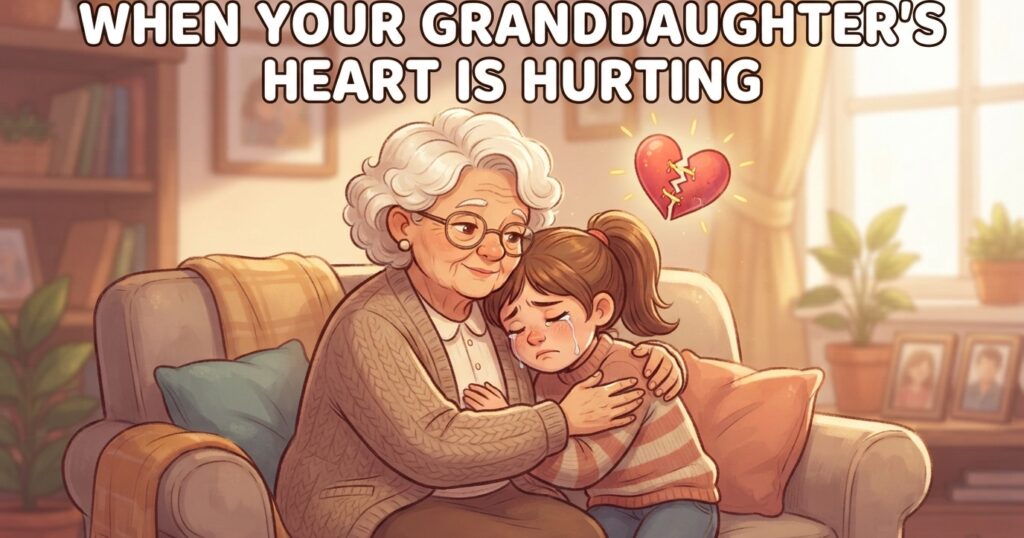
Your 17-year-old granddaughter, Maya, comes over after school looking unusually quiet. After a little while, she finally tells you what is wrong.
She and her boyfriend have been arguing constantly. He sometimes takes hours to answer her messages, and when she asks whether something is wrong, he tells her she is “overthinking everything.” Yesterday, they had another disagreement, and now Maya is wondering whether the relationship is worth continuing.
You can see how upset she is. Part of you wants to tell her exactly what you think. You’ve lived long enough to recognize certain relationship patterns, and you hate watching someone you love get hurt.
Then Maya says, “Grandma, I just don’t know what to do.”
When a granddaughter comes to us with a hurting heart, every grandmotherly instinct may shout, Protect her.
We want to spare her disappointment. We want to point out the warning signs she may not see. And after decades of living, loving, making mistakes, and learning from them, we may feel fairly certain that we know what she ought to do.
But when grandchildren bring us relationship problems, the most valuable gift we can often give them is not an answer.
It is a safe place to find their own answer.
Let’s look at each response.
A. Tell her to end the relationship immediately.
This response comes from love.
If you hear that your granddaughter is regularly feeling dismissed, anxious, or confused, you may instantly want to protect her. Perhaps you have seen similar behavior before. Perhaps you remember mistakes you made yourself and desperately want to save her from repeating them.
The problem is that telling Maya exactly what to do can accidentally turn the conversation into a debate.
Instead of examining her relationship, she may begin defending it.
“He isn’t always like that.”
“You don’t know the whole story.”
“You just don’t understand him.”
Suddenly, Grandma and granddaughter are standing on opposite sides of the issue.
There may certainly be times when a young person needs direct guidance, particularly when safety, coercion, threats, or abuse are involved. But in an ordinary relationship struggle, immediately issuing a verdict can reduce the chance that she will keep confiding in you.
You want to remain someone she can come back to, even if she makes a choice you would not have made.
B. Tell her that young relationships often involve drama.
There is a grain of truth here. Young people are learning how to communicate, handle disappointment, establish boundaries, and understand what they need from relationships.
But telling Maya not to take the conflict so seriously may unintentionally minimize what she is feeling.
To us, a teenage romance may seem temporary. To her, it may feel enormous.
The emotions are real even when the relationship does not last forever.
A granddaughter who hears, “Don’t take it so seriously,” may interpret that as, “Grandma doesn’t understand.”
A better response acknowledges the feeling first.
You might say, “It sounds like this has been weighing on you quite a bit.”
That simple recognition can make a young person feel heard rather than judged.
C. Tell her about a similar relationship from your past.
Sharing our own experiences can be wonderful.
Grandchildren often love discovering that Grandma once struggled with friendships, romance, confidence, heartbreak, and uncertainty too. Those stories make us human rather than simply the older person who always seems to know the answer.
But timing matters.
If Maya has just opened her heart, immediately telling a long story about your own experience can shift the focus away from her.
She may end up listening politely while still wondering what to do with her own feelings.
A personal story can be helpful later, especially if you ask permission first.
“Would it help if I told you about something I went through when I was young?”
That keeps Maya’s needs at the center of the conversation.
D. Ask whether she wants listening or help thinking it through.
A simple question such as, “Do you want me to listen, or would you like me to help you think through what you want to do?” does something surprisingly powerful.
It gives your granddaughter a sense of control.
Young people gradually need to learn how to evaluate relationships for themselves. If Grandma always supplies the answer, they may follow our advice temporarily without developing the confidence to trust their own judgment.
Gentle questions can help.
You might ask:
“What happens inside you when he dismisses your concerns?”
“When things are going well between you, what feels good about the relationship?”
“When things are difficult, do you feel respected?”
“What would you tell a friend who described the same situation?”
“What do you need from a relationship to feel secure and valued?”
Notice that none of those questions tells Maya what decision to make.
Instead, they invite her to listen more closely to herself.
That kind of conversation builds emotional intelligence. It teaches a young person to notice patterns, identify needs, recognize boundaries, and consider whether a relationship is healthy for them.
And there is another benefit.
Maya learns something about Grandma too.
She learns that Grandma is a person who can hear difficult things without immediately taking over.
That lesson may matter enormously later.
Today she may be talking about a boyfriend. Another day it could be friendship trouble, disappointment at school, a mistake she regrets, or a decision she is frightened to tell anyone about.
If past conversations taught her that Grandma listens before judging, she will be much more likely to come through your door again.
Of course, listening does not mean keeping every opinion to yourself forever.
Once Maya has talked, you might gently ask, “Would you like to hear what I’m noticing?”
If she says yes, you can share your wisdom without making it sound like a command.
You might say, “One thing I hope you remember is that your feelings deserve to be taken seriously in a relationship.”
That offers guidance while still respecting her ability to choose.
Perhaps one of the hardest parts of grandparenting is realizing that love cannot spare our grandchildren every heartbreak.
Nor should it.
Some lessons about love, trust, boundaries, forgiveness, and self-respect can only be learned through experience.
Our role is not always to clear every obstacle from their path.
Sometimes our role is to walk beside them while they learn how to choose the path themselves.
And when your granddaughter discovers that she can bring you her confusion without receiving a lecture or an instant verdict, something beautiful happens.
You become more than the grandmother who gives advice.
You become the grandmother she trusts with her heart.



