
Disclaimer: Devoted Grandma is reader-supported. If you purchase anything through my site, I may receive a small commission (at no cost to you). Thank you.
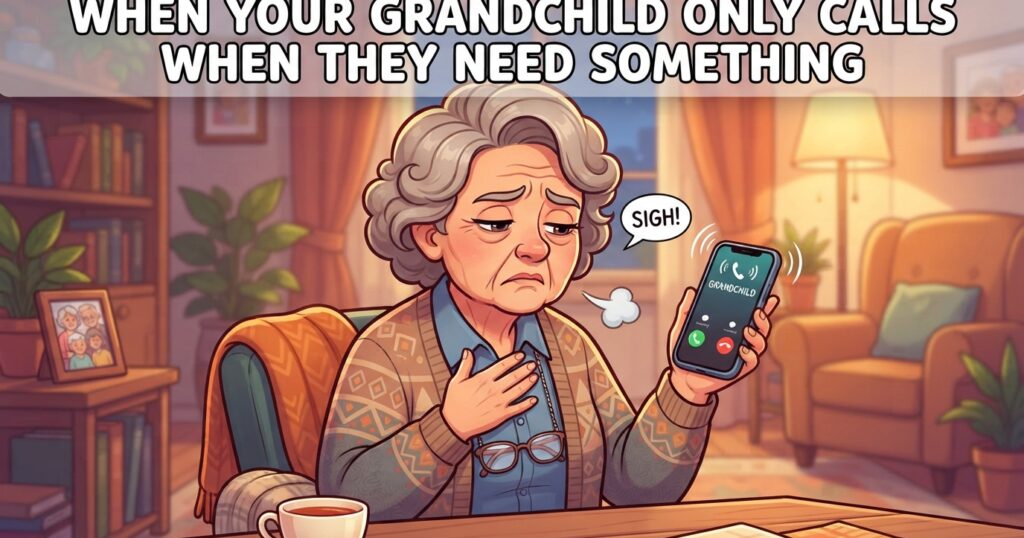
You adore your 19-year-old grandson, and you’re always happy to hear his voice. But lately, you’ve noticed a pattern.
Weeks may go by without a call or text. Then suddenly, your phone rings.
“Grandma! How are you?”
For a moment, your heart lifts. But within a minute or two, the real reason for the call appears.
He needs help paying for a car repair. Or he wants you to proofread an assignment. Or he needs a ride somewhere. Or he’s hoping you’ll make that dish he loves for a gathering with his friends.
You usually help because you love him. Still, lately, you’ve begun to feel a little hurt.
You don’t want him to call because he feels obligated. And you certainly don’t want to keep score. But you miss feeling like he simply wants to talk to you.
Then one afternoon, he calls and cheerfully says, “Grandma, I need a favor.”
You feel that familiar little ache in your chest.
When Love Starts to Feel a Little One-Sided
There is something especially tender about hearing a grandchild’s voice on the phone.
No matter how old they become, part of us still remembers the little child who once ran toward us with open arms. So when the phone rings and we see that familiar name on the screen, our hearts often respond before our minds do.
That is why this particular situation can sting.
The problem is not really the favor.
Most grandmothers are delighted to help when they can. The deeper hurt comes from wondering, Would you have called me if you didn’t need something?
That question can bring up sadness, disappointment, and even resentment. But the way we handle those feelings can either strengthen the relationship or quietly create more distance.
Option A: Say nothing and continue helping
There is something loving behind this choice.
You may tell yourself, “He’s young. He’s busy. I don’t want to make him feel guilty.”
And that may all be true.
Young adults are often absorbed in school, work, friendships, dating, finances, and the everyday task of figuring out who they are. They may genuinely love their grandparents while being terribly inconsistent about staying in touch.
So giving a grandchild some grace is wise.
But continually hiding your feelings is different from giving grace.
If you repeatedly help while quietly feeling hurt, resentment can begin to creep into the relationship. Eventually, even an innocent request may feel irritating because it carries the weight of every previous disappointment.
Healthy closeness depends on being able to express affection and needs gently. Silence may keep the peace in the moment, but it does not always create deeper understanding.
Option B: Refuse and tell him you’re tired of being used
Anyone who has felt taken for granted can understand the temptation behind this response.
Sometimes we want the other person to experience a little of the disappointment we have been carrying.
But beginning the conversation with accusation is likely to make your grandchild defensive.
“You only call when you want something” may be emotionally accurate from your point of view, but to him it may sound like a verdict on his character.
He may immediately start defending himself.
“That’s not true!”
“I’ve been busy!”
“I called you last month!”
Now the conversation has shifted away from connection and toward proving who is right.
Refusing a favor can certainly be appropriate if the request is unreasonable, expensive, inconvenient, or something you simply do not want to do. Grandmothers are allowed to have boundaries.
But using refusal as a way of teaching an emotional lesson often creates distance rather than understanding.
Option C: Start contacting him much more often yourself
This response comes from a generous instinct.
Perhaps you think, “Maybe he just isn’t good at initiating. I’ll take the lead.”
And there is nothing wrong with reaching out to your grandchildren.
A funny photograph, a quick message saying “Thinking of you,” or a short phone call can be lovely ways to keep a relationship alive.
But there is a difference between reaching out because you want to and reaching out because you are trying to compensate for someone else’s lack of effort.
If Grandma always fills every silence, the grandchild never has much opportunity to notice the silence himself.
You may also find yourself monitoring his responses.
“He took six hours to text back.”
“I called twice last week. Why hasn’t he called me?”
Suddenly, something meant to create closeness can start feeling like emotional bookkeeping.
Relationships with older grandchildren often require a new rhythm. They are becoming independent adults, and part of that transition is allowing them room to become active participants in the relationship.
Option D: Help if you wish, then gently tell him you’d love to hear from him just because
This is the best response.
Why?
Because it combines warmth, honesty, and emotional maturity without turning the conversation into a guilt trip.
You might say something simple such as:
“I’m happy to help if I can. And you know something? I really love hearing your voice. I’d enjoy it if you called me sometimes even when you don’t need anything. You don’t have to have a reason.”
Notice what this does.
You are not accusing him.
You are not keeping score.
You are not demanding a weekly telephone appointment.
You are simply letting him know that his presence matters to you.
That distinction is powerful.
A young adult may not realize that Grandma experiences these calls differently than he does. To him, contacting you for help may actually be evidence of trust.
He may think, Grandma is someone I can depend on.
That is not necessarily a bad thing.
What he may not yet understand is that relationships also need ordinary moments—the conversations that have no purpose except connection.
By expressing that desire gently, you teach something important about relationships: people need to feel valued not only for what they provide, but for who they are.
And there is another important lesson here for grandmothers.
Try not to measure your grandchild’s love entirely by how often the phone rings.
Different generations communicate differently. Some young people rarely call anyone. Others send memes, photographs, short texts, or social media messages instead of having long conversations.
Look at the whole relationship.
Does your grandchild hug you warmly when you meet?
Does he tell you things about his life?
Does he trust your advice?
Does he remember details you have shared?
Does he seem comfortable being himself around you?
Those things matter too.
At the same time, your feelings matter.
Wanting to hear from someone you love is not unreasonable. The healthiest approach is often to express that desire without turning it into a test.
You might say:
“I never want you to feel you have to call me. I just want you to know that hearing from you makes my day.”
Then leave some room.
You may be pleasantly surprised.
A week later, the phone might ring.
“Hi, Grandma.”
And you might ask, “Everything okay?”
And perhaps he will laugh and say:
“Yep. I don’t need anything. I just thought I’d call.”
Those may be some of the sweetest words a grandmother can hear.
The goal is not to make our grandchildren feel guilty enough to contact us.
The goal is to build a relationship safe enough that they want to.
Warm honesty helps create that kind of relationship.
Say what your heart needs to say, but say it without blame. Keep the door open. Keep your expectations flexible. And remember that connection grows best when love is offered freely, and when both people gradually learn how to show up for one another.



