
Disclaimer: Devoted Grandma is reader-supported. If you purchase anything through my site, I may receive a small commission (at no cost to you). Thank you.
You’ve been looking forward to your granddaughter Lily’s weekend visit for days. You bought her favorite cereal, set out a new puzzle, and even planned to bake the cookies she loved when she was little.
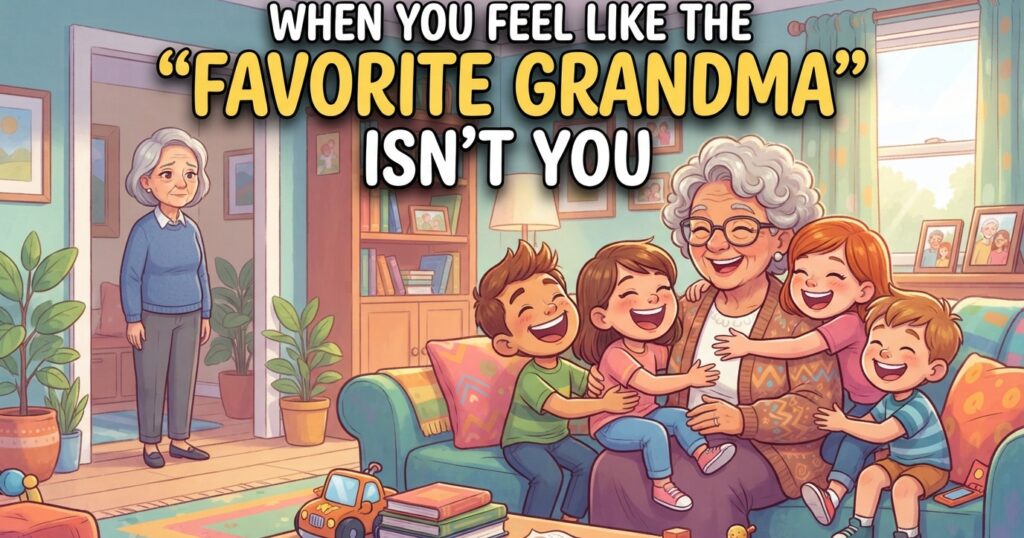
But not long after she arrives, Lily begins talking excitedly about her other grandmother.
“Grandma Rose lets me stay up late,” she says. “She takes me shopping, and she always knows what I like. She’s so much fun.”
You smile, but something inside you sinks.
Later, when Lily asks whether she can call Grandma Rose to tell her about school, you feel a surprising sting of jealousy. You love your granddaughter deeply, and you do not want to compete, but you cannot help wondering whether you matter to her as much.
Feeling like the “less-favored” grandmother can touch a very tender place in the heart.
Grandmothers give so much of themselves. We remember birthdays, save little treasures, listen to long stories, prepare favorite foods, and carry our grandchildren in our thoughts even when they are far away. When a grandchild seems more excited about another grandmother, it can feel as though all that love has somehow been measured—and found lacking.
But love is rarely as simple as a ranking.
A grandchild may prefer one grandmother for certain activities, another for comfort, another for traditions, and another for quiet conversation. Children often speak enthusiastically about whatever is newest, most exciting, or most different. Their excitement does not necessarily reveal the full depth of their attachment.
Let us look carefully at each response.
Option A: Tell Lily that her comments hurt your feelings
This response comes from honesty, and honesty matters in close relationships. Grandmothers should not have to pretend they never feel disappointed.
However, telling Lily directly that her enthusiasm for Grandma Rose is hurting you may place an emotional burden on her that she is not ready to carry.
Lily is not trying to reject anyone. She is simply sharing her excitement. If she begins to feel responsible for protecting your feelings, she may become cautious about what she says. She might avoid mentioning her other grandmother, not because she loves you more, but because she is afraid of upsetting you.
That can create guilt where there should be freedom.
A grandmother’s feelings deserve care, but another trusted adult—a spouse, friend, sibling, counselor, or fellow grandmother—is usually a better person to help process jealousy or sadness. With Lily, the goal is to keep the relationship emotionally safe.
You can still express a need without making her responsible for your pain. For example, you might say, “I’d love for us to choose something special to do together today.” That focuses on connection rather than comparison.
Option B: Become more exciting and generous
This choice is understandable. When we fear losing closeness, we may feel tempted to compete.
Perhaps if you buy better gifts, allow later bedtimes, or plan more impressive outings, your grandchild will talk about you with the same excitement.
The trouble is that competition can slowly change the relationship. Instead of asking, “What helps my grandchild feel loved and secure?” we begin asking, “What will make me win?”
Children may enjoy extra treats and special outings, but lasting closeness is not built by trying to outspend or out-entertain another grandparent. It grows through consistency, warmth, interest, trust, and shared history.
Relaxing every boundary can also create confusion. Grandchildren benefit from knowing that Grandma’s love is steady and that her home has caring limits. You do not need to become someone else to be valuable.
The best relationships are not copies of one another. Grandma Rose may be the shopping grandmother. You may be the gardening grandmother, the story-listening grandmother, the pancake grandmother, or the one who always notices when something is wrong.
Your strength may be quieter, but quiet love can run very deep.
Option C: Support the other relationship while building your own
This is the best response.
When you show genuine interest in Lily’s relationship with Grandma Rose, you send a powerful message: “You do not have to divide your love.”
You might say, “That sounds like such a fun day. What did you enjoy most?” This does not make you less important. It makes you emotionally generous.
Children feel safest when the adults they love are not competing for loyalty. They should not have to calculate which grandmother they are allowed to praise or worry that loving one person will wound another.
At the same time, supporting Lily’s other relationship does not mean becoming passive. You can continue creating your own connection.
Instead of trying to imitate Grandma Rose, think about what feels natural between you and Lily. Perhaps you could begin a small tradition: a Saturday morning walk, a recipe notebook, a shared craft box, a bedtime question, or a monthly “Grandma and Lily” afternoon.
Ask what she enjoys, but also invite her into your world.
You could say, “I love hearing about the fun you have with Grandma Rose. I’d also like us to have something special that belongs to our time together. What should we choose?”
This response combines confidence with warmth. It honors Lily’s freedom to love both grandmothers while reminding her that your relationship deserves attention too.
Most importantly, it allows closeness to grow without pressure.
Option D: Hide your feelings and pull away
It can feel safer to withdraw before you are rejected.
You may think, “I will give her space. If she wants me, she can come to me.”
But children may not understand the reason for the distance. Lily may simply notice that you call less often, invite her less frequently, or seem less interested. She could interpret your withdrawal as disapproval or lack of affection.
Silence does not always protect a relationship. Sometimes it quietly weakens it.
You do not need to chase or demand attention, but remaining warmly present matters. Keep showing up. Ask about school. Remember what she tells you. Celebrate her interests. Offer invitations without pressure.
Love is often built through ordinary repetition.
A phone call. A shared joke. A familiar meal. A patient conversation. A grandmother who remains steady.
A Loving Reminder
Being the “favorite” is not the most important role a grandmother can have.
Favorites may change with age, mood, distance, family circumstances, and the activities a child currently enjoys. A grandchild who seems especially attached to one grandmother at ten may turn to another at sixteen for a completely different kind of support.
Instead of asking, “Am I the favorite?” try asking, “Does my grandchild feel safe, accepted, and known when she is with me?”
That is a far more lasting measure of love.
Let your grandchild enjoy every trustworthy person who cares for her. There is no shortage of love when a child has more than one devoted grandmother.
Your relationship does not need to be louder, grander, or more exciting than anyone else’s.
It only needs to be real.
Keep creating small moments of belonging. Stay curious about who your grandchild is becoming. Resist the urge to compare. Trust that your steady presence is planting seeds, even when you cannot yet see how deeply they are taking root.
A grandmother’s love is not a contest to win.
It is a place a child can return to, again and again.



