
Disclaimer: Devoted Grandma is reader-supported. If you purchase anything through my site, I may receive a small commission (at no cost to you). Thank you.
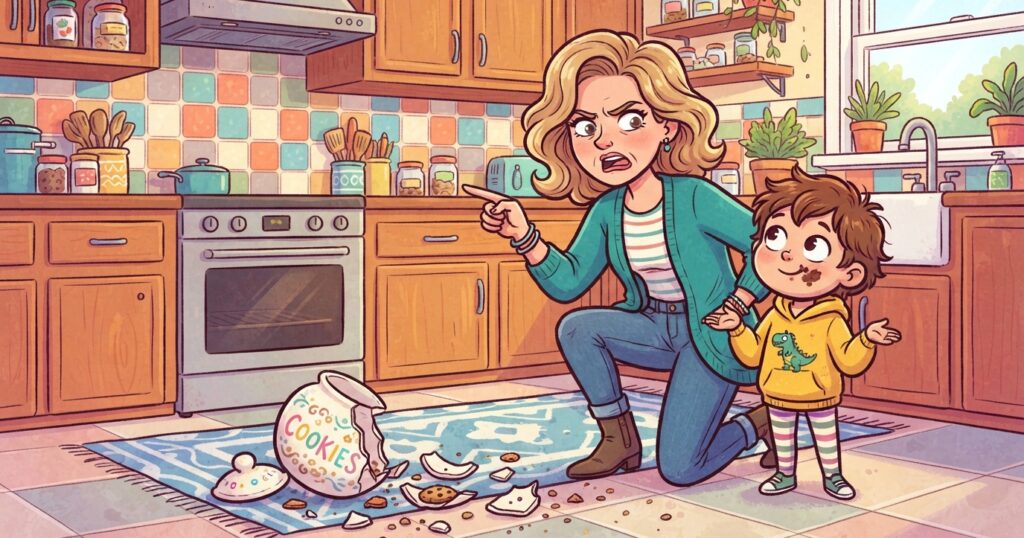
Your 11-year-old grandson, Caleb, is visiting for the weekend. While you are preparing lunch, he reaches across the table and knocks over a glass of juice.
Already feeling tired and frustrated, you react sharply.
“Caleb! You are always so careless. You’re old enough to know better.”
The moment the words leave your mouth, you regret them.
Caleb’s face changes. He quietly cleans up the spill, then disappears into the guest room. For the rest of the afternoon, he gives you one-word answers and avoids looking at you.
You know the spill was an accident. You also know that calling him “always careless” was unfair. Still, part of you wonders whether bringing it up again will make the situation more uncomfortable.
The Best Response—and Why It Matters
Every loving grandmother has moments she wishes she could take back.
Perhaps we speak too quickly. Perhaps we correct a child in front of others. Perhaps we use words like “always,” “never,” “lazy,” “rude,” or “careless,” when what we truly mean is, “Please pay attention,” or, “I’m feeling overwhelmed.”
The mistake itself does not have to damage the relationship. What matters most is what happens next.
Let us look at each response with honesty and compassion.
Option A: Say nothing and hope the moment passes
It is understandable to want to move on.
Many of us were raised in families where adults rarely apologized to children. Difficult feelings were often handled by changing the subject, making a favorite snack, or acting extra pleasant later. We may hope our grandchild will understand that our cheerful behavior means, “I’m sorry.”
But children and teenagers do not always interpret silence that way.
Caleb may think his grandmother still believes he is careless. He may also learn that when someone hurts his feelings, the safest response is to withdraw and pretend nothing happened.
The awkwardness may fade, but the hurt can remain.
Ignoring the moment also misses a valuable opportunity. A sincere apology shows a child that relationships can recover after mistakes. It teaches that love does not require perfection. It requires honesty, responsibility, and repair.
Option B: Apologize clearly and invite him to share his feelings
This is the best response.
A gentle apology might sound like this:
“Caleb, I’m sorry for the way I spoke to you. Spilling the juice was an accident, and it was wrong of me to call you careless. You did not deserve that. I noticed you became quiet afterward. Did my words hurt your feelings?”
This kind of apology does several important things.
First, it names the exact behavior. You are not simply saying, “Sorry about earlier.” You are showing Caleb that you understand what was hurtful.
Second, it avoids excuses. You may have been tired, stressed, or worried about the mess, but those feelings do not make the words fair. An explanation can be offered later, but the apology should come first.
Third, it separates the child from the mistake. Caleb spilled a drink. That does not mean he is a careless person. Children are still forming their sense of identity, and labels from trusted adults can carry more weight than we realize.
Finally, inviting him to share gives him a voice.
He may say, “It embarrassed me,” or, “You made me feel like I always mess things up.” He may shrug and say he is fine. He may not be ready to talk.
The goal is not to force a conversation. The goal is to create a safe opening.
You might say, “You don’t have to talk about it right now. I just want you to know I’m sorry, and I love you.”
When a grandmother apologizes with sincerity, she does not lose authority. She gains trust.
Option C: Apologize, but remind him to be more careful
This response may seem balanced. After all, children do need guidance, and being careful is important.
However, combining an apology with a correction can weaken the apology.
“I’m sorry, but you need to be more careful” may sound to Caleb like, “I’m not really sorry, because this was still your fault.”
There will be other moments to teach responsibility. Right now, the most important issue is not the spilled juice. It is the way the correction was delivered.
Once the relationship has been repaired, you can calmly discuss practical habits, such as keeping drinks away from the edge of the table. But that lesson will be received more openly when Caleb feels respected rather than shamed.
Correction works best when it focuses on behavior, not character.
“Please move your glass farther back” teaches a useful action.
“You are always careless” creates a painful label.
Option D: Ask someone else to reassure him
It can be tempting to involve another trusted adult, especially when we feel embarrassed.
You may hope his parent can explain that you were having a difficult day or that you did not truly mean what you said.
But the repair needs to come from you.
When one person causes the hurt, a message delivered through someone else can feel indirect or incomplete. Caleb needs to hear your words, see your expression, and experience your willingness to take responsibility.
Another family member may support the conversation, but they should not replace it.
A direct apology communicates courage. It says, “Our relationship is important enough for me to face an uncomfortable moment.”
A Loving Lesson for All of Us
Grandchildren do not need grandmothers who never make mistakes.
They need grandmothers who show them what to do after a mistake.
A heartfelt apology can become one of the most powerful lessons we ever give. It teaches humility without humiliation, responsibility without shame, and closeness without pretending.
The next time you correct your grandchild in a way that feels too sharp, pause and repair.
Name what you did. Apologize without defending yourself. Listen without interrupting. Then reconnect.
You might even say, “Next time I feel frustrated, I’m going to take a breath before I speak.”
That promise shows your grandchild that growing and learning do not stop when we become adults, or grandmothers.
Sometimes the words we regret can open the door to a deeper conversation. And sometimes the simple words, “I was wrong, and I’m sorry,” become words a grandchild remembers with love for the rest of their life.



