
Disclaimer: Devoted Grandma is reader-supported. If you purchase anything through my site, I may receive a small commission (at no cost to you). Thank you.
You’ve been looking forward to having your 12-year-old granddaughter, Maya, over for the afternoon. She usually drops her backpack by the door, gives you a hug, and heads straight for the kitchen to see what snacks you have.
But today, she walks in while looking at her phone and barely says hello.
A few minutes later, you ask her to put the phone away while you’re together. She sighs and says, “Grandma, I was just answering my friend.”
Something about her tone hits you the wrong way.
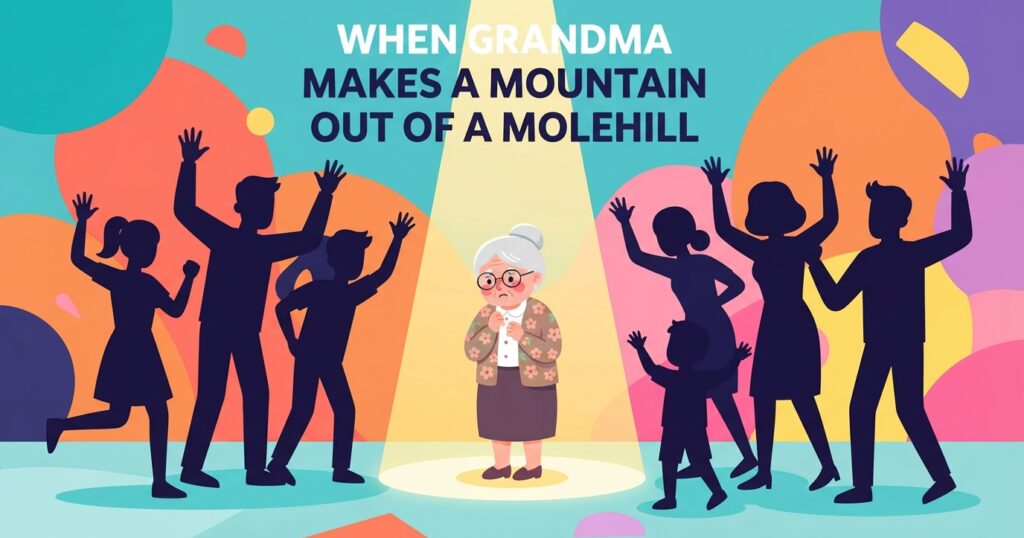
Before you know it, you’re giving her a long lecture about manners, respect, and how young people are “always glued to their phones.” Maya grows quiet. Eventually, she says, “I wasn’t trying to be rude. My friend was upset, and I was telling her I’d call her later.”
That’s when you realize you may have made a much bigger deal out of the moment than it deserved.
What would you do next?
A. Let the subject drop. Bringing it up again might make things more awkward, and she’ll probably forget about it soon anyway.
B. Explain that you only reacted strongly because manners are important, so she’ll understand where you were coming from.
C. Lighten the mood with a joke and suggest the two of you start fresh without dwelling on what happened.
D. Tell her plainly that you overreacted, apologize without making excuses, and let her know you appreciate her explaining what was really happening.
Oh, haven’t we all had a moment like this?
Sometimes it isn’t really the phone, the sigh, the forgotten thank-you, or the shoes left in the hallway. It’s simply the little thing that catches us at the wrong moment.
Perhaps we were already tired. Perhaps we’ve been worrying that our grandchildren are growing up too quickly. Perhaps a small behavior touches an old-fashioned nerve about respect or good manners. Suddenly, what could have been a two-minute conversation turns into a speech worthy of a town meeting.
And then comes that uncomfortable realization:
I may have overdone that.
What happens next can matter more than the original mistake.
A. Let the subject drop
There is something tempting about this choice.
Once we realize we’ve overreacted, we may feel embarrassed. We might think, Why make it worse? She seems fine now. Let’s just move on.
And sometimes moving forward is perfectly healthy. Families do not need to examine every tiny misunderstanding under a microscope.
But when a grandmother has clearly spoken too harshly or unfairly, silence can leave a grandchild wondering whether Grandma still believes everything she said.
Maya may forgive the moment quickly, but she may also remember the feeling of being misunderstood.
An apology gives her something silence cannot: reassurance that Grandma noticed the unfairness too.
B. Explain why you reacted strongly
This response comes from a very understandable place.
You might say, “I’m sorry I got upset, but manners really are important to me.”
That sounds reasonable. And certainly, grandparents are allowed to have expectations about courtesy.
The trouble is that an apology followed immediately by a defense can feel less like an apology and more like a closing argument.
Children and teenagers are especially sensitive to whether adults are truly listening to them. If Maya hears a long explanation about why Grandma was justified in getting upset, the message she may receive is:
Grandma still thinks I was wrong.
There will be plenty of opportunities to talk about phones, manners, and family expectations another day.
But first, the relationship needs tending.
C. Make a joke and start over
There is much to like about this response.
Humor can be a wonderful bridge between generations. A warm smile and a little joke can dissolve tension beautifully.
You might say, “Well, Grandma certainly climbed onto her soapbox rather quickly today!”
That could make Maya laugh.
And laughter can help.
But humor works best after the hurt has been acknowledged, not instead of acknowledging it.
If Grandma skips the apology altogether, Maya may wonder whether her feelings matter enough to be taken seriously.
Children learn a great deal from watching how adults handle mistakes. When adults simply laugh awkward moments away, children may learn to avoid responsibility themselves.
D. Admit you overreacted and apologize
This is the strongest response.
You might say something simple:
“I made a much bigger deal out of that than I needed to. I’m sorry, sweetheart. I should have asked what was going on before I started lecturing you. Thank you for explaining it to me.”
Notice what this apology does not include.
It does not say, “I’m sorry, but you did sound disrespectful.”
It does not say, “You’ll understand when you’re older.”
And it does not require Maya to immediately say, “That’s okay.”
It simply takes responsibility.
That kind of apology can be remarkably powerful in a grandparent-grandchild relationship.
Young people are used to adults correcting them. Teachers correct them. Parents correct them. Coaches correct them.
So when a trusted adult says, “I was wrong,” something important happens.
The child learns that love does not require pretending to be perfect.
She also learns that respect goes both ways.
In fact, apologizing does not weaken a grandmother’s authority or dignity. Quite the opposite. A sincere apology shows emotional maturity.
It tells a grandchild:
I care more about our relationship than I care about being right.
That is a lesson children often remember for years.
The deeper lesson
Grandmothers sometimes worry that admitting a mistake will encourage grandchildren to talk back or ignore boundaries.
Usually, the opposite happens.
Children who feel respected are often more willing to listen.
Imagine how differently Maya might respond the next time Grandma says, “Sweetheart, could we put the phones away while we have lunch?”
Because Grandma repaired this moment with humility, Maya may be more likely to hear that request as an invitation to connect rather than another criticism.
And there is another beautiful benefit.
When Grandma apologizes well, she is teaching Maya how to apologize someday.
One day, Maya will overreact with a friend, a spouse, a coworker, or perhaps even her own child.
She may remember, consciously or not, that someone she loved once showed her what repair looks like:
Notice the mistake.
Own it.
Say you’re sorry.
Listen.
Then move forward with love.
None of us gets every moment right.
Grandchildren do not need perfect grandmothers. They need grandmothers who are willing to keep learning from them, listening to them, and repairing the little bumps that naturally happen when two generations love each other.
Sometimes one of the most connecting things a grandmother can say is also one of the simplest:
“I made too much of that. I’m sorry.”
Those few words can turn an uncomfortable moment into something unexpectedly precious, a reminder that in a loving family, being wrong does not have to create distance.
Sometimes admitting we were wrong is exactly what brings us closer.



