Disclaimer: Devoted Grandma is reader-supported. If you purchase anything through my site, I may receive a small commission (at no cost to you). Thank you.
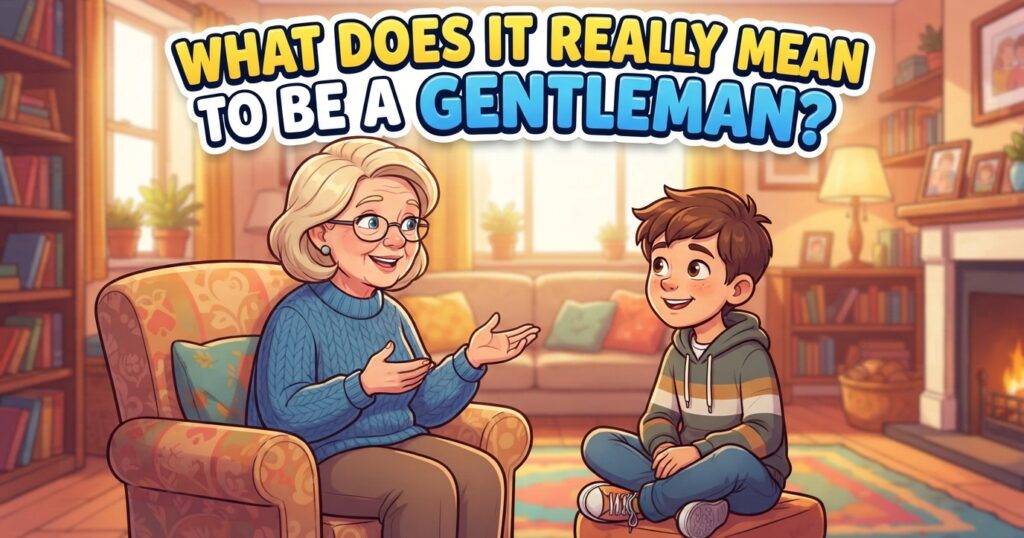
Your 11-year-old grandson, Marcus, is spending Saturday afternoon with you. You’ve always tried to teach him good manners, saying “please” and “thank you,” holding doors when someone is behind him, and treating people with respect.
On your way into a café, Marcus walks through the door ahead of you and lets it swing shut behind him. A woman carrying a toddler is coming in just a few steps behind you.
You gently say, “Marcus, sweetheart, a gentleman holds the door for others.”
He sighs and replies, “Grandma, nobody does that anymore. And why do boys always have to do things for girls? Girls can open doors too.”
You’re caught a little off guard. You want him to grow into a thoughtful, respectful young man, but you also realize that the world he is growing up in may think about manners differently than the one you grew up in.
There is something tender about watching a grandson grow old enough to question the lessons we once taught him without hesitation.
When Marcus was five, “Hold the door for Grandma” may have been all the explanation he needed. At eleven, he is beginning to examine the reasons behind rules. That can sometimes sound like arguing, but it is also an important part of growing up.
The goal is no longer simply to teach Marcus what to do.
It is to help him understand why kindness matters.
Option A: “Gentlemen hold doors for ladies.”
Many grandmothers may feel drawn to this response because it comes from a loving place.
For generations, boys were often taught that being a gentleman meant showing particular courtesy toward women, opening doors, pulling out chairs, giving up seats, and offering assistance.
There is nothing wrong with teaching courtesy.
The difficulty comes when courtesy is presented only as a rule boys must follow for girls.
Marcus has already noticed something important: girls and women are perfectly capable of opening their own doors.
If Grandma responds by insisting, “That is simply what gentlemen do,” Marcus may obey when she is watching. But he may also quietly decide that manners are outdated rules adults impose rather than expressions of genuine respect.
And that would miss the deeper lesson Grandma is hoping to teach.
Option B: “Let’s just forget about it.”
Avoiding the conversation may seem tempting.
After all, Grandma and Marcus are enjoying a nice afternoon together. Why create tension over a door?
And choosing our battles with grandchildren is often wise.
But this moment actually offers something valuable: Marcus has opened the door figuratively this time to a bigger conversation about respect.
Children often learn important values through small everyday moments rather than formal lectures.
A doorway, a grocery cart, a restaurant table, or a conversation with an elderly neighbor can all become opportunities to practice awareness of other people.
So while Grandma does not need to turn the café entrance into a serious lecture, completely dropping the subject means missing a lovely teaching moment.
Option C: “You have a point. But kindness isn’t really about boys versus girls.”
This is the strongest response.
Grandma might say something like:
“You’re right, sweetheart. Girls can certainly open doors themselves. I don’t want you holding doors because you think girls are helpless. I want you to notice people around you. If someone is carrying a baby, using a cane, pushing a stroller, or simply walking right behind you, holding the door is a small way of saying, ‘I see you.’”
Now the lesson becomes much bigger than etiquette.
Marcus is learning consideration.
And consideration is at the heart of what being a gentleman can mean today.
A gentleman does not behave kindly because someone is weaker than he is.
He behaves kindly because he notices other people.
He lets someone finish speaking.
He says thank you.
He apologizes when he hurts someone.
He treats waiters, teachers, classmates, siblings, and strangers with dignity.
He offers help without assuming someone is incapable.
And yes, sometimes he holds the door.
Not because the person behind him is female—but because letting a door swing into someone’s face is simply inconsiderate.
This approach also respects Marcus’s growing ability to think for himself.
Children entering the tween years often begin questioning rules they once accepted automatically. That questioning is not necessarily disrespectful. It is part of developing independent judgment.
When Grandma acknowledges, “You have a point,” she sends an important message:
I listen to your ideas.
Children who feel heard are often much more willing to hear us in return.
Option D: “People will judge you by your manners.”
There is some truth here.
People do notice manners.
A child who greets others politely, shows gratitude, and behaves thoughtfully often makes a positive impression.
But if Marcus learns that manners are mainly about how other people judge him, he may begin performing kindness rather than practicing it.
He may hold the door when a teacher is watching, but ignore someone when nobody important is nearby.
Grandma wants something deeper.
She wants kindness to become part of his character.
That means helping him ask not, “How will this make me look?”
but rather:
“How might my actions affect the person beside me?”
That small shift, from appearance to empathy, is powerful.
Raising a Gentleman in a Changing World
The definition of a gentleman may look a little different today than it did when many grandmothers were young.
But the heart of it has not changed very much.
Respect still matters.
Courtesy still matters.
Self-control still matters.
Keeping your word matters.
Treating people with dignity matters.
Noticing when someone needs help matters.
Perhaps instead of giving our grandsons a long list of rules about what gentlemen must do, we can give them something even more valuable: a way of looking at the world.
Notice people.
Listen.
Be helpful.
Be respectful.
Use your strength to protect, never intimidate.
Treat girls as equals.
Treat boys with kindness too.
Speak respectfully to the elderly and the young.
And when a small act of courtesy might make someone else’s day easier, do it gladly.
One day, Marcus may hold a café door open for a mother carrying a toddler.
Another day, a woman may hold the door for him when his hands are full.
Both moments teach exactly the same lesson.
Kindness is not weakness.
Courtesy is not outdated.
And being a gentleman is not about proving that someone else needs your help.
It is about becoming the kind of man who notices the people around him and chooses, whenever he can, to make the world a little kinder for them.