
Disclaimer: Devoted Grandma is reader-supported. If you purchase anything through my site, I may receive a small commission (at no cost to you). Thank you.
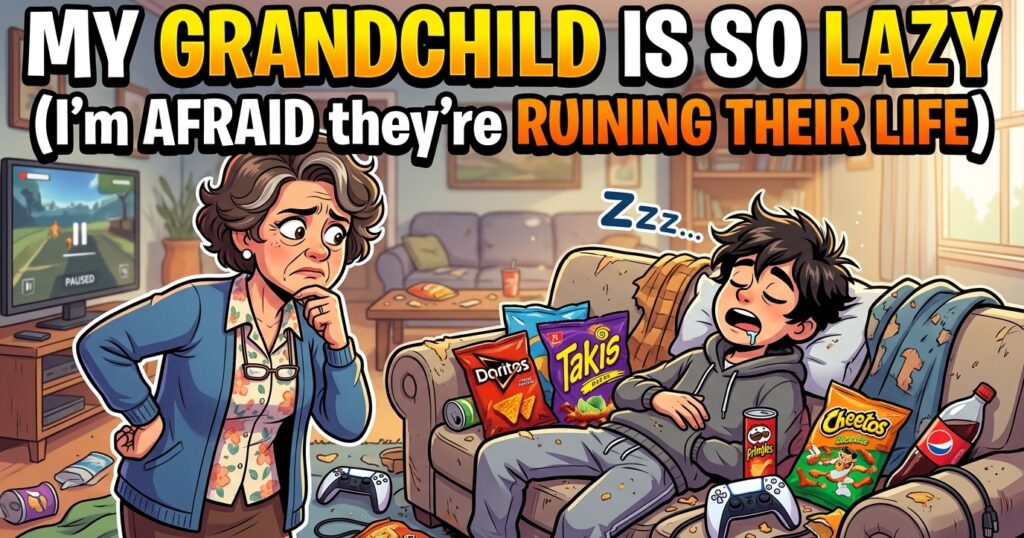
Your 19-year-old grandson, Noah, has always been bright and capable. But lately, watching him has become painful.
He dropped two college classes last semester. He works only a few shifts a week and complains whenever his manager asks him to do more. When he’s home, he spends hours in his room playing games, watching videos, or scrolling on his phone.
Meanwhile, his friends seem to be moving forward—college, apprenticeships, jobs, relationships.
You love Noah dearly, but every time you see him lying on the couch at two in the afternoon, something inside you wants to shout:
“Wake up! You’re wasting the best years of your life!”
One afternoon, Noah tells you he’s thinking about quitting his job.
“They expect too much for what they pay me,” he says with a shrug. “I’ll figure something else out eventually.”
You feel your patience disappear.
You remember working hard when you were his age. Nobody had to motivate you. Nobody rescued you when things became difficult.
And you’re frightened that if someone doesn’t give Noah a good hard push, he’ll wake up at 30 and realize he has wasted a decade.
But you also know that one angry conversation could make him stop talking to you altogether.
What would you do?
A. Give him the reality check he needs.
Tell Noah plainly that he is being lazy and that life will pass him by if he doesn’t grow up soon. Sometimes love means saying what nobody else will say.
B. Stop discussing his future altogether.
He’s an adult now, and his choices are his responsibility. Keep your relationship pleasant and refuse to get involved.
C. Motivate him by pointing to successful young people.
Mention friends and relatives his age who are working, studying, buying homes, or building careers. Seeing what others have accomplished might inspire him.
D. Get curious before calling him lazy.
Tell Noah you’ve noticed that he seems stuck and ask what’s been making things difficult lately. Listen without immediately correcting him, then ask whether he’d like your help thinking through one small next step.
What Looks Like Laziness May Be Telling You Something
If you’ve ever watched a grandchild waste opportunities you would have been grateful to have at their age, you know how frustrating this situation can feel.
Your instinct may be to shake some sense into them.
But before we decide that a young person is lazy, there is one important question worth asking:
What is happening underneath the behavior?
That is why D is the best response.
It doesn’t excuse Noah from responsibility. It creates the kind of conversation in which responsibility may actually become possible.
Why A is understandable but risky
There is something very tempting about saying, “Noah, you are being lazy.”
After all, Grandma has lived long enough to know that choices have consequences.
And sometimes young people genuinely do need encouragement to develop discipline, perseverance, and responsibility.
The problem is the label.
When you say, “You’re lazy,” Noah may not hear, “I believe you’re capable of more.”
He may hear:
“Grandma thinks there is something wrong with me.”
Once a young person feels judged, the conversation can quickly become about defending himself rather than examining his choices.
There is a useful difference between criticizing a behavior and defining a person.
“You haven’t been following through on things lately” leaves room for change.
“You are lazy” can feel like a verdict.
Grandma can tell the truth without turning that truth into a label.
Why B goes too far in the other direction
Perhaps you decide, “He’s 19. I’m staying out of it.”
There is wisdom in recognizing that Noah’s life belongs to Noah.
A grandmother cannot live her grandchild’s life for him—and trying to control an adult grandchild can damage a relationship surprisingly quickly.
But staying completely silent may mean losing an opportunity for connection.
Young adults still benefit from caring adults who notice them.
The goal isn’t to take over.
It is to communicate:
“Your choices belong to you, but you don’t have to figure everything out alone.”
That’s a very different message from either controlling him or abandoning the subject.
Why C can accidentally create shame
Comparisons often come from good intentions.
“Your cousin is already finishing university.”
“Daniel has a wonderful apprenticeship.”
“Sarah worked two jobs at your age.”
Grandma may hope that these examples provide inspiration.
But Noah might hear something entirely different:
“Everybody else is doing better than you.”
Comparison can turn concern into shame.
And shame isn’t particularly good fuel for lasting change.
Your grandchild doesn’t need to become his cousin, neighbor, sibling, or childhood friend.
He needs to figure out how he moves forward.
Why D opens a door instead of closing one
Imagine saying:
“I’ve noticed you seem a little stuck lately. I’m not here to lecture you. I’m wondering what’s been going on.”
And then comes the difficult part.
Listen.
Perhaps Noah really has developed some poor habits.
But perhaps you’ll discover something else.
Maybe he has no idea what he wants to do and is embarrassed to admit it.
Maybe college left him feeling like a failure.
Maybe he is overwhelmed by adulthood and disguising uncertainty with indifference.
Maybe he has become accustomed to comfort and needs to learn that progress requires effort.
Or perhaps several things are true at once.
You don’t have to diagnose the reason. You simply want to understand before deciding what the reason is.
Then Grandma can gently move the conversation toward responsibility:
“What do you think would make things a little better?”
Not, “What are you going to do with your entire life?”
Just the next step.
Maybe Noah agrees to keep his current job while looking for another one.
Maybe he explores a trade instead of returning immediately to college.
Maybe he starts applying for full-time work.
Maybe he needs help creating a routine.
The important thing is that he participates in choosing the step.
That helps turn Grandma from the person pushing him into the person standing beside him.
Love Them Without Carrying Them
There is another important part of D that grandmothers sometimes find difficult.
Understanding Noah doesn’t mean rescuing Noah.
You can listen compassionately while still allowing natural consequences.
You don’t have to provide endless spending money because he doesn’t want to work.
You don’t have to solve every problem he avoids.
You don’t have to make phone calls, fill out applications, or arrange his future for him.
Sometimes loving a young adult means saying:
“I believe you can handle this.”
Then allowing him to handle it.
Our grandchildren may take longer than we’d like to find their direction. Their path may also look very different from the one we imagined for them.
Your job isn’t to build Noah’s life.
It’s to help preserve the kind of relationship where, when Noah finally decides he wants to build it himself, he knows Grandma is someone he can talk to.
So when you’re tempted to say, “You’re ruining your life,” try beginning somewhere gentler:
“You don’t seem like yourself lately. What’s going on?”
You may be surprised by what you hear.
And sometimes the conversation that changes a young person’s direction doesn’t begin with a lecture.
It begins with someone loving them enough to ask—and being patient enough to listen.



