
Disclaimer: Devoted Grandma is reader-supported. If you purchase anything through my site, I may receive a small commission (at no cost to you). Thank you.
Your 14-year-old granddaughter, Maya, has always been close to you. She tells you things she doesn’t always tell her parents, sends you funny videos, and often asks to spend weekends at your house.
Lately, though, you’ve noticed something changing.
When Maya asks for something, you find yourself saying yes even when you don’t feel comfortable with it. An extra-late bedtime? You allow it. Dessert instead of dinner? You let it slide. She wants you to tell her parents she finished her homework when you know she hasn’t? You almost do it.
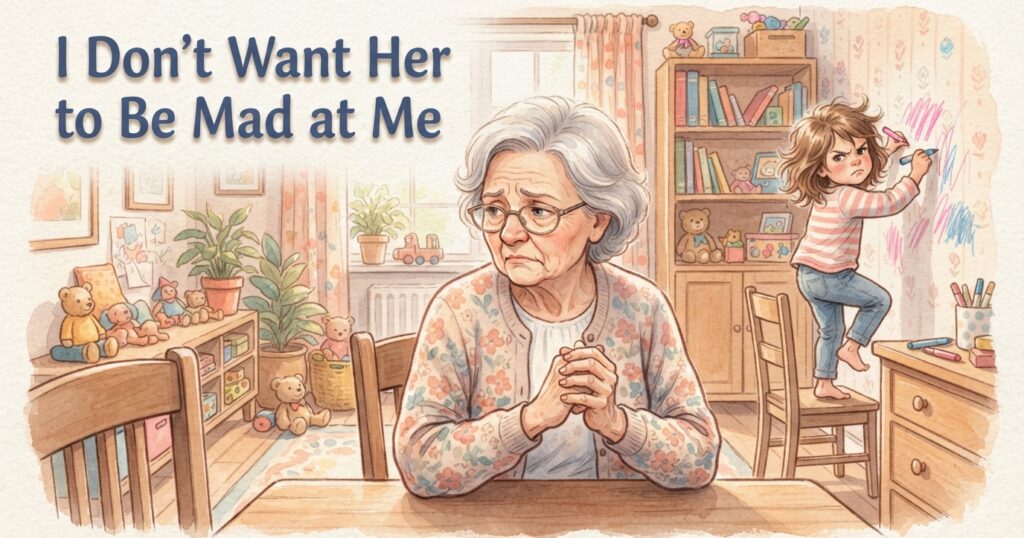
The truth is, you’re afraid of getting on her bad side.
You’ve seen Maya become distant when adults tell her no. She’ll go quiet, roll her eyes, or stop texting for a few days. And because your relationship with her means so much to you, the thought of her pulling away feels painful.
Then one Saturday evening, Maya asks you to cover for her.
“Grandma, if Mom asks, just tell her I was with you the whole afternoon. Please. She’ll freak out if she knows I went somewhere else.”
You know her mother specifically asked you to keep an eye on her that day.
Maya sees you hesitate.
“Come on, Grandma. I thought you were the one person I could trust.”
Your heart sinks. You don’t want to betray her confidence, but you also know that lying for her crosses a line.
There is a particular kind of tenderness that comes with being a grandmother.
We have lived long enough to know that relationships can be fragile. We know people grow up, schedules get busy, children become teenagers, and teenagers sometimes become very good at closing bedroom doors.
So when a grandchild lets us into her world, it can feel precious.
And because it feels precious, we may become afraid to do anything that might threaten it.
That fear is understandable. But sometimes, without realizing it, we begin confusing closeness with agreement.
That is the heart of today’s dilemma.
Option A: Agree to cover for Maya this once
At first glance, this may feel like the loving choice.
You might think, “She trusts me. I don’t want to ruin that.”
And perhaps you tell yourself it is only one small lie.
But agreeing to cover for Maya teaches an unintended lesson: Grandma’s love can be used to get around boundaries.
Children and teenagers often test relationships, not necessarily because they are manipulative, but because they are learning where the limits are. They are discovering which adults will stay steady when emotions run high.
If Grandma always gives in because she is afraid of losing affection, the grandchild may actually feel less secure over time.
Warmth matters. But so does steadiness.
A relationship built on “I must never upset you” is not quite the same as a relationship built on trust.
Option B: Refuse to lie, but quickly change the subject
This is certainly better than agreeing to the lie.
You have held the boundary.
But something important is missing.
Maya’s words, “I thought you were the one person I could trust” are really the emotional center of the moment.
If Grandma simply refuses and then changes the subject, Maya may hear only the rejection.
She may not understand that the boundary is actually part of the love.
Teenagers can sometimes interpret limits as personal rejection, especially in emotionally charged moments. That is why explanation matters.
Not a speech. Not an argument.
Just a calm reminder that love and boundaries can exist in the same sentence.
Option C: Give Maya a long lecture
Many loving grandparents might be tempted by this response.
After all, honesty matters. Respect for parents matters. And you may genuinely feel disappointed.
But long lectures rarely create the kind of reflection we hope for, especially with teenagers.
Once a young person feels judged or cornered, she may stop listening and start defending herself.
The goal is not simply to make Maya admit Grandma is right.
The deeper goal is to keep the relationship open enough that Maya will still come to Grandma when life gets complicated.
That requires truth, but it also requires emotional safety.
A grandchild should be able to make a mistake without believing that the mistake has changed how deeply she is loved.
Which brings us to Option D, the best response.
Option D: Hold the boundary while protecting the relationship
This response does something very powerful.
It says, in effect:
“I love you enough to be close to you—and I love you enough not to help you do something I believe is wrong.”
That is mature love.
Grandma does not shame Maya.
She does not threaten her.
She does not withdraw affection.
And she does not surrender her values simply because Maya may become upset.
Instead, she separates two things that often get tangled together: trust and secrecy.
Being a trusted grandmother does not mean keeping every secret.
It means being the kind of person a grandchild can come to knowing she will be heard, respected, and guided with care.
Sometimes the most trustworthy adult in a child’s life is the one who gently says, “I cannot help you hide this, but I will help you face it.”
Notice also the second half of the response: Grandma offers to help Maya talk to her mother.
That turns the boundary into support.
Instead of saying, “You’re on your own,” Grandma says, “I’m still beside you.”
That distinction matters.
When we fear losing our grandchildren’s affection
Many grandmothers carry a quiet worry:
“What if I say the wrong thing and she stops coming around?”
That fear can grow stronger when grandchildren become teenagers or young adults.
Their approval suddenly feels less predictable.
But healthy closeness cannot depend on never disappointing each other.
In fact, some of the strongest relationships are built when a grandchild discovers something surprising:
“Grandma can disagree with me, and she still loves me.”
That is a powerful lesson.
It teaches a young person that conflict does not automatically mean abandonment.
It teaches her that relationships can survive frustration.
And it teaches her that love does not have to be earned through agreement.
The grandmother’s quiet strength
There is a special role grandparents can play.
We often have a little more patience than we did when raising our own children.
A little more perspective.
A little less need to win every argument.
That makes us wonderfully positioned to offer something children desperately need: calm, steady love.
But steady love is not the same as permissive love.
Sometimes steadiness means saying yes.
Sometimes it means listening without fixing.
And sometimes it means gently saying no while keeping the door wide open.
If your grandchild becomes annoyed with you, it does not automatically mean the relationship is damaged.
Young people are allowed to feel disappointed.
They are allowed to disagree.
They are even allowed to be grumpy for a while.
Your job is not to prevent every uncomfortable feeling.
Your role is to remain kind, trustworthy, and emotionally available while staying true to what you believe is right.
A grandmother might say:
“I know you may be upset with me, sweetheart. I can handle that. I love you too much to lie for you, and I’m still right here to help you figure out what to do next.”
Those words carry both backbone and tenderness.
And very often, that combination is exactly what makes a grandchild feel safest.
The goal is not to stay permanently on your grandchild’s “good side.”
The goal is to become someone whose love is so dependable that even disagreement cannot shake it.



