
Disclaimer: Devoted Grandma is reader-supported. If you purchase anything through my site, I may receive a small commission (at no cost to you). Thank you.
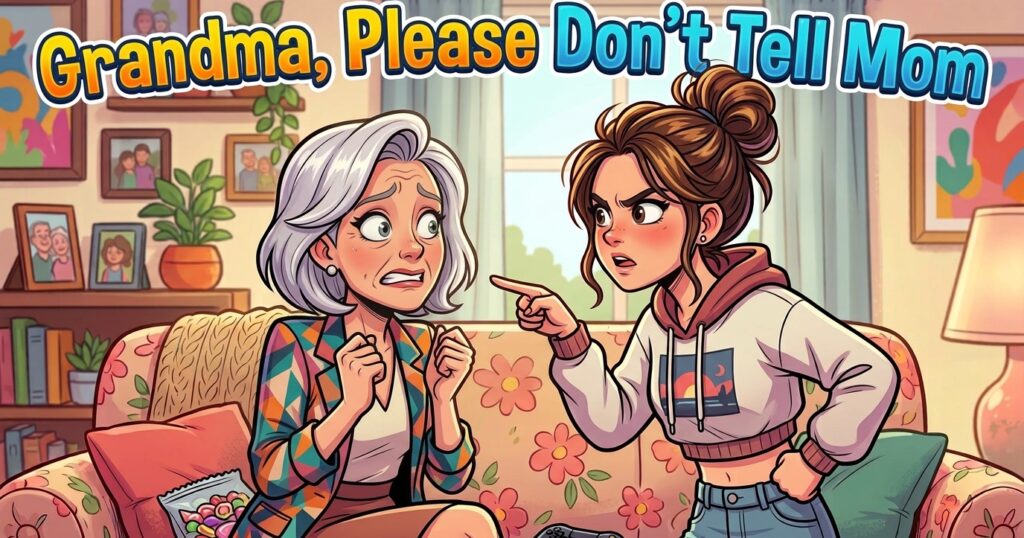
Your 13-year-old granddaughter, Sophie, comes to spend Saturday afternoon with you. Usually she chatters away the moment she walks through the door, but today she seems unusually quiet.
While the two of you are making cookies, you gently ask whether something is bothering her.
After a long silence, Sophie finally says, “I got a really bad grade on my math test. Mom doesn’t know yet.”
Then she looks straight at you.
“Please don’t tell her, Grandma. She’ll be so disappointed. I just wanted to tell somebody.”
You know Sophie’s mother, your daughter, expects honesty about school. You also know how much it means that Sophie trusted you enough to confide in you.
What would you do?
A. Tell Sophie that keeping secrets from her mother is wrong, then call her mother that evening and explain what happened.
B. Promise Sophie you won’t say anything and reassure her that what happens between the two of you always stays between the two of you.
C. Thank Sophie for trusting you, ask what happened, and help her think through how she can tell her mother herself while explaining that you won’t secretly report it unless there is a serious safety concern.
D. Avoid discussing the grade further and distract Sophie with something enjoyable so she won’t feel worse about it.
There are moments in a grandmother’s life when love seems to pull us in two directions at once.
We want to support our adult children as parents. At the same time, we want our grandchildren to know that Grandma is a safe person—the kind of person they can come to when their stomach is tied in knots and they don’t quite know what to do.
That is exactly what makes this situation so tender.
Sophie isn’t really asking Grandma to solve a math problem. She is asking a much bigger question:
“Can I trust you with something that embarrasses me?”
How Grandma responds may influence whether Sophie comes to her again when the problems are larger than a disappointing test grade.
Let’s look carefully at each choice.
Option A: Tell Sophie that keeping secrets is wrong, then inform her mother.
It is easy to understand the instinct behind this response.
A grandmother may think, “My daughter deserves to know what is happening with her child.” She may also worry that staying quiet somehow means approving of dishonesty.
But immediately reporting Sophie’s confession could unintentionally teach her a painful lesson: telling Grandma something difficult means losing control of the information.
At thirteen, young people are beginning to develop more independence. They are learning how to handle mistakes, embarrassment, responsibility, and difficult conversations.
If every uncomfortable confession is quickly passed along to a parent, Sophie may simply stop confiding in Grandma.
There are certainly situations in which a grandmother should involve a parent immediately—particularly if a grandchild is in danger, being harmed, considering self-harm, or facing another serious safety issue.
A bad math grade, however, is usually an opportunity for guidance rather than emergency intervention.
Option B: Promise Sophie complete secrecy.
This response feels wonderfully loyal.
Grandma may want Sophie to know, “You can tell me anything.”
And that feeling of safety is tremendously valuable.
The difficulty is the phrase “anything stays between us.”
Children and teenagers should never be promised absolute secrecy by a trusted adult. Occasionally they may reveal something involving danger or harm that requires another responsible adult to step in.
There is another issue here as well. Sophie still needs to deal with the grade.
Protecting her from an uncomfortable conversation may feel kind today, but it could prevent her from practicing an important life skill: facing a mistake honestly.
Grandma can be a safe harbor without becoming a hiding place.
That distinction matters.
Option C: Thank Sophie for trusting you and help her prepare to tell her mother herself.
This is the best response.
It protects two important things at the same time: Sophie’s trust and Sophie’s growing responsibility.
Grandma might begin simply:
“Thank you for telling me. I know that probably wasn’t easy.”
Those few words can make a child feel remarkably understood.
Then, instead of rushing to fix the situation, Grandma can become curious.
“What happened on the test?”
“Was the material confusing?”
“Were you surprised by the grade?”
“What are you most worried your mom will say?”
Questions like these help Sophie move from panic toward reflection.
Perhaps she didn’t understand the material. Perhaps she forgot to study. Perhaps she is usually a strong student and feels ashamed. Perhaps the real problem isn’t the grade at all, it is her fear of disappointing her mother.
Once Sophie feels heard, Grandma can help her think about the next step.
“You’ll probably feel better once Mom knows. How would you like to tell her?”
Grandma might even help Sophie practice the conversation.
She could encourage Sophie to say something like:
“Mom, I got a bad grade on my math test. I’m disappointed too, and I want to figure out what went wrong.”
Notice what Grandma is doing here.
She isn’t rescuing Sophie.
She isn’t betraying her.
She is standing beside her while Sophie learns to handle something difficult.
That is one of the most valuable roles a grandparent can play.
Grandma can also gently establish a healthy boundary around confidentiality.
She might say, “I won’t run and tell your mom about every little thing you share with me. But if I ever thought you were in real danger, I would need to get help because I love you.”
That kind of honesty actually strengthens trust.
Option D: Change the subject and cheer Sophie up.
There is something very grandmotherly about wanting to replace a worried face with a smile.
Cookies, a movie, a walk, or a little laughter may indeed help Sophie relax.
But distraction alone leaves the real concern untouched.
When a child takes the emotional risk of saying, “Something is bothering me,” one of the greatest gifts we can offer is our willingness to stay in the conversation.
We don’t always need answers.
Sometimes we simply need to show that uncomfortable feelings are welcome at Grandma’s house too.
Sadness can come in.
Mistakes can come in.
Embarrassment can come in.
And none of them threatens the relationship.
The deeper lesson
As grandchildren grow older, grandmothers often have to adjust the way we help them.
When they are little, we tie shoes, wipe tears, and solve immediate problems.
As they enter adolescence, our role changes.
We begin helping them solve problems for themselves.
That means listening before advising. Asking questions before giving answers. And sometimes resisting the urge to rescue them from perfectly survivable discomfort.
A strong relationship with a grandchild is not built by making every difficult feeling disappear.
It is built when a child gradually learns:
“Grandma can handle the truth about me.”
Not just the good grades.
Not just the happy stories.
Not just the moments when everything is going well.
The whole child.
And when a grandchild knows that Grandma will listen calmly, respect appropriate privacy, and still guide her toward honesty and responsibility, something beautiful develops.
Trust.
The kind of trust that may someday bring that grandchild back to Grandma’s kitchen with an even harder conversation.
And when that day comes, she will already know she has a safe place to begin.



