
Disclaimer: Devoted Grandma is reader-supported. If you purchase anything through my site, I may receive a small commission (at no cost to you). Thank you.
Twelve-year-old Maya has always been close to her grandmother, Ruth. Every Friday after school, Maya comes over for hot chocolate, card games, and long talks at the kitchen table.
But lately, Maya has been quieter.
Her other grandmother, whom she called Nana June, passed away several months ago. At first, Maya cried often and talked about her memories. Recently, though, she has stopped mentioning Nana June altogether.
One Friday, Ruth notices Maya staring at an old family photograph on the mantel. In it, Maya is about six years old, standing between both grandmothers at a birthday party.
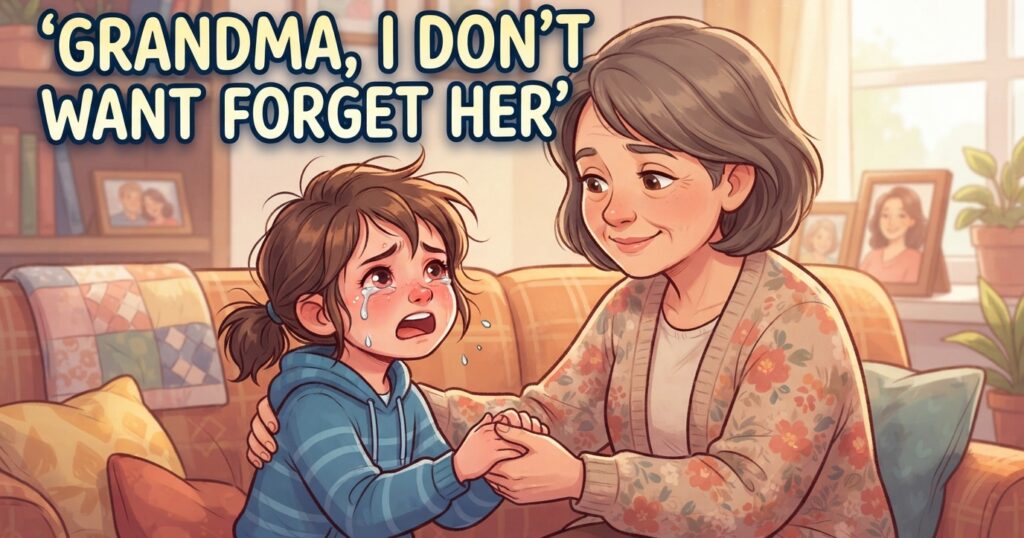
Ruth sits beside her and gently asks, “Are you thinking about Nana June?”
Maya’s eyes fill with tears.
“I miss her,” she whispers. “But Mom gets sad when I talk about her. And I don’t want you to think I loved her more than I love you.”
Ruth feels a lump rise in her throat. Part of her wants to reassure Maya quickly. Another part of her worries that saying the wrong thing might make the moment even harder.
What should Ruth do?
A. Say, “You don’t need to be sad anymore. Nana June would want you to be happy.”
B. Say, “You never have to compare us. I know you love me, so let’s focus on the good times we have together.”
C. Say, “You can love and miss Nana June with your whole heart, and still love me too. I would be honored to hear anything you want to remember about her.”
D. Say, “Maybe you should talk to your mother about this instead. I don’t want to interfere with how she is handling it.”
There are moments in a grandmother’s life when the most loving thing she can offer is not advice, distraction, or reassurance. It is permission.
Maya is carrying more than grief. She is also carrying guilt. She worries that talking about one grandmother may hurt her mother, and loving one grandmother deeply may somehow betray the other. That is a heavy emotional burden for a twelve-year-old.
Ruth’s response can either add to that burden or gently help lift it.
Let us look at each choice with kindness.
Option A: “You don’t need to be sad anymore. Nana June would want you to be happy.”
This response comes from a loving place. Grandmothers often want to protect their grandchildren from pain. When we see tears, our instinct may be to wipe them away as quickly as possible.
The difficulty is that grief does not follow a timetable. Maya may still feel sad months later, especially when she sees a photograph, hears a familiar song, or remembers something she once shared with Nana June.
Telling her that she does not need to be sad anymore may sound comforting to an adult, but to Maya it could feel as though her sadness is wrong or inconvenient. She may begin hiding her grief more carefully.
Children and young teenagers need to know that difficult feelings are not failures. Sadness can exist alongside laughter, gratitude, and love. Maya does not need to choose between grieving and being happy. She can experience both.
Option B: “You never have to compare us. I know you love me, so let’s focus on the good times we have together.”
The first part of this response is helpful. Maya truly does not need to compare her two grandmothers. Love is not a contest, and family bonds do not have to compete for first place.
However, the second part moves away from Maya’s pain too quickly. “Let’s focus on the good times we have together” may unintentionally communicate, “Let us talk about our relationship, not the grandmother you lost.”
Ruth might choose this response because she also feels vulnerable. Hearing Maya speak lovingly about Nana June could awaken Ruth’s own fears about aging, loss, or whether she matters enough. Those feelings are understandable.
Still, this moment is not really about Ruth’s place in Maya’s heart. It is about helping Maya understand that her heart has room for many people.
A child’s love for someone who has died does not reduce the love available for someone who is still present.
Option C: “You can love and miss Nana June with your whole heart, and still love me too. I would be honored to hear anything you want to remember about her.”
This is the best response.
It addresses both of Maya’s deepest worries: that her grief is too much, and that her love must be divided.
Ruth gives Maya permission to miss Nana June openly. She also removes the fear of competition by making it clear that love can grow in more than one direction at the same time.
The words “I would be honored to hear” are especially meaningful. They tell Maya that her memories are not awkward, threatening, or unwelcome. They are precious.
Ruth is not trying to replace Nana June. She is not asking Maya to move on. She is offering to become a safe keeper of Maya’s memories.
That may lead to a beautiful conversation. Maya might share how Nana June sang while washing dishes, always carried peppermints, or called her by a special nickname. Ruth could listen, ask gentle questions, and perhaps share a warm memory of Nana June too.
This kind of listening helps children process grief. It teaches them that strong feelings can be spoken aloud and held safely by someone who loves them.
It also strengthens trust. Maya learns, “Grandma can handle my sadness. I do not have to protect her from my heart.”
Option D: “Maybe you should talk to your mother about this instead. I don’t want to interfere with how she is handling it.”
It is thoughtful for Ruth to respect Maya’s mother. Grandparents should be careful not to undermine parents or create tension within the family.
But listening to Maya is not interfering.
Maya has already explained that her mother becomes sad when Nana June is mentioned. Her mother may be grieving deeply too. That does not mean she is doing anything wrong. It simply means Maya may need another trusted adult who can listen without becoming overwhelmed.
Sending Maya away in this moment could make her feel that her grief is too uncomfortable for everyone.
Ruth can support Maya while still respecting her daughter or daughter-in-law. She might later say, “Maya shared that she misses Nana June. I listened and reminded her that it is always okay to talk about someone we love.”
That is not taking over. It is helping the family carry grief together.
The Deeper Lesson
One of the greatest gifts a grandmother can give is emotional spaciousness.
Our grandchildren need places where they do not have to edit themselves. They need to know they can talk about sadness without being rushed, love without being tested, and memories without worrying that someone will feel replaced.
A wise grandmother does not ask, “How do I make this feeling disappear?”
She asks, “How can I help my grandchild feel less alone while carrying it?”
Sometimes the answer is as simple as sitting close, keeping our voice gentle, and saying:
“Tell me about her.”
In that quiet invitation, a child may discover something important: love does not end when someone dies, and it does not shrink when it is shared.
A grandchild’s heart is not a room with only one chair.
It is a whole home, with space for every person who has loved them well.



