
Disclaimer: Devoted Grandma is reader-supported. If you purchase anything through my site, I may receive a small commission (at no cost to you). Thank you.
Your 12-year-old grandson, Marcus, is visiting for the weekend. While you are preparing dinner, you hear a loud crash from the living room. When you rush in, you see a broken lamp on the floor and Marcus standing nearby with a football in his hands.
Before he can explain, you snap, “How many times have I told you not to throw balls in the house? You never listen!”
Marcus looks shocked and embarrassed. He quietly says, “I wasn’t throwing it,” then walks to the guest room and closes the door.
A few minutes later, your granddaughter tells you that the dog bumped the side table while Marcus was picking up the football. You realize you reacted before knowing what happened.
You feel terrible. You want to make things right, but part of you also feels awkward about admitting you were wrong.
There is a particular sting that comes with realizing we have judged a grandchild too quickly. Most grandmothers do not react sharply because they want to hurt a child. We react because we are startled, worried, tired, protective, or afraid that something important has been damaged.
Still, even a brief outburst can leave a child feeling unheard or unfairly blamed. What matters most is not whether we ever make mistakes. We all do. What matters is what we do after the mistake becomes clear.
Let us look gently at each response.
Option A: Give Marcus space and act extra kind later
This response comes from a loving place. You may want to avoid embarrassing Marcus further, and you may hope that warm behavior will show him you regret what happened.
Giving a child a little time to settle can sometimes be helpful. However, kindness without a direct apology may leave the real hurt untouched. Marcus might notice that you are being especially cheerful or offering him an extra dessert, but he may still wonder whether you believe he caused the accident.
Children and teenagers are often very alert to fairness. When an adult makes an accusation and then does not correct it openly, the child may feel that adults expect apologies from young people but do not believe they must apologize themselves.
Extra kindness is welcome, but it is not a substitute for taking responsibility.
Option B: Explain your fear and remind him about indoor safety
This response contains a reasonable point. A football near a breakable lamp may not be ideal, and the sound of breaking glass can certainly cause alarm. It is natural to want Marcus to understand why you reacted strongly.
The difficulty is timing. If your first words focus on your fear or on what Marcus could have done differently, your apology may sound like a defense of your behavior.
You might unintentionally communicate, “I was wrong, but you were partly responsible for my reaction.”
There may be a time later to discuss safe places for sports equipment. First, however, the unfair accusation must be repaired. Marcus needs to know that you understand the difference between causing an accident and simply being nearby when it happened.
When we explain too soon, children can hear excuses rather than accountability.
Option C: Apologize clearly and listen to Marcus
A sincere apology might sound like this:
“Marcus, I am sorry. I saw the broken lamp and accused you before I knew what happened. That was unfair. You did not deserve to be spoken to that way. I would like to hear how you are feeling.”
This kind of apology does several important things.
First, it names exactly what went wrong. You are not merely saying, “Sorry you got upset.” You are acknowledging that you made an unfair assumption and spoke harshly.
Second, you do not place responsibility for your reaction on Marcus. You may have been startled, but your feelings were still yours to manage.
Third, you invite him to speak. He may say he felt angry, embarrassed, or disappointed that you did not trust him. It can be difficult to hear those words, especially when we already feel guilty. Yet listening without interrupting is part of the repair.
You might respond, “I understand why you felt that way,” or, “Thank you for telling me. I want to do better.”
A good apology does not weaken a grandmother’s authority. In fact, it often strengthens the relationship. It shows a grandchild that respect goes both ways and that love is strong enough to survive an uncomfortable moment.
Children learn about accountability by watching us. When we admit a mistake calmly, we teach them that being wrong is not shameful and that repairing hurt is a sign of maturity.
Option D: Ask someone else to carry the apology
This option may feel easier. You might worry that Marcus does not want to see you, or you may feel too embarrassed to face him directly. Asking his sister to explain could seem like a gentle way to open the door.
However, the apology belongs to you.
When another person delivers it, Marcus loses the chance to hear your tone, see your expression, and respond directly. Your granddaughter may also feel caught in the middle of something that is not her responsibility.
A message passed through someone else can easily become unclear. Marcus might hear, “Grandma did not mean it,” rather than, “Grandma knows she was wrong and wants to make amends.”
You can still respect his space. You might knock and ask, “May I come in for a moment?” If he says no, you can reply, “That is all right. I owe you an apology, and I will be here when you are ready.”
The important thing is that the repair comes from you.
A loving relationship can hold a mistake
Many grandmothers carry an old belief that adults must always appear certain and in control. Perhaps the adults in our own childhood rarely apologized. We may have learned that saying “I was wrong” invited disrespect.
But closeness grows through honesty, not perfection.
Returning after a quick reaction tells your grandchild, “You matter more to me than my pride.” It shows that the relationship is not damaged beyond repair when someone makes a mistake. Instead, mistakes can become moments of deeper trust.
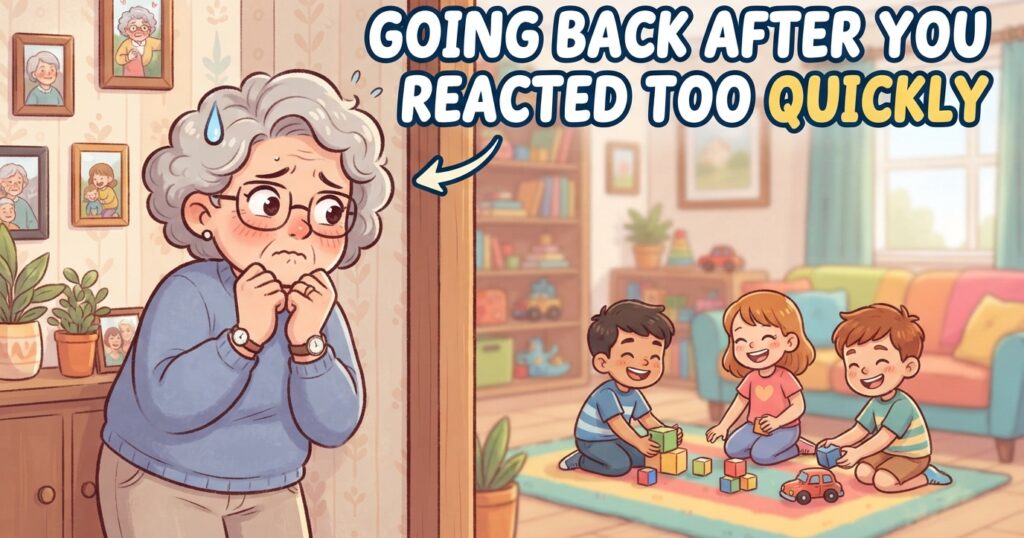
The next time you react too quickly, pause as soon as you recognize it. Take a breath. Go back. Name what you did, apologize without excuses, and listen.
You do not need a long speech. You only need honesty, humility, and a willingness to reconnect.
A grandchild may not remember every broken lamp, spilled drink, or misunderstood moment. But they may remember that Grandma came back, looked them in the eye, and cared enough to make things right.



