Disclaimer: Devoted Grandma is reader-supported. If you purchase anything through my site, I may receive a small commission (at no cost to you). Thank you.
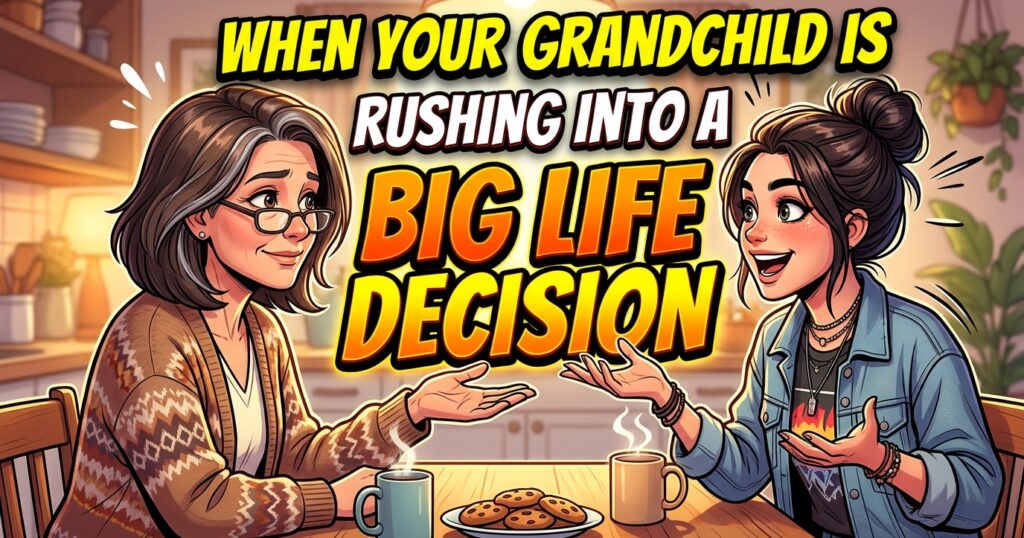
Your 22-year-old granddaughter, Maya, calls you bursting with excitement.
“Grandma, I’ve decided! I’m quitting my job and moving across the country next month to live with Daniel.”
You’ve met Daniel only twice. They’ve been dating for five months, and although he seems pleasant enough, Maya has never lived away from home, has very little money saved, and doesn’t have a job lined up in the new city.
As she talks, you can hear how thrilled she is. She tells you this is her chance to “finally start living” and says she knows in her heart that everything will work out.
Your stomach tightens.
You love Maya dearly. You don’t want to crush her excitement or make her feel that you don’t trust her judgment. But you also worry she may be making several enormous changes all at once without thinking through what could happen if things don’t go as planned.
When Love Makes Us Want to Protect Them
There are few things more difficult for a grandmother than watching a beloved grandchild stand at the edge of a life-changing decision.
We have lived long enough to know that excitement can sometimes outrun wisdom. We know how quickly money disappears, how complicated relationships can become, and how hard it can be to start over in an unfamiliar place.
And because we love our grandchildren, our first instinct may be to protect them from every pothole we can see in the road ahead.
But when a grandchild becomes a young adult, our role begins to change. We can no longer steer the car. What we can do is help them slow down long enough to look at the map.
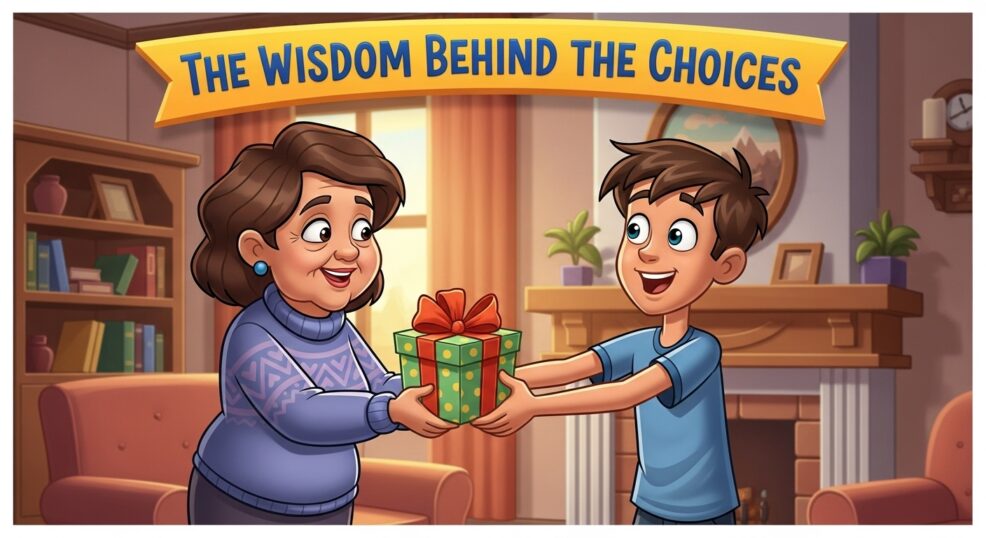
That is why B is the best response.
Let’s look at each choice.
A. Tell her she is making a mistake
This response comes from a very understandable place.
You may genuinely believe Maya is moving too quickly. Perhaps your own life experience tells you that quitting a job, moving far away, and becoming financially dependent on a relatively new romantic partner is a risky combination.
The problem is not necessarily the concern. The problem is how it is expressed.
If you begin with, “You’re making a mistake,” Maya may stop hearing everything that follows.
Young adults are developing confidence in their ability to direct their own lives. When they feel judged or treated like children, they often become more determined to defend their decisions.
Instead of encouraging reflection, a strong warning may push Maya into proving that Grandma is wrong.
You might win the argument and still lose the conversation.
B. Share her excitement, then ask thoughtful questions
This response gives Maya something every young adult needs: respect without indifference.
You might begin by saying, “You sound so excited about this new chapter. I can hear how much it means to you.”
That does not mean you approve of every detail. It simply tells Maya, “I am listening to you.”
Then you can gently invite her to think more deeply.
You might ask:
“What will you do for income while you look for work?”
“Have you and Daniel talked about how you’ll divide expenses?”
“What would your backup plan be if the relationship became difficult?”
“Would you consider visiting for a few weeks before making the move permanent?”
These questions do something important.
They allow Maya to examine her own decision rather than forcing her to defend it against yours.
That distinction matters.
When we tell someone what to think, they may resist us. When we ask thoughtful questions, we give them space to think for themselves.
You might even discover that Maya has considered more than you realized. Or your questions may uncover gaps she had not thought about.
Either way, you are treating her as a capable adult while still offering the wisdom of someone who has seen a few more seasons of life.
C. Say nothing because she is an adult
There is some wisdom in recognizing that adult grandchildren must make their own decisions.
We cannot prevent every mistake, nor should we try.
Sometimes the experiences that worry us most become the experiences through which our grandchildren grow.
But respecting independence does not require silence.
A loving relationship should have room for thoughtful concern.
If Maya later struggles, she may wonder why the people closest to her never encouraged her to think through the risks.
The key is to offer perspective without trying to take control.
You can say, in effect, “This is your life, and I respect that. I also love you enough to ask a few questions.”
That is very different from interference.
D. Call her parents behind her back
This option may feel tempting, especially when the whole family shares concerns.
But going around Maya can damage trust.
Imagine discovering that after you shared exciting news with your grandmother, she immediately contacted your parents to organize an intervention.
Even if everyone meant well, you might feel betrayed.
Unless there is an immediate safety concern, it is usually better to speak directly with the grandchild rather than quietly recruiting other relatives.
If Maya chooses to involve her parents, that is different.
But whenever possible, protect the trust she placed in you by coming to you first.
The Gift of Being a Safe Place
One of the greatest gifts a grandmother can offer an adult grandchild is a relationship where both excitement and uncertainty are welcome.
We do not need to approve of every choice to remain close.
We do not need to predict every mistake to be helpful.
And we do not need to rescue our grandchildren from every difficult lesson.
Sometimes our most valuable role is simply to help them think.
Ask questions. Listen carefully. Share your experience when invited. Express concern without announcing catastrophe.
And above all, keep the door open.
Because if Maya does move away and life becomes harder than she expected, the most important thing may not be whether Grandma predicted it.
The most important thing may be knowing she can call Grandma without hearing, “I told you so.”
That kind of relationship is built long before the difficult phone call comes.
It is built in moments like this one, when love chooses curiosity over control, respect over fear, and connection over being right.