
Disclaimer: Devoted Grandma is reader-supported. If you purchase anything through my site, I may receive a small commission (at no cost to you). Thank you.
You’ve been looking forward to Sunday dinner all week.
Your daughter and her family are visiting, including your grandchildren, 13-year-old Lily and 16-year-old Noah. You’ve cooked some family favorites, set the table nicely, and even made the chocolate cake everyone loves.
At first, the house feels wonderfully full again.
But after dinner, you notice something.
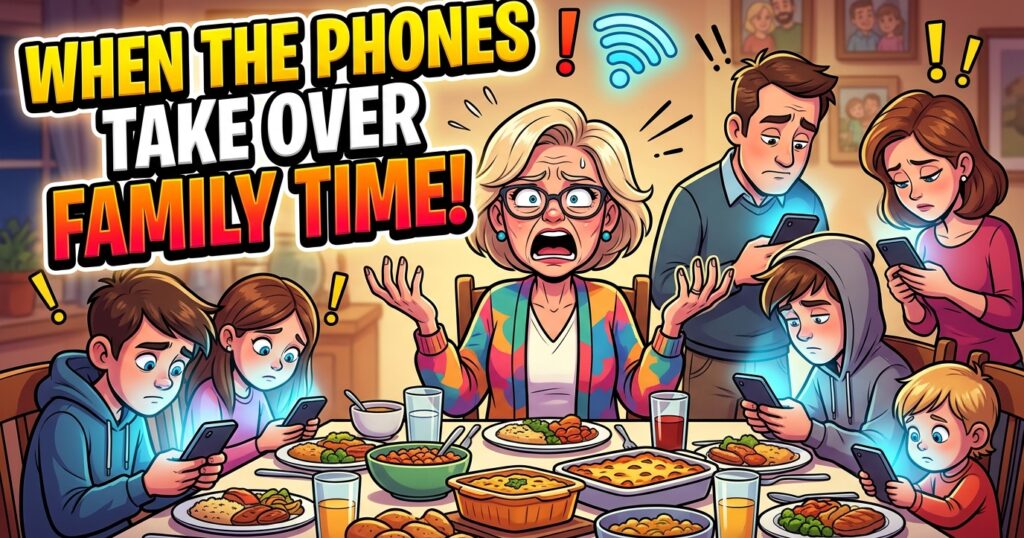
Noah is scrolling through videos on his phone. Lily is texting friends. Your daughter is answering messages, and your son-in-law keeps glancing at his screen.
Before long, everyone is sitting together… but nobody is really together.
You try asking Noah about school.
“Fine,” he says, without looking up.
You ask Lily about her upcoming dance performance.
“Hang on, Grandma,” she says, still typing.
You feel a little ache in your heart. You don’t expect everyone to spend the whole evening entertaining you, but these visits don’t happen nearly as often as you’d like. You had imagined laughter, stories, and catching up, not five people sitting in the same room staring at separate screens.
You’re tempted to say something.
But you also don’t want to become the grandmother who complains about “kids these days” or makes everyone dread coming over.
There is something particularly lonely about being surrounded by people you love while feeling as though no one is truly present.
For a grandmother, it can sting even more when family visits are precious and perhaps less frequent than you would like. You may have spent hours preparing a meal, tidying the house, and looking forward to hearing what is happening in your grandchildren’s lives. When everyone retreats behind a phone screen, disappointment is perfectly understandable.
But the way we respond to that disappointment can either invite our grandchildren closer—or make them feel criticized and controlled.
Let’s look at each response.
Option A: Tell everyone to put their phones away
There is certainly something reasonable behind this response.
Phones can interfere with connection. And a grandmother is allowed to have expectations in her own home.
The trouble is that starting with, “Put those phones away,” turns the moment into a battle over behavior rather than an invitation to connect.
Teenagers especially are becoming more independent and sensitive to being controlled. A command may get the desired result—phones might disappear—but it can also produce eye rolls, resentment, or uncomfortable silence.
And notice the difference between having someone’s phone and having someone’s attention.
You might succeed in getting every screen off the table without creating a single warm conversation.
That doesn’t mean grandparents should never establish boundaries. A family might happily agree that dinner itself is phone-free, for example. But in this particular moment, connection is more likely to grow through invitation than enforcement.
Option B: Invite everyone into something enjoyable and phone-free
This is the best response.
Instead of making the phones the enemy, Grandma gives everyone something better to do.
“Before we all disappear into our screens, how about twenty minutes of cards with Grandma?”
There is wisdom tucked inside that little invitation.
First, it is specific.
“Let’s spend quality time together” sounds admirable, but teenagers may have no idea what that actually means. Playing cards, taking a family photo, going for a short walk, bringing out an old board game, or having dessert together gives everyone an easy way to participate.
Second, the time limit matters.
Twenty minutes feels manageable.
You are not announcing that phones are forbidden for the rest of the evening. You are simply creating a small island of undistracted family time.
Young people often respond better when they know a request has boundaries. “Come play cards for twenty minutes” feels very different from “You need to spend more time talking to your grandmother.”
Third—and perhaps most importantly, the invitation avoids shame.
No one is being accused of being rude, selfish, addicted, or ungrateful.
Grandma is communicating the real message underneath her frustration:
I enjoy you. I miss you. I would love a little of your attention while we’re together.
That message is much easier for a grandchild to receive.
And once everyone begins doing something together, conversation often happens naturally. Noah might mention school while shuffling cards. Lily may suddenly start talking about her dance performance. Stories emerge when children and teenagers do not feel as though they are being formally interrogated.
Sometimes the best conversations happen sideways.
Option C: Say nothing and simply accept it
This choice may seem peaceful.
Perhaps you tell yourself, “This is their generation. I shouldn’t interfere.”
Certainly, phones are woven into modern life. Your grandchildren may be communicating with friends, following interests, doing homework, or simply relaxing.
Understanding that reality helps grandparents avoid turning every screen into a moral issue.
But understanding does not require silence.
Your desire for connection matters too.
Healthy relationships allow people to express what they need respectfully. If Grandma repeatedly feels overlooked but never says anything, disappointment can quietly become resentment.
Rather than deciding, “They don’t want to talk to me,” it is often better to create an opportunity for connection and see what happens.
You may be surprised how readily grandchildren respond when the invitation feels welcoming rather than demanding.
Option D: Make a pointed joke
Many of us have done this.
When saying what we really feel seems uncomfortable, sarcasm slips out instead.
“Well, I’m glad I cooked all day so I could look at the tops of your heads!”
Everyone may laugh.
But they will probably hear the message underneath:
You are disappointing me.
Guilt occasionally changes behavior, but it rarely strengthens closeness.
A grandchild who feels embarrassed may put the phone away, yet emotionally withdraw at the same time.
If what Grandma really wants is companionship, it is kinder, and usually more effective, to ask for companionship directly.
Connection Works Better Than Competition
Phones are probably not going anywhere.
And grandparents do not need to compete with them.
The more useful question is: How can I create moments my grandchildren genuinely want to join?
That might mean pulling out a silly card game. Asking a grandchild to teach you something. Looking through old photographs together. Making dessert. Taking the dog for a walk. Asking everyone a funny question at the dinner table.
You might even occasionally enter their digital world.
“Show me that video you keep laughing at.”
“What game are you playing?”
“Who are you texting so furiously?”
Curiosity can build bridges where criticism builds walls.
And then, once the bridge is there, it becomes much easier to say, “All right, phones down for fifteen minutes. Grandma wants you all to herself.”
Most grandchildren can hear the love in that.
The goal isn’t a perfectly phone-free family gathering.
The goal is something much more important: creating enough moments of genuine presence that your grandchildren leave remembering not simply what Grandma served for dinner, but how it felt to be with her.
Because years from now, nobody will remember who checked their phone that Sunday afternoon.
But they just might remember the card game, the laughter, and the grandmother who made being together feel like an invitation rather than an obligation.



