
Disclaimer: Devoted Grandma is reader-supported. If you purchase anything through my site, I may receive a small commission (at no cost to you). Thank you.
For nearly thirty years, Mr. Lewis walked around the same lake every Saturday morning.
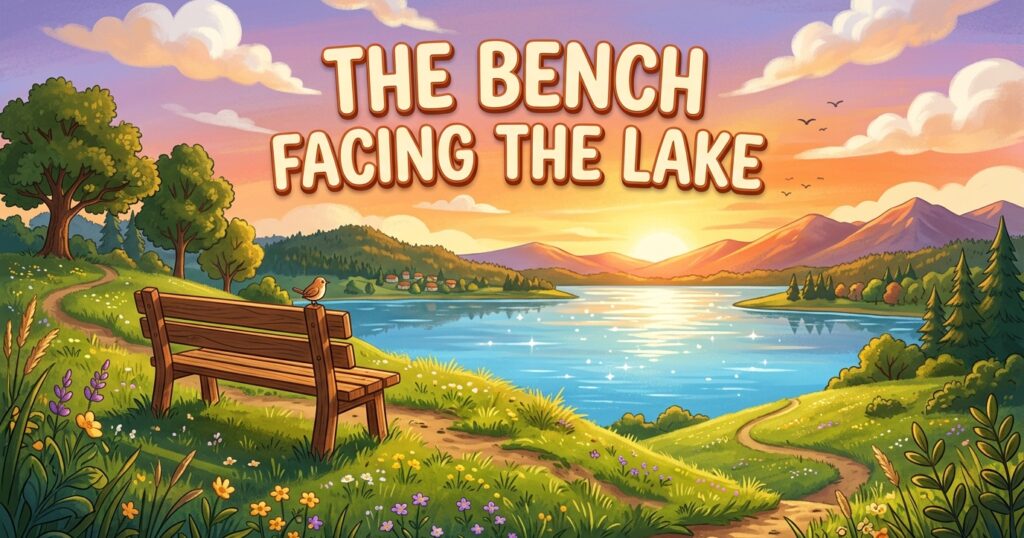
He had a favorite bench.
It sat beneath an enormous oak tree and faced the water.
From there, he could see ducks swimming near the reeds, little boats in the distance, and the sun sparkling across the lake.
One Saturday, Mr. Lewis found a young man standing beside his bench.
The young man was studying it carefully.
“Morning,” Mr. Lewis said.
“Morning.”
The young man pointed at the bench.
“Do you know who put this here?”
“No idea.”
The young man shook his head.
“Terrible place for it.”
Mr. Lewis nearly laughed.
“Terrible?”
“Yes.”
“This is the best bench in the entire park.”
The young man looked surprised.
“Seriously?”
“Look at that view!”
Mr. Lewis pointed toward the lake.
The young man turned.
“It’s fine.”
“Fine?”
Mr. Lewis couldn’t believe what he was hearing.
“You have the water, the ducks, the sunrise—”
“But you can’t see the playground.”
“Why would I want to?”
The young man pointed behind the bench.
There, across the path, was a large children’s playground.
“My daughter plays there.”
Mr. Lewis looked at him.
The young man continued.
“If the bench faced the other direction, parents could sit down while watching their children.”
Mr. Lewis shook his head.
“Then you’d spend your entire time staring at swings instead of enjoying the lake.”
“Exactly.”
“Exactly?”
“My daughter is four. I don’t particularly want to lose sight of her so I can admire a duck.”
Mr. Lewis laughed.
“Fair enough.”
But neither man changed his mind.
To Mr. Lewis, the bench faced the perfect direction.
To the young father, it faced the wrong one.
Mr. Lewis thought about the conversation later that afternoon.
He had been so certain.
Then he realized the young man had been equally certain.
And strangely, they were both making sense.
A few weeks later, Mr. Lewis had dinner with his two adult daughters, Sarah and Rebecca.
They were discussing what to do with their mother’s old piano.
Their mother had died several years earlier, and the piano had remained in the family home.
“We should sell it,” Sarah said.
Rebecca looked horrified.
“Absolutely not.”
“Nobody plays it.”
“Mom loved that piano.”
“It’s taking up half the room.”
“So?”
“So keeping something nobody uses just because Mom owned it doesn’t make sense.”
Rebecca folded her arms.
“Some things aren’t about being useful.”
The conversation quickly became an argument.
Sarah thought Rebecca was being overly sentimental.
Rebecca thought Sarah was being cold.
Mr. Lewis listened.
Normally, he would have chosen a side.
Instead, he remembered the bench.
“What does the piano mean to you?” he asked Rebecca.
She looked surprised.
“It reminds me of Mom.”
Then she smiled.
“When I was little, she’d play while I sat underneath it.”
Mr. Lewis turned to Sarah.
“And what do you see when you look at it?”
“A huge piece of furniture nobody has touched in six years.”
Sarah paused.
“And honestly? I don’t need the piano to remember Mom.”
There it was again.
Same piano.
Two views.
Neither daughter loved their mother more.
Neither was necessarily wrong.
They simply attached different meanings to the same object.
Eventually, Rebecca decided to take the piano to her own home.
Problem solved.
But Mr. Lewis had learned something larger.
He started noticing how often people argued as though only one perspective could possibly be reasonable.
One person saw caution.
Another saw fear.
One person saw confidence.
Another saw arrogance.
One person thought a family tradition was comforting.
Another found it exhausting.
One person wanted advice because it felt supportive.
Another wanted to be trusted to figure things out alone.
One person thought silence meant anger.
Another simply needed time to think.
We often assume that if someone experienced the same situation we did, they should understand it exactly as we do.
But they didn’t arrive there through our life.
They brought their own memories.
Their own fears.
Their own priorities.
Their own experiences.
Their own view from the bench.
Months later, Mr. Lewis returned to the lake.
The young father was there again.
This time, his daughter was running around the playground.
“Still think the bench is facing the wrong way?” Mr. Lewis asked.
“Absolutely.”
Mr. Lewis laughed.
He sat down.
The father remained standing on the other side of the bench, facing the playground.
For several minutes, neither said anything.
Then Mr. Lewis turned around.
From where he sat, he could see what the father saw.
A little girl climbed the ladder to the slide.
“Daddy! Watch me!”
“I’m watching!”
She slid down, laughing.
Mr. Lewis smiled.
“That’s a pretty good view.”
The father looked toward the lake.
The morning sun was glowing across the water.
“Yours isn’t bad either.”
Neither man had changed his position.
They had simply taken a moment to look in the other direction.
And perhaps that’s something all of us could do more often.
Before saying, “That’s ridiculous,” ask why it makes sense to them.
Before assuming someone misunderstood, consider whether they simply noticed something you didn’t.
Listen long enough to understand the experiences behind their opinion.
You may still disagree.
Sometimes one person genuinely does have incorrect information.
Sometimes decisions require choosing one path.
Understanding another perspective doesn’t mean abandoning your own judgment.
It simply means accepting that your view may not contain the entire picture.
There is wisdom in being able to say:
“I still see it differently, but now I understand what you’re seeing.”
Because life rarely gives every person the exact same seat.
And sometimes the person facing the other direction can see something important that you can’t.
You don’t always have to change your view but every now and then, it’s worth turning around to see theirs. 💛
