
Disclaimer: Devoted Grandma is reader-supported. If you purchase anything through my site, I may receive a small commission (at no cost to you). Thank you.
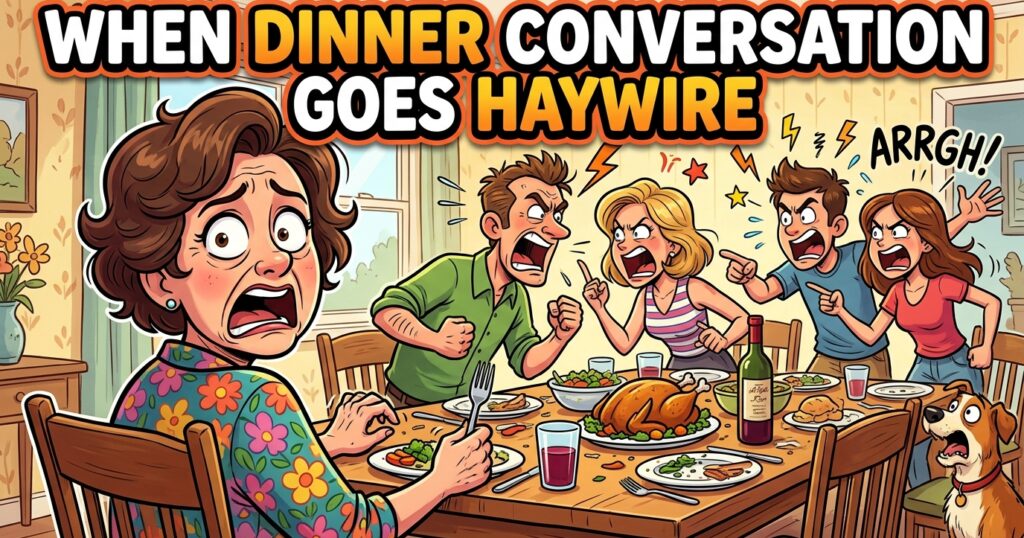
You’ve been looking forward to Sunday dinner all week.
Your daughter and her family are visiting, and for once, everyone is actually sitting around the table together. Your 13-year-old grandson, Noah, has barely looked up from his plate, though. Every time someone asks about school, he gives a one-word answer.
Finally, you smile and say, “So, Noah, your mom tells me you’ve been having a little trouble in math.”
His fork stops halfway to his mouth.
His mother sighs. “More than a little.”
Noah’s face reddens.
His father adds, “He’d be doing better if he spent half as much time studying as he does on that phone.”
Suddenly Noah pushes his chair back.
“Can everyone PLEASE stop talking about me like I’m not sitting right here?”
The table goes silent.
His mother snaps, “Don’t use that tone.”
Noah mutters, “This is why I hate family dinners.”
Now you can feel the whole evening sliding downhill. You want to help—but you also don’t want to undermine his parents.
Dinner tables have a funny way of becoming emotional crossroads.
We gather around them hoping for warmth, laughter, stories, and connection. Yet because family members finally have one another in the same place, dinner can also become the moment when worries, frustrations, grades, behavior, and unfinished disagreements suddenly spill onto the table beside the mashed potatoes.
In this situation, Noah isn’t simply reacting to a conversation about mathematics. He is reacting to the uncomfortable experience of becoming the subject of the conversation while sitting right there.
At thirteen, that can feel especially painful.
Young teenagers are becoming increasingly aware of how others see them. They want more independence, more privacy, and more say in how personal information about them is discussed. When several adults begin describing a child’s shortcomings in front of the family—even with loving intentions—the child may hear something very different from what the adults intend.
The adults may be thinking, We’re concerned about you.
Noah may be hearing, Everyone thinks I’m failing.
That distinction matters.
Let’s look at each possible response.
Option A: Correct Noah and ask him to apologize
There is something understandable about this choice.
Grandmothers often care deeply about manners, and Noah’s sharp response certainly isn’t ideal. His mother may also feel undermined if someone appears to excuse his tone.
But correcting Noah immediately misses the emotion underneath the outburst.
Several adults have just discussed his academic struggles publicly. His embarrassment is already high. If Grandma now becomes the fourth adult correcting him, he may feel even more outnumbered.
There will certainly be opportunities to talk about respectful communication. But emotional intelligence often means asking ourselves, What is happening underneath the behavior?
A teenager who feels cornered may not have the maturity to say calmly, “I feel embarrassed that everyone is discussing my school performance.”
Instead, he says, “Stop talking about me!”
The words need work. The feeling behind them deserves understanding.
Option B: Name the tension gently and change the subject
This is the best response.
“I think Noah may be feeling a little cornered. How about we give school talk a rest for dinner?”
Notice what this response does and what it does not do.
Grandma does not declare that Noah is right and his parents are wrong.
She does not criticize their parenting.
She does not excuse disrespectful language.
Instead, she recognizes the emotional temperature of the table and gives everyone a graceful exit.
That is a wonderful role grandparents can sometimes play.
Because Grandma is not responsible for enforcing every household rule, she can occasionally serve as the family’s emotional bridge. She can notice when communication has shifted from productive discussion into defensiveness and help everyone reset.
Changing the topic also sends Noah a quiet but powerful message:
You are more than your grades.
Later, his parents can address his schoolwork privately, where the conversation is far more likely to be constructive.
And something else important happens when Grandma redirects the dinner conversation: she protects the table as a place of connection.
Family meals do not need to avoid every serious topic, of course. But children benefit when family gatherings aren’t routinely turned into performance reviews.
Sometimes the wisest thing we can do is recognize that an important conversation is happening at the wrong time.
Option C: Stay silent, then privately tell Noah you agree with him
The instinct behind this option is tender.
You may want Noah to know someone understands how embarrassed he felt.
Private conversations between grandparents and grandchildren can be precious because grandchildren sometimes share feelings with grandparents that they hesitate to discuss with their parents.
But there is a subtle danger in saying, “I agree with you. Your parents embarrassed you.”
That can accidentally place Grandma and Noah on one side and his parents on the other.
A healthier private conversation might sound more like:
“I could see that dinner was uncomfortable for you. I’m always here if you want to talk.”
That validates his feelings without turning Grandma into an ally against his parents.
Grandparents can be safe confidantes without becoming secret teammates in family conflicts.
That difference is enormously important.
Option D: Make a joke and keep the school conversation going
Humor can sometimes rescue a tense family moment.
A grandmother saying, “Goodness, I was hopeless at algebra!” may genuinely help a teenager feel less alone.
But the problem here is that Noah has already clearly communicated a boundary: he does not want his school struggles discussed at the table.
Continuing the topic, even playfully, may signal that the adults heard his words but ignored them.
That can make a child feel powerless.
Humor works best when it relieves tension without dismissing someone’s discomfort.
A joke followed by a subject change might help. A joke followed by more discussion of Noah’s grades probably won’t.
The deeper lesson
Grandmothers sometimes find themselves in a delicate middle place.
You love your grandchild fiercely.
You also respect that his parents are the parents.
Those loyalties do not have to compete.
One of the most loving things a grandmother can offer is not taking sides, but helping family members hear one another more clearly.
When a grandchild becomes defensive, try listening for the feeling underneath the words.
Is she embarrassed?
Is he overwhelmed?
Does she feel criticized?
Does he feel as though adults are talking about him rather than with him?
Recognizing those feelings does not mean approving every behavior. It simply means beginning with connection.
And connection gives correction somewhere safe to land.
There is also wisdom in remembering that timing matters.
A struggling grade may need attention.
A disrespectful tone may need attention.
A worried parent may need support.
But none of those conversations necessarily has to happen while everyone is passing the potatoes.
Sometimes Grandma’s greatest gift is simply saying, with warmth and calm:
“Why don’t we talk about something else for now?”
Then ask about the school play.
Tell a funny family story.
Ask everyone where they would travel if they could go anywhere tomorrow.
Let the table become a table again.
Because years from now, grandchildren are unlikely to remember every piece of advice we gave them.
But they often remember something much more important:
How they felt when they were with us.
And when a dinner conversation goes haywire, a wise grandmother can help turn embarrassment back into belonging—without taking sides, fixing everything, or saying very much at all.



