
Disclaimer: Devoted Grandma is reader-supported. If you purchase anything through my site, I may receive a small commission (at no cost to you). Thank you.
At seventeen, Maya shared almost everything online.
A good grade?
Post it.
An argument with a friend?
Post about it.
A new crush?
Her friends knew within hours.
A disagreement with her mother?
There would usually be a mysterious quote on her page before dinner.
“Some people will never understand you.”
Her mother always knew exactly who “some people” meant.
One Saturday, Maya visited her aunt Lena.
Aunt Lena lived in a little house filled with plants.
Some sat on windowsills.
Others hung from the ceiling.
But Maya’s favorite was a small lemon tree growing in a large pot near the kitchen.
“You should put this online,” Maya said, taking out her phone. “It’s beautiful.”
Aunt Lena laughed.
“Not everything needs an audience.”
Maya rolled her eyes.
“That’s such an old-person thing to say.”
“I’m thirty-eight.”
“Exactly.”
Aunt Lena threw a dish towel at her.
A few weeks later, Maya started talking to a boy from school named Jordan.
She liked him.
He liked her.
At first, they kept things between themselves.
They talked after school.
Shared jokes.
Went for ice cream.
It was simple.
Then Maya posted a photograph of them together.
Her phone exploded.
“Are you two dating?”
“He’s cute!”
“Didn’t he used to like Chloe?”
“Be careful with him.”
“You can do better.”
“OMG FINALLY!”
Suddenly, something that had belonged to Maya and Jordan seemed to belong to everyone.
People asked questions at school.
Friends analyzed their messages.
Someone told Maya that Jordan had been talking to another girl.
That wasn’t true.
But Maya became suspicious.
Then Jordan took several hours to reply to a message.
Maya told her friends.
Three different people gave three different opinions.
“He’s losing interest.”
“Ignore him.”
“Post something with another guy and make him jealous.”
By evening, Maya was angry about a problem that hadn’t existed that morning.
She sent Jordan a cold message.
He was confused.
They argued.
The next day, Maya posted a sad quote.
Now even more people wanted to know what happened.
Within two days, a small misunderstanding had become public entertainment.
Maya hated it.
That weekend, she went to Aunt Lena’s house.
“I’m deleting social media forever.”
Aunt Lena smiled.
“That sounds dramatic.”
“Everyone is in my business.”
“How did they get there?”
Maya opened her mouth.
Then closed it.
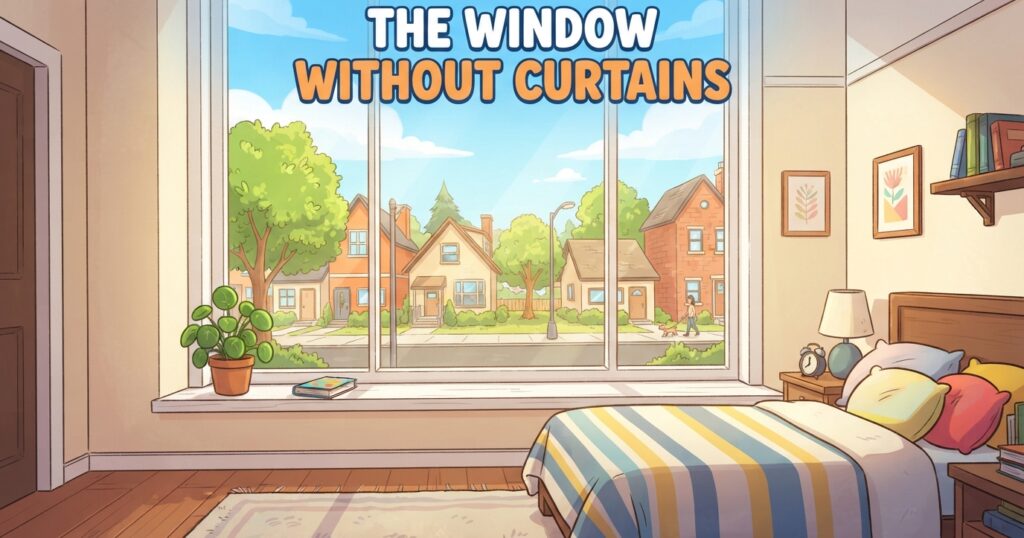
Aunt Lena walked toward the living room window.
“Come here.”
She opened the curtains.
Across the street, people were walking past.
“Imagine I removed these curtains permanently,” she said.
“Okay.”
“And then I became angry because people walking past could see into my living room.”
Maya immediately understood.
“You’re saying it’s my fault?”
“No.”
Aunt Lena shook her head.
“People should still respect boundaries. But sometimes we have to create those boundaries ourselves.”
She closed the curtains.
“Privacy isn’t about having something shameful to hide.”
“Then what’s it about?”
“Choosing who gets a window into your life.”
That sentence stayed with Maya.
Aunt Lena continued.
“Your life is a home, Maya. Some people belong in the living room. A few belong in the kitchen. Maybe two or three people know where you keep the spare key.”
She smiled.
“But strangers don’t need a tour of every room.”
Maya laughed.
For the next few months, she experimented with keeping more things private.
When she received exciting news about a school opportunity, she told her family first.
When she argued with a friend, she spoke directly to the friend instead of posting about it.
When she felt hurt, she called someone she trusted.
And when something wonderful happened, sometimes she simply enjoyed it.
No photograph.
No announcement.
No need to see how many people approved.
At first, that felt strange.
Then it felt peaceful.
Maya discovered something surprising.
Not everything became more valuable when it was shared.
Some things became more valuable when they weren’t.
Private jokes.
Family conversations.
Early dreams.
Personal struggles.
New relationships.
Plans that were still taking shape.
Moments of happiness that belonged entirely to the people who were actually there.
Years later, Maya kept a photograph on her desk.
It showed her standing beside Aunt Lena’s lemon tree.
On the back, Aunt Lena had written:
“You can let sunshine into your life without removing all the curtains.”
Maya never forgot it.
Because the world may encourage us to share everything.
Where we are.
What we’re doing.
Who we’re with.
What we’re buying.
What we’re struggling with.
What we’re planning next.
But being private doesn’t mean being dishonest.
And keeping something to yourself doesn’t mean you’re hiding.
Sometimes you’re simply protecting it.
There are parts of your life that don’t need public voting.
Some dreams need time before they are announced.
Some disagreements should stay between the people involved.
Some family matters belong inside the family.
Some relationships deserve the chance to grow without spectators.
And some beautiful moments are allowed to exist without becoming content.
Share your life.
Celebrate it.
Invite people into it.
But remember that you are allowed to have curtains.
The public doesn’t need access to every room in your life for your life to be real. 💛
