
Disclaimer: Devoted Grandma is reader-supported. If you purchase anything through my site, I may receive a small commission (at no cost to you). Thank you.
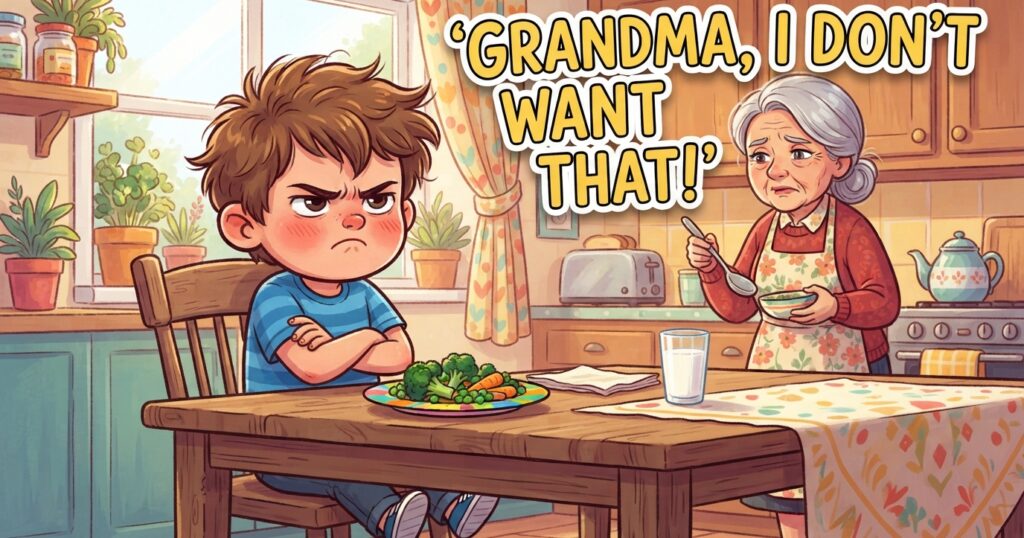
Your 10-year-old grandson, Noah, is spending the weekend with you. You love having him over, but lately you’ve noticed a pattern that worries you.
At breakfast, he pushes aside the eggs and fruit and asks for sugary cereal. At lunch, he refuses the sandwich you make and wants chips instead. When dinner comes around, he takes two bites of chicken and vegetables before announcing, “I’m full.”
But half an hour later, he asks for cookies.
You know children can be picky, but Noah seems to be eating more sweets, chips, and processed snacks than actual meals. His parents have mentioned that they are struggling with the same thing at home.
Tonight, after he refuses dinner again, he looks at you hopefully and asks, “Grandma, can I have ice cream?”
You want to encourage healthier habits, but you don’t want food to become a battle—or make Noah feel ashamed of what he likes to eat.
Food can stir up surprisingly strong emotions in families.
As grandmothers, we often express love through feeding the people we care about. We remember making favorite cookies, preparing Sunday dinners, or slipping a grandchild an extra treat simply because seeing that smile makes us happy.
So when a grandchild develops eating habits that concern us, it can be tempting to react quickly.
We may worry: Is he getting enough nutrition? Am I spoiling him? Should I be stricter?
The challenge is helping children develop healthy habits without creating anxiety, shame, or power struggles around food.
Let’s look at each response.
Option A: “Finish your dinner first.”
This response comes from a very familiar place.
Many of us grew up hearing something like, “Clean your plate,” or, “No dessert until you eat your vegetables.”
It seems logical. If a child knows dessert depends on eating dinner, perhaps he will eat the healthier foods first.
But there can be an unintended downside.
When children are pressured to finish everything on their plates, they may learn to ignore their own hunger and fullness signals. Instead of paying attention to what their bodies are telling them, they begin eating to satisfy an adult.
There is another problem.
When dessert becomes the reward for eating vegetables, dessert can accidentally become even more desirable.
The message a child may hear is: “Vegetables are the unpleasant thing you must endure so you can earn the good stuff.”
That is probably the opposite of what Grandma intended.
Encouragement is helpful. Pressure is usually less so.
Option B: “No more junk food in this house.”
This option has some good instincts behind it.
Children do benefit when adults provide nutritious choices and avoid making sweets, soda, and highly processed snacks available all day long.
The difficulty is in the way the message is delivered.
Calling certain foods “bad,” “junk,” or completely forbidden can sometimes make children even more fascinated by them.
And children are remarkably sensitive to judgment.
If Noah hears, “The foods you like are bad,” he may quietly translate that into, “I’m doing something wrong.”
Food does not need to become a moral issue.
There is a difference between saying, “Cookies are bad,” and saying, “Cookies are something we enjoy sometimes, but our bodies also need foods that help us grow, think, play, and stay strong.”
That small change in language can make a big difference.
Option C: Keep the boundary gentle and consistent.
This is the best response.
Grandma might say warmly, “Dinner is still here if you’re hungry. We’re not having ice cream tonight, but tomorrow we’ll have another snack after breakfast.”
Then she lets the subject rest.
No lecture.
No bargaining.
No shame.
The power of this approach lies in something children need very much: calm consistency.
Adults decide what foods are offered and when meals and snacks happen. Children can then decide whether they are hungry and how much they wish to eat from what is offered.
Over time, this helps children learn to listen to their bodies while still living within healthy family routines.
Grandma can also quietly shape the environment.
She might offer fruit with breakfast, yogurt and berries for a snack, vegetables alongside familiar foods at dinner, and sweets occasionally rather than automatically after every meal.
She can even invite Noah into the process.
“Would you like carrots or cucumber with lunch?”
“Want to help me make fruit kabobs?”
“Which vegetable should we try with dinner tonight?”
Children are often more willing to taste foods when they feel involved rather than controlled.
And remember: progress may be slow.
A child may need to see or taste a food many times before it becomes familiar. One rejected broccoli floret does not mean broccoli must disappear forever.
Option D: “Grandma’s house is for treats.”
Oh, how understandable this one is.
Grandparents often treasure the freedom to spoil grandchildren just a little.
An ice cream cone, a cookie after lunch, or pancakes on Saturday morning can become wonderful family memories.
There is nothing wrong with treats.
The concern comes when treats regularly replace meals or when a child learns, “If I refuse dinner long enough, something sweeter will appear.”
Children are quick learners.
If Noah discovers that turning down chicken and vegetables leads to ice cream thirty minutes later, he has a very good reason to keep turning down dinner.
Grandma can still be fun without making every visit revolve around sugary food.
Special memories might come from board games, gardening, movie night, baking together, walking to the park, or telling stories after dinner.
Food can be part of love without carrying all of it.
The Bigger Lesson
Healthy eating habits are rarely built through one perfect meal.
They are built through hundreds of ordinary moments.
A grandmother’s greatest influence may come not from convincing a child to eat three more bites of peas, but from creating a peaceful relationship with food.
Serve nourishing choices.
Include familiar foods alongside new ones.
Allow treats without making them forbidden treasures.
Avoid commenting on a child’s weight or body.
And most importantly, keep meals warm and relational.
Talk about school.
Tell a funny story.
Ask about a favorite game.
Let the dinner table be a place where a child feels connected rather than inspected.
Someday, Noah may not remember whether he ate the green beans.
But he may remember something far more important.
He may remember that Grandma’s table was a place where he was guided with love, given healthy boundaries, and never made to feel ashamed.
And that kind of nourishment lasts far beyond childhood.



