
Disclaimer: Devoted Grandma is reader-supported. If you purchase anything through my site, I may receive a small commission (at no cost to you). Thank you.
Your 10-year-old grandson, Noah, is spending Saturday afternoon with you. You have already baked cookies together, played two board games, and taken a walk to the park.
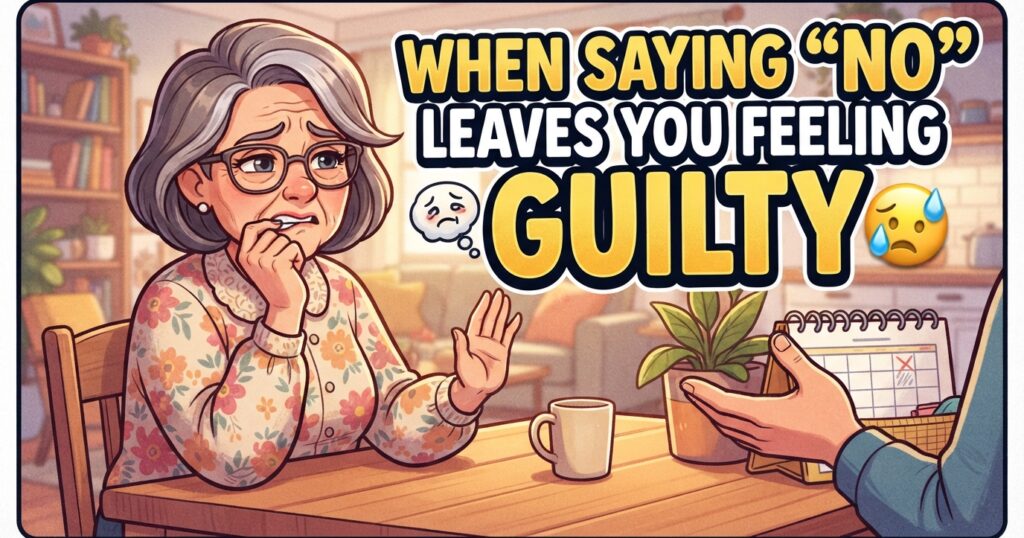
As you begin preparing dinner, Noah asks if you will drive him to the toy store to buy a new video game. You gently explain that you had not planned a shopping trip and that the game is expensive.
“But Grandma,” he says, looking disappointed, “Mom always says no. I thought you would say yes.”
His words tug at your heart. You love being the person who brings joy into his life, and you worry that refusing him might make your time together feel less special. Still, you do not feel comfortable buying the game.
It is remarkable how one small word—“no”—can feel so heavy when we say it to a grandchild.
Many grandmothers naturally want visits to feel joyful. We may have more freedom than we did when raising our own children, and we often delight in offering treats, adventures, and little surprises. When a grandchild looks disappointed, it can awaken a tender fear: What if they stop wanting to spend time with me? What if they think I do not love them enough?
But love is not measured by how often we say yes. Sometimes, the most loving response is a warm, steady no.
Let us look at each option.
Option A: Buy the game to avoid disappointing him
This choice is understandable. Noah’s words touch a sensitive place. Grandma wants him to feel cherished, and buying the game would quickly restore his smile.
The difficulty is that saying yes mainly to remove our own guilt can teach an unintended lesson. Noah may begin to believe that disappointment is something adults must immediately fix. He may also learn that comparing Grandma with Mom is an effective way to get a different answer.
That does not make Noah calculating or badly behaved. At ten, children are still learning how to cope with frustration, delay gratification, and express what they want appropriately. Testing boundaries is part of that development. He is noticing which approaches work.
Buying occasional gifts is not harmful. The important question is whether the gift comes from genuine generosity or from fear, pressure, and guilt. When we repeatedly give in because a child looks unhappy, we may create short-term happiness while making it harder for that child to accept limits later.
Option B: Call out the manipulation and demand gratitude
There is some truth behind this response. Noah is applying emotional pressure, whether he fully realizes it or not. Grandma also deserves respect and appreciation.
However, calling him manipulative may make him feel ashamed rather than guided. His comment may be less about manipulation and more about disappointment, hope, or an immature attempt to persuade. Children often speak dramatically when they do not get what they want.
Telling him he should be grateful for the cookies, games, and park visit may also turn loving time together into a kind of emotional debt. Gratitude matters, but it grows best through modeling and gentle reminders, not through making a child feel guilty for wanting something else.
A calmer response can address the behavior without attacking his character. Grandma might say, “I know you hoped I would say yes, but comparing my answer with your mom’s will not change my decision.”
That keeps the boundary clear while protecting the relationship.
Option C: Hold the boundary, acknowledge his feelings, and offer connection
Grandma could say, “I can see that you are disappointed. You were really hoping for that game. We are not going to the store today, but after dinner we can choose a movie or make our own ice-cream sundaes.”
This response does three important things.
First, it keeps the boundary. Grandma does not abandon her judgment simply because Noah is unhappy. She shows him that a loving adult can say no and remain kind, calm, and close.
Second, she acknowledges his feelings. She does not tell him that his disappointment is silly or ungrateful. She lets him know that his feelings make sense, even though the answer is still no.
Children benefit from learning that feelings and decisions are not the same thing. Noah is allowed to feel disappointed. Grandma is allowed to maintain her limit. Neither person has to become the villain.
Third, she offers connection rather than compensation. Suggesting another activity does not mean Grandma must distract him immediately or reward him for complaining. It simply reminds him that their relationship is still warm and secure. The no applies to the game, not to love, fun, or togetherness.
This is an emotionally intelligent balance: “I hear you, I care about you, and my answer remains the same.”
Option D: Say no now, but surprise him later
This option may seem like a reasonable compromise. Grandma maintains the boundary in the moment while planning a loving surprise.
Yet if she buys the game soon afterward because she still feels guilty, the original boundary becomes unclear. Noah may conclude that Grandma’s no actually means “not yet,” especially if disappointment eventually leads to the desired result.
There may certainly be another occasion when Grandma chooses to give him the game, perhaps for his birthday, after discussing it with his parents, or as part of an agreed reward. The key is that the later decision should be thoughtful and separate from guilt.
Grandparents and parents also benefit from supporting one another’s boundaries. If Noah says, “Mom always says no,” Grandma can avoid becoming the easier alternative. A simple response might be, “Your mom may have good reasons, and I will respect her decisions. Today, my answer is no as well.”
This strengthens family trust and prevents a child from feeling caught between adults with competing rules.
Letting go of the guilt
Saying no can feel uncomfortable because we associate love with giving. But healthy love includes warmth, honesty, consistency, and limits.
A grandchild may pout, protest, or need a little time to recover. That does not mean the relationship has been damaged. In fact, when Grandma remains affectionate and steady through disappointment, the child learns something deeply reassuring: I do not have to be happy with her decision to remain loved by her.
The next time guilt appears, pause before changing your answer. Ask yourself, “Am I reconsidering because the request is reasonable, or because I cannot bear to see my grandchild disappointed?”
Then respond with both tenderness and confidence:
“I know this is not the answer you wanted. It is okay to feel disappointed. I love you, and my answer is still no.”
A grandmother’s love is not proven by granting every wish. Sometimes it is shown most beautifully through a gentle boundary, a listening heart, and the quiet confidence to stay connected even when a grandchild does not get what they want.



