
Disclaimer: Devoted Grandma is reader-supported. If you purchase anything through my site, I may receive a small commission (at no cost to you). Thank you.
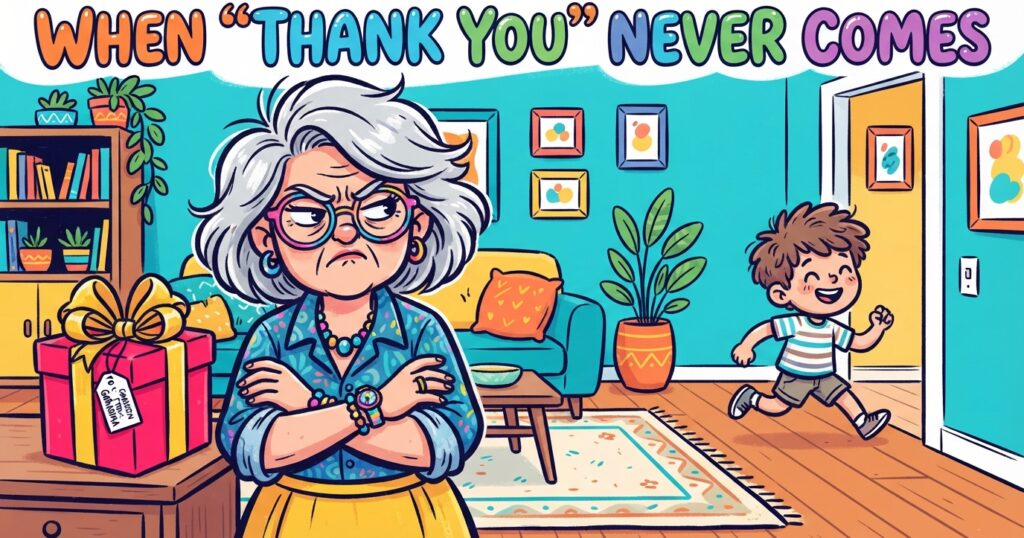
You love doing little things for your grandson, Eli. You pick up his favorite snacks when he visits, remember which games he likes, and sometimes slip a small surprise into his backpack before he goes home.
Lately, though, something has been bothering you.
Eli rarely says thank you.
When you hand him a snack, he takes it and walks away. When you buy him a birthday gift, he tears it open and immediately asks whether there is anything else. Last weekend, you spent the afternoon baking his favorite cookies. He ate three, packed several to take home, and never once acknowledged the effort.
You know he is only eleven, and you do not expect perfect manners. Still, his lack of gratitude is beginning to hurt your feelings. You worry that if no one corrects him, he may grow up believing that people’s kindness should simply be expected.
The next time Eli visits, you give him a small gift you thought he would enjoy. He opens it, looks at it briefly, and says, “Do you have the other kind?”
The Best Response: Teaching Gratitude Without Shaming
Few things sting quite like giving from the heart and feeling unnoticed.
When we prepare a favorite meal, choose a special gift, or make time for a grandchild, we are offering more than an object or an activity. We are offering love. So when a grandchild accepts that kindness without even a small acknowledgment, it can feel as though our love has been brushed aside.
At the same time, children do not always understand what their behavior communicates. A child may be excited, distracted, uncomfortable, or simply accustomed to adults doing things for him. Gratitude is not always automatic. It is a skill that develops through modeling, reminders, and repeated practice.
Let us look at each choice with compassion.
Option A: Correct Him Firmly and Take the Gift Back
It is understandable to feel tempted by this response.
When a child appears rude, a clear consequence may seem like the quickest way to make the lesson memorable. Taking the gift back might certainly get Eli’s attention. It sends the message that gifts should not be treated carelessly.
The trouble is that a strong reaction may teach the wrong lesson.
Instead of learning, “I should notice and appreciate someone’s kindness,” Eli may learn, “I must say thank you so adults will not become angry or take things away.”
That is compliance, not gratitude.
A harsh correction can also create shame. Shame tells a child, “There is something wrong with you.” Gentle guidance says, “This behavior needs to change, and I believe you can do better.”
There may be situations when a gift should be put away, especially if a child is deliberately insulting or damaging it. But as a first response, taking it back may turn a teachable moment into a power struggle.
Option B: Say Nothing and Expect Nothing
There is generosity in this choice.
Many grandmothers were taught that true giving means expecting nothing in return. And in one sense, that is wise. A gift should not come with a hidden demand for praise, affection, or repayment.
But saying nothing at all may not serve Eli well.
Children need caring adults to teach them how relationships work. A sincere thank-you is not merely a rule of etiquette. It is a way of saying, “I see what you did. I know you made an effort. You matter to me.”
If adults repeatedly excuse discourteous behavior because “he is just a child,” the child loses opportunities to learn consideration.
You are not being selfish by wanting acknowledgment. You are helping your grandchild understand that other people have feelings, and that kindness deserves recognition.
The goal is not to demand appreciation. The goal is to teach awareness.
Option C: Speak Calmly and Give Him a Chance to Respond
This is the best response because it combines honesty, warmth, and instruction.
You might say:
“Eli, I chose that because I thought you would enjoy it. It is all right if it is not the kind you expected, but when someone gives you something, it is important to acknowledge the thought behind it. What could you say?”
This approach does several helpful things.
First, it names the behavior without labeling the child. You are not calling Eli spoiled, selfish, or rude. You are simply pointing out that his response was hurtful and incomplete.
Second, it explains the reason behind the manners. Children are more likely to learn when they understand that “thank you” is not a magic phrase adults demand. It is a way to recognize another person’s effort.
Third, it gives him a chance to repair the moment.
Perhaps he will say, “Thank you, Grandma.” Perhaps it will sound awkward or reluctant. That is all right. Emotional skills often begin as practice before they become genuine habits.
You can also model a fuller response:
“You can say, ‘Thank you for thinking of me. I was hoping for the other kind, but I appreciate the gift.’”
This teaches him that gratitude does not require pretending. He can be honest about his preferences while still being considerate.
That is an important life skill.
Option D: Ask His Parents to Make Him Apologize
Speaking with his parents is not necessarily wrong. Parents and grandparents can work together to reinforce kindness and respect.
However, going to his parents before addressing Eli directly may weaken the opportunity for connection.
If Eli is old enough to express disappointment, he is old enough to have a calm conversation about it. Speaking to him respectfully shows that you see him as someone capable of learning and making amends.
A forced apology arranged later by his parents may sound correct but feel empty. He may apologize only because he was told to, without understanding why his behavior mattered.
You may still mention the pattern to his parents, especially if it continues. A helpful conversation might sound like this:
“I have noticed that Eli sometimes struggles to acknowledge gifts or thoughtful gestures. I am working on gently reminding him when he is with me. I wanted us to be consistent.”
That keeps the focus on teaching rather than complaining.
Gratitude Grows Through Practice
A child who forgets to say thank you is not necessarily ungrateful at heart.
Sometimes children live so fully in the moment that they notice only the object in front of them, not the effort behind it. Our role is to help them widen their view.
We can do this by modeling gratitude aloud:
“Thank you for helping me carry those bags.”
“That was thoughtful of you.”
“I noticed you shared with your cousin. That was kind.”
We can also invite reflection:
“What do you think Grandpa did to prepare this meal?”
“How do you think your friend felt when you thanked her?”
Over time, children begin to connect words of appreciation with empathy.
And remember, you are allowed to protect the joy of giving. You do not have to keep showering a grandchild with treats while resentment quietly grows. Sometimes fewer gifts and more shared experiences can restore balance. Bake together instead of baking for him. Let him help choose and wrap a gift for someone else. Give him opportunities to be the thoughtful one.
Gratitude becomes real when children experience both receiving and giving.
The heart of this dilemma is not a missing phrase. It is a chance to teach your grandchild to notice people, effort, and love.
A calm correction today may help him become a more thoughtful friend, partner, parent, and grandparent tomorrow.



